 Demian Sahputra
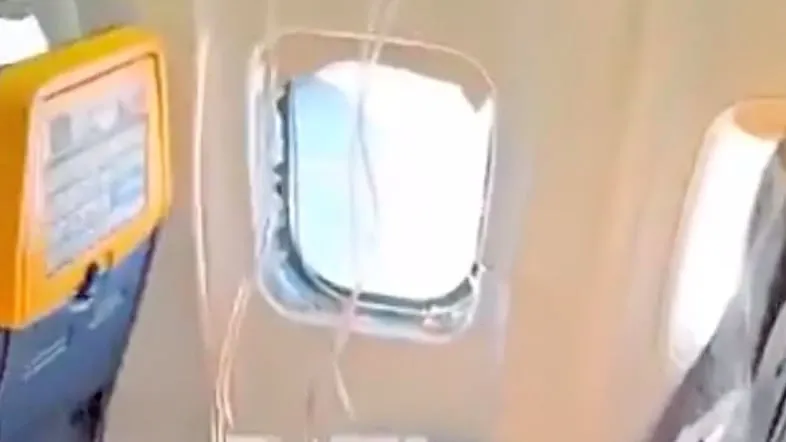
THESSALONIKI — A Ryanair flight carrying passengers from Thessaloniki, Greece, to Germany was suddenly gripped by terror when one of the aircraft's windows burst open at an altitude of approximately 5,000 meters. This dramatic incident, which occurred recently, caused a passenger to be nearly sucked out of the cabin up to their shoulders, triggering widespread panic among the crew and all passengers. Initial investigations point to suspected material fatigue as the cause.
The shocking event took place mid-flight, as the aircraft cruised at altitude. A sudden bang followed by rapid decompression transformed a routine flight into a horror scenario. The flight crew reacted immediately, implementing emergency procedures to ensure the safety of everyone on board.
Testimonies from several passengers described a terrifying atmosphere. They witnessed firsthand how a fellow passenger was suddenly pulled forcefully towards the broken window opening, saved only by their seatbelt and the quick reaction of nearby passengers. "It felt like a nightmare. We thought we were going down," said an unnamed passenger.
Responding to the incident, leading aviation expert Peter Gatz offered his perspective. "The phenomenon of a window bursting at such an altitude is very rare, but it indicates material fatigue," Gatz explained. He added that the differential pressure between the pressurized cabin and the thin air outside at 5,000 meters could exacerbate existing structural damage.
Material fatigue refers to the weakening of a material due to repeated loading. In the context of aircraft, this can occur in vital components such as window frames or fuselage panels that are constantly exposed to pressure cycles during flight. Regular inspections are crucial to detect early signs of this fatigue.
Ryanair, the Irish low-cost airline, promptly issued a statement affirming its commitment to passenger safety. The airline stated that it is fully cooperating with aviation authorities to conduct a thorough investigation to ascertain the exact cause of the incident and prevent similar occurrences.
The cabin crew swiftly implemented emergency procedures, including the deployment of oxygen masks and efforts to calm panicked passengers. The pilot also immediately initiated an emergency descent to reduce cabin pressure and stabilize the situation. The speed of the flight crew's reaction was a crucial factor in managing the crisis.
This incident once again highlights the urgency of strict aircraft maintenance and inspection. Global aviation safety standards mandate comprehensive periodic checks to ensure the structural and operational integrity of every aircraft. Even a slight oversight can have fatal consequences, as nearly happened on this flight.
Similar events, albeit with different details, have previously attracted public attention. Our earlier publication also reported on Horor di Udara Yunani: Penumpang Ryanair Nyaris Terisap Keluar Jendela, demonstrating that issues of aircraft structural safety need continuous attention.
Although all passengers were declared safe and the aircraft landed securely at its destination airport, this incident serves as a serious reminder to the aviation industry about the vital importance of preventive maintenance and emergency preparedness. Aviation safety is non-negotiable and requires unceasing vigilance from all involved parties.