 Chris Robert
GLOBAL – Scientists worldwide recently announced a monumental achievement: the publication of the most comprehensive anatomical map of the vagus nerve ever created. This discovery, occurring in 2026, fundamentally alters medical understanding of one of the human body's most enigmatic neural networks and opens doors for innovative treatment strategies.
The vagus nerve, often called 'the wanderer' due to its extensive reach, is the tenth cranial nerve playing a vital role in regulating autonomous bodily functions. These include heart rate, breathing patterns, and digestive processes. However, its exact pathways and branching within the body have always been a mystery.
For centuries, research into this nerve has been hampered by the complexity of its intricate network. Medical and neurological experts only had a partial understanding of how the vagus nerve precisely influences internal organs. Consequently, its therapeutic potential remained largely unexplored.
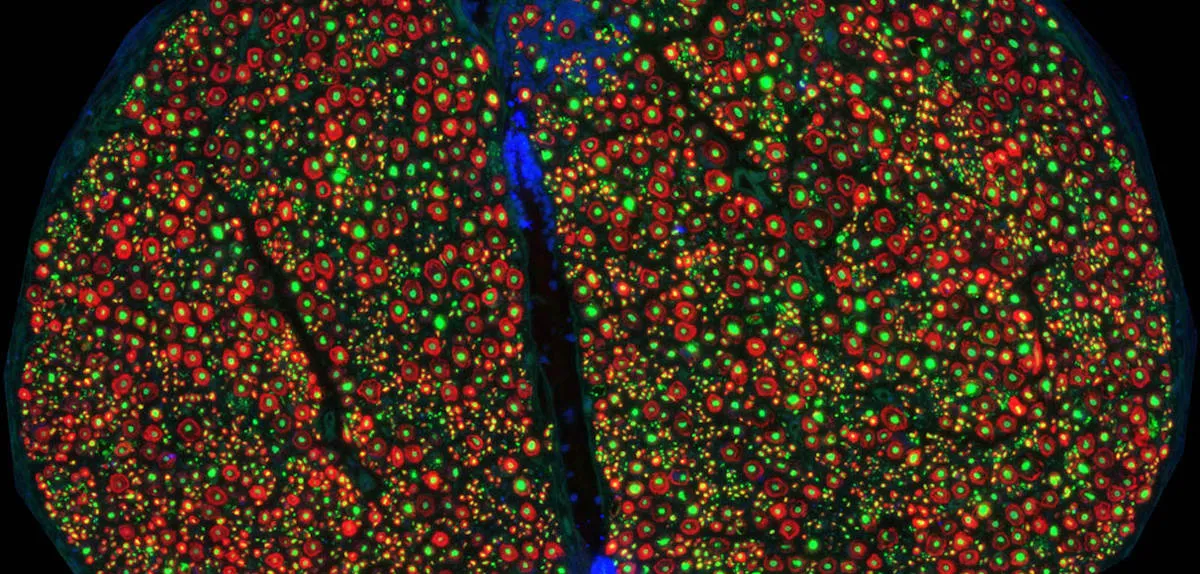
An international collaborative study, led by a prominent research team in Europe, successfully compiled this detailed map. They utilized advanced imaging technologies and high-resolution neural network analysis, marking a significant breakthrough in the field of neurology.
The mapping results reveal that the vagus nerve's pathways are far more complex and detailed than previously imagined. Researchers discovered previously undetected subtle branches connecting the vagus nerve to unexpected organs and systems.
'This is a 'Rosetta Stone' moment for autonomic neurology,' stated Professor Dr. Klaus Richter, one of the lead researchers, during a virtual press conference from Berlin. 'With this map, we can finally understand the body's secret language, specifically how the brain communicates directly with vital organs via the vagus nerve.'
This discovery has significant implications for the development of new therapies. Conditions such as depression, chronic inflammation, epilepsy, and even some forms of digestive disorders are believed to be linked to vagus nerve dysfunction.
With a more accurate understanding of this nerve's architecture, scientists can now design more precise vagus nerve stimulators. This has the potential to enhance treatment effectiveness and reduce side effects, ushering in a new era of targeted medicine.
Furthermore, future research will focus on anatomical variations of the vagus nerve among individuals. This is crucial for personalized medicine, ensuring that medical interventions can be tailored to patients' physiological needs.
This map will also form the foundation for studies on vagus nerve neuroplasticity and its potential in recovery after injury or stroke. Researchers hope to uncover the nerve's capacity to regenerate and form new connections.
Dr. Lena Schmidt, a neurophysiologist from Frankfurt, emphasized the importance of interdisciplinary collaboration. 'This map is not just for neurologists, but also for cardiologists, gastroenterologists, and psychiatrists. It's a new universal language for understanding the body,' she said.
The global scientific community has welcomed this discovery with enthusiasm. Many predict that the vagus nerve map will become one of the most frequently used references in biomedical research over the coming decade.
Editorial Insight: The publication of this anatomical map of the vagus nerve is not merely a scientific discovery; it is a revolution in our understanding of the interaction between the central nervous system and internal organs. It signifies a paradigm shift from symptomatic treatment approaches towards more targeted interventions for underlying neurological issues. Its long-term impact is expected to be immense, triggering a wave of innovation in bioelectronics and pharmacology that will fundamentally change how we manage various chronic and psychiatric diseases. This also strengthens Europe's position in scientific research as a pioneer in the field of neurology.