 Angel Doris
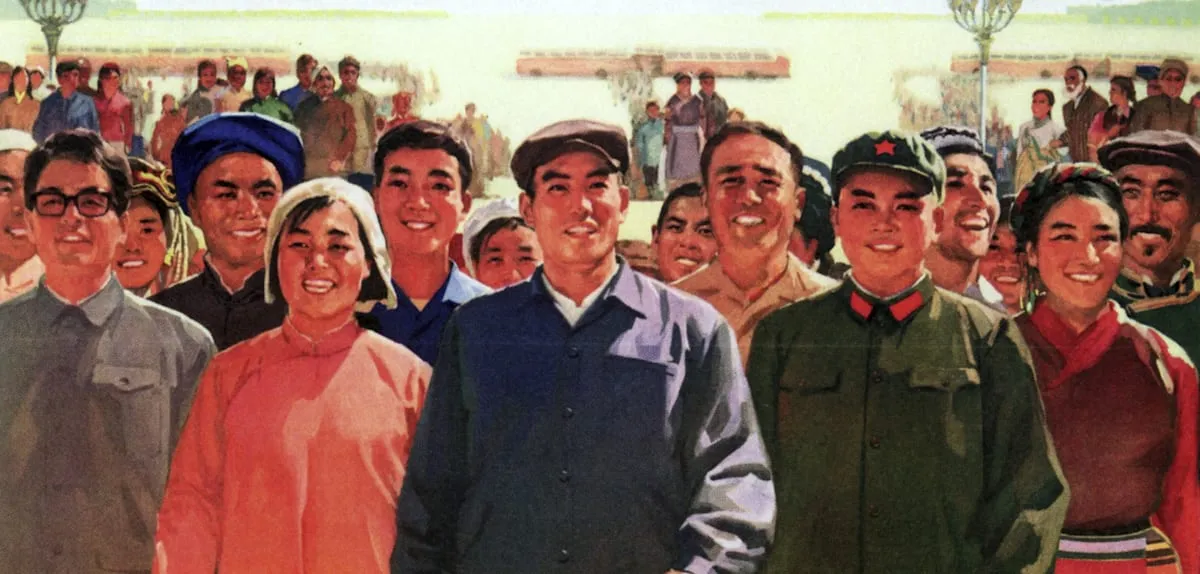
BEIJING — In the summer of 1966, the People's Republic of China plunged into one of the darkest periods of its modern history, when Chairman of the Communist Party of China (CPC), Mao Zedong, unleashed what became known as the "Great Proletarian Cultural Revolution." This movement, officially aimed at purifying communist ideology and eradicating capitalist and traditionalist elements, instead triggered a wave of violence and terror that paralyzed the nation until 1976. Millions of lives fell victim to this brutal campaign, including political rivals, intellectuals, and anyone labeled "capitalist" or "counter-revolutionary."
Mao Zedong, the central figure behind the Cultural Revolution, launched the movement under the pretext of consolidating his power and purging the party of "reactionaries." He felt his authority threatened after the failure of the "Great Leap Forward" and sought to reassert his dominance over the CPC. This move also served as a strategy to eliminate party opponents deemed to have deviated from the revolutionary line.
To achieve these goals, Mao mobilized the youth, forming what became known as the Red Guards. These radical young groups were mandated to destroy the "Four Olds" (old customs, old culture, old habits, and old ideas). With Mao's full backing, the Red Guards unleashed a campaign of terror that knew no bounds, attacking anyone they suspected of harboring anti-revolutionary sentiments.
Testimonies from victims reveal unimaginable horrors. Many individuals were forced to kneel, beaten, and kicked in public. They suffered public humiliation, physical torture, and even murder. Schools and universities were closed, professors and teachers were harassed, exiled, or killed. Precious Chinese cultural heritage, including temples, artifacts, and ancient books, was systematically destroyed by the Red Guards.
The wave of violence spread across China, from major cities to remote rural areas. Families were torn apart, neighbors suspected each other, and society lived in constant fear. No one was safe from accusations and slanders. Even senior figures within the party, including President Liu Shaoqi and Secretary-General Deng Xiaoping, became targets of purges and oppression.
Liu Shaoqi, once Mao's successor, was brutally persecuted and died in detention. Meanwhile, Deng Xiaoping was exiled, although he later rose to prominence after Mao's death. These cases highlight how the Cultural Revolution was not merely an ideological war, but also a brutal power struggle at the elite levels of Chinese politics.
The economic and social impacts of the Cultural Revolution were devastating. Industrial and agricultural production was severely disrupted. Education ceased for years, creating a generation deprived of learning opportunities. The damage to the social and moral fabric of society took decades to recover.
Historical analysis indicates that the Cultural Revolution was an extreme manifestation of the cult of personality centered on Mao Zedong. Slogans glorifying Mao and "Mao Zedong Thought" became an unchallengeable dogma, justifying every repressive action by the Red Guards. Blind loyalty became the measure of devotion to the revolution.
This period de facto ended with Mao Zedong's death in 1976. Afterwards, factions within the CPC began vying for power, and eventually, the group known as the "Gang of Four," led by Mao's wife Jiang Qing, was arrested. This event marked the beginning of an era of reform and openness under the leadership of Deng Xiaoping.
The legacy of the Cultural Revolution remains a sensitive chapter in Chinese history. The Chinese government officially acknowledges the Cultural Revolution as a "serious error" committed by Mao, yet public discussion about the full scale of its atrocities and long-term impacts remains restricted. It serves as a bitter reminder of the dangers of ideological extremism and excessive personality cults. Although China has transformed significantly since 1976, the lessons from this dark period remain relevant as a warning to future generations about the importance of preserving humanitarian values and common sense amidst political turmoil.