 Robert Andrison
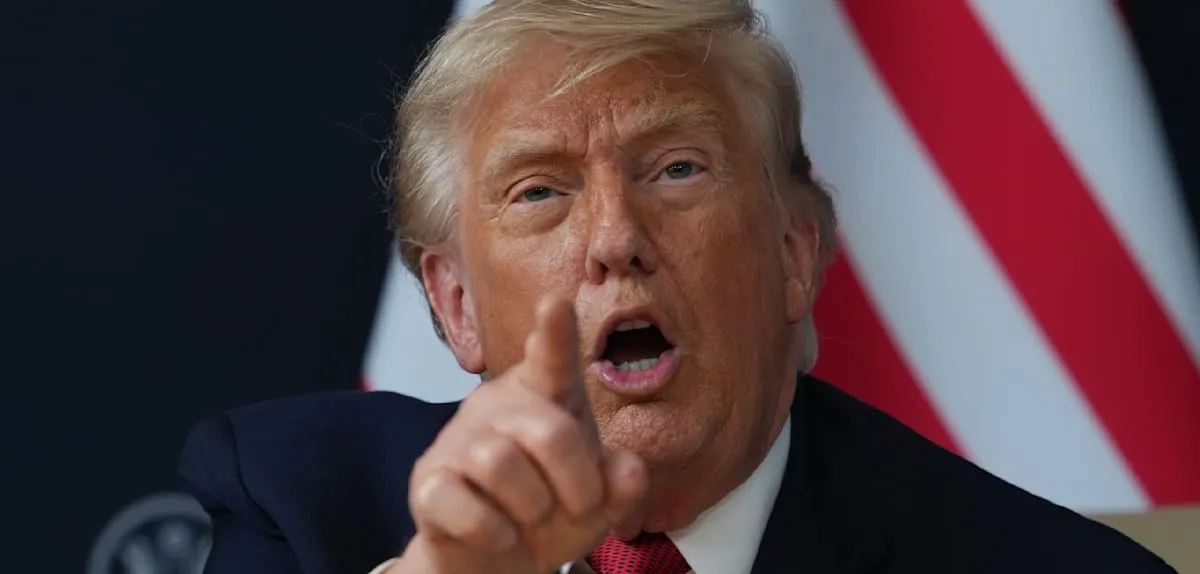
WASHINGTON – United States President Donald Trump has once again ignited a wave of political controversy by proposing the radical idea of renaming the state of New Mexico to 'New America.' This audacious suggestion immediately met with fierce backlash from New Mexico Governor Michelle Lujan Grisham, who unequivocally rejected any intervention in her state's historical identity and sovereignty.
The concept emerged amidst President Trump's ambitious political agenda, signaling a broader vision for restructuring national identity. Sources close to the White House indicated that this name change is part of a grand effort to 'revitalize' America's image, although implementation details remain shrouded in mystery.
Governor Michelle Lujan Grisham, during a press conference in Santa Fe, launched a scathing critique of the proposal. New Mexico possesses a rich history, culture, and identity, forged over centuries. We are not a mere billboard to be rebranded so easily by federal decree, Grisham asserted, making her displeasure evident.
Grisham further elaborated that such an initiative not only disregards the unique heritage of New Mexicans, including its deeply rooted Hispanic and Native American communities, but also risks setting a dangerous precedent for the autonomy of other states. This condemnation reflects a principled battle between federal supremacy and states' constitutional rights.
The discourse surrounding this renaming raises serious questions regarding the legal and constitutional basis that the Trump administration might employ. The U.S. Constitution grants states broad rights in determining their internal affairs, including their names and symbols of identity. Changes to a state's name typically require approval from both the state legislature and the federal Congress.
Some political observers view this maneuver as President Trump's strategy to test the boundaries of executive power and spark a national conversation about American identity. This is not the first time President Trump has stirred public debate with his unconventional statements, as has occurred with other issues involving him.
Beyond New Mexico, President Trump's remarks also flirted with the possibility of 'taking over' or changing the status of other states in the future. This hint has sparked concern among governors and state legislators nationwide, who perceive it as a threat to the principle of federalism, a pillar of American democracy.
Professor of Constitutional Law at Georgetown University, Dr. Eleanor Vance, commented, Such an action, if forcibly implemented, would shake the very foundations of our federalism. Renaming a state is not a unilateral decision a president can make.
Public reaction to the proposal has been varied. Some support President Trump's grand vision, seeing it as a bold step to unify the nation under a new identity. However, the majority, especially within New Mexico, vehemently denounce it as an arrogant display of power that disregards local heritage.
Federal Senator from New Mexico, Martin Heinrich, also voiced his opposition. We will fight any attempt to strip us of our identity. New Mexico is not just a name; it is a reflection of the soul and spirit of its people, he declared, emphasizing solidarity with Governor Grisham.
The long-term implications of this debate could extend beyond the mere issue of a name. It could become a starting point for deeper discussions about the relationship between the federal government and state governments, as well as a reinterpretation of constitutional clauses governing the sovereignty of each entity.
This controversy further adds to the long list of contentious policies and statements that characterize President Donald Trump's leadership, such as previous debates about his efforts in international peace, which often spark speculation. Trump Set to Call Putin and Zelensky: Is a Path to Peace Open? is one example of how he seeks to lead debates.
Editorial Insight: The notion of renaming New Mexico to 'New America' by President Donald Trump is more than a mere nomenclatural change; it is a symbolic assault on state sovereignty and historical identity. The robust response from Governor Grisham and legislators underscores that this issue touches the core of the American federal system. Such a proposition, while perhaps intended for 'unification,' instead risks carving new divisions and deepening political polarization, all while testing the elasticity of the constitution during a risk-taking leadership era.