 Stefani Rindus
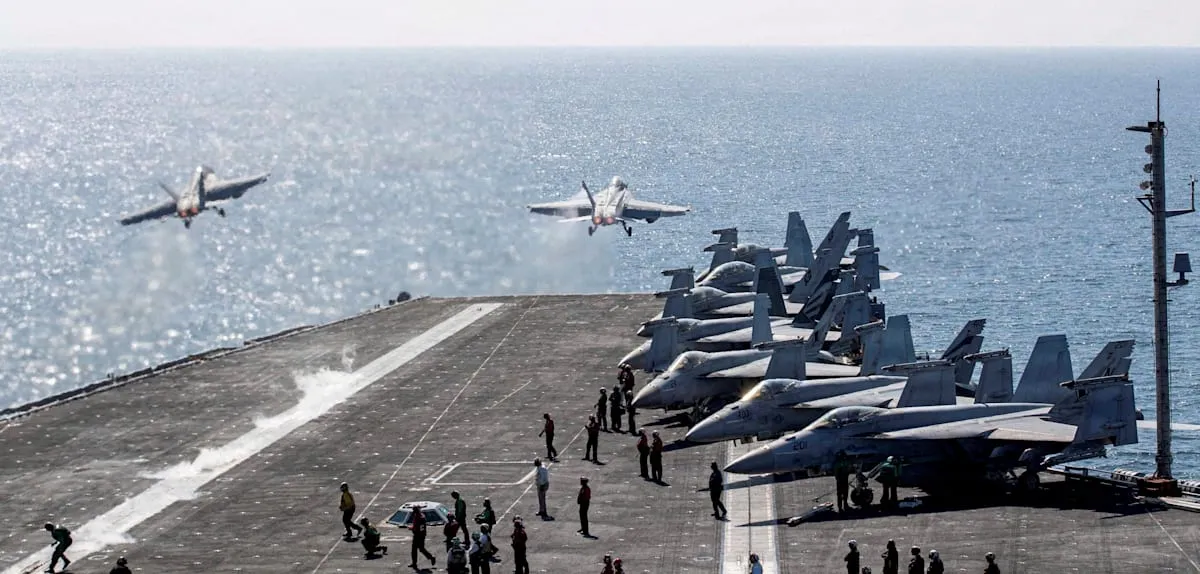
WASHINGTON — The United States has launched air strikes on Iran, concurrently with President Donald Trump's sharp verbal condemnations of Tehran. However, behind this barrage of fiery rhetoric, political observers believe there is a deep strategic calculation: an effort to push negotiations towards a crucial agreement that is also urgently needed by the Mullah regime.
President Trump, who resumed office in 2025, consistently employs a blunt communication style. He labeled the Iranian regime as "liars, cheaters, and scum," a diction aimed at building maximum pressure on the global stage. This is not merely an emotional outburst, but a powerful instrument in coercive diplomacy.
The recent US air strikes on Iran underscore Washington's seriousness in responding to regional dynamics. Although specific details of the attacks have not been fully disclosed, such military actions often serve as a prelude or reinforcement for larger diplomatic messages.
International political analysts, such as Dr. Sarah Khan of the Council on Foreign Relations, argue that "Trump's harsh rhetoric is an inseparable part of a complex 'good cop, bad cop' strategy." She added, "Simultaneous verbal and military assaults create strong disincentives for Iran to procrastinate at the negotiation table."
In contrast to the provocative public tone, behind the scenes, US negotiating teams are reportedly actively communicating with Iranian representatives. Anonymous sources from the US Department of State indicate significant progress in discussions involving nuclear programs and regional stability.
The Mullah regime in Tehran itself is under immense economic and political pressure. Continuous international sanctions have crippled the country's vital sectors, making them desperately in need of sanctions relief that can only be achieved through a comprehensive agreement. This deal could offer a path to economic revitalization.
For Trump, achieving a peace agreement with Iran would be a monumental foreign policy accomplishment, cementing his legacy as a shrewd negotiator ahead of potential future political campaigns. This strategy is designed to force Iran into a more vulnerable position, giving the US an advantage in negotiations.
This pattern is not new in Trump's diplomacy. Previously, in negotiations with North Korea or China, Trump often used bluster and threats as initial tactics to create room for compromises beneficial to the United States. Trump also once shook NATO with similar warnings, demonstrating consistency in his negotiation style.
Potential agreements between the US and Iran could include restrictions on Iran's uranium enrichment program, stricter international inspections, and an exchange for partial lifting of economic sanctions. These are the main focal points of the intensive ongoing negotiations.
Despite optimism, significant challenges remain. Trust between the two parties is very low, and every step forward is constantly shadowed by uncertainty. Domestic political polarization in both countries could also be a serious impediment.
The US-Iran relationship continues to be one of the most complex geopolitical knots in the Middle East. The subsequent decisions and actions of both parties will largely determine regional stability and the direction of global foreign policy in the coming years.