 Robert Andrison
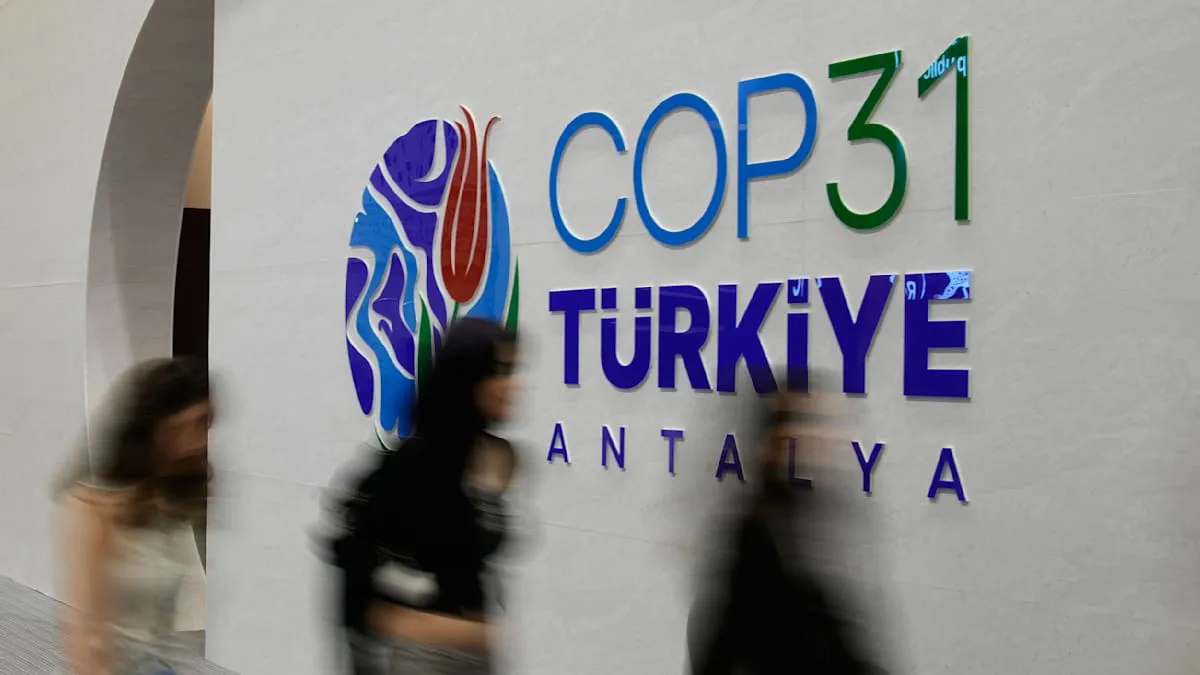
ANKARA – The World Climate Conference in Turkey is now in its final phase, with delegates from various nations fiercely negotiating the concluding declaration. At the core of these intense debates is a strong demand to explicitly include the phasing out of fossil fuels in the final document, an issue with the potential to determine the direction of global climate policy in 2026 and beyond.
Axel Bojanowski, Chief Science Reporter for the prominent media outlet WELT, highlighted the complexity of the situation. The main point of contention is that the phasing out of fossil fuels absolutely must be included in the final document, he stated, emphasizing the crucial nature of this issue for the planet's future.
These negotiations in Turkey are taking place amidst increasing global pressure to address the climate crisis. Scientists and activists are urging more ambitious actions, while developing countries struggle to balance economic growth needs with environmental commitments.
The transition to clean energy poses a significant challenge, especially for nations heavily reliant on fossil fuel revenues. They fear that too rapid a withdrawal could cripple national economies and disrupt social stability.
Nevertheless, strong arguments also contend that delaying the transition will only exacerbate the impacts of climate change, which in turn will lead to far greater economic losses in the future. The balance between climate urgency and economic realities forms the core of the debate.
Bojanowski added that the success of this conference heavily depends on the parties' ability to find meaningful compromises. Without a firm commitment on fossil fuels, the credibility of the final declaration could be questioned, and global climate mitigation efforts would be hampered.
This situation reflects the geopolitical dynamics of global energy. For instance, countries like Saudi Arabia and Japan continue to strengthen their energy security amid global conflicts, demonstrating the complexity of diversifying energy resources internationally.
The concluding declaration produced by this conference will not only politically bind the parties but also send a strong signal to global markets and investors regarding the direction of investments in the energy sector. Decisions about fossil fuels will have long-term implications.
Some nations insist that renewable energy should be the sole focus, while others argue that natural gas, as a relatively cleaner fossil fuel, could serve as a transition bridge. These differing views add a layer of complexity to achieving consensus.
Observers hope that despite the existing difficulties, this Turkey Climate Conference can lead to concrete steps towards global decarbonization. However, hopes for 'major breakthroughs' appear to be dimming as negotiations progress.
Editorial Insight:
The Turkey Climate Conference 2026 once again exposes the chasm between environmental ambitions and global economic realities. The pressure to eliminate fossil fuels is a logical step for planetary sustainability. However, without a fair roadmap and adequate financial support for developing nations, this transition will remain a source of conflict. Real success lies not in declarations, but in concrete implementation that considers all stakeholders, while pushing for renewable energy innovation as the primary solution.