 Robert Andrison
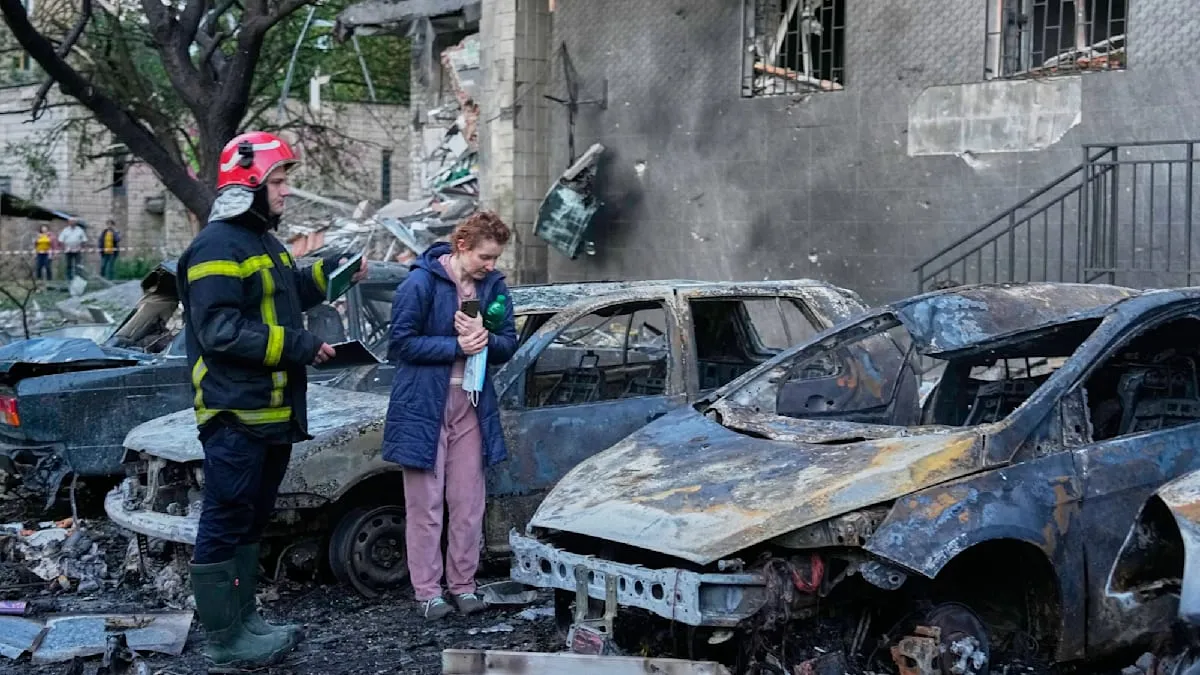
KYIV — Missile and artillery attacks by the Russian Federation have once again rocked major Ukrainian cities, Kyiv and Kherson, killing and injuring numerous innocent civilians. Despite facing constant daily threats, the people in these conflict zones exhibit remarkable resilience, holding fast to their daily routines as a form of silent resistance.
This harsh reality is profoundly revealed by Jan Jessen, a veteran war reporter who has covered the conflict in Ukraine for years. Jessen, in his latest report, highlights how Ukrainian citizens adapt to the ongoing war conditions, creating a new normalcy amidst the sounds of bombs and warning sirens.
Jessen's observations follow an intensification of attacks. Intelligence reports indicate that civilian infrastructure is a primary target, resulting in severe damage to residential areas, public facilities, and vital utility networks. This is not an isolated incident but a continuous pattern aimed at eroding public morale.
"The resilience of these people is truly remarkable," Jessen stated. "They do not succumb to fear. Children still go to school, markets remain open, and social life continues, albeit with the ever-present shadow of war."
The psychological pressure of living under constant threat is undoubtedly immense. However, the response of the Ukrainian people demonstrates a strong self-preservation mechanism, where maintaining routines is considered an essential non-military act of resistance. This prevents the social fabric from unraveling.
In the capital, Kyiv, the sound of air raid sirens has become an inseparable part of the city's acoustic landscape. This reminds us of the worst wave of rocket attacks that hit Kyiv previously. Nevertheless, residents rush to designated shelters, then resume their activities once the threat subsides. Cafes and shops reopen, and public transport continues to operate.
Meanwhile, in Kherson, a city frequently targeted by direct artillery fire due to its strategic location, residents show similar courage. They quickly repair damage, help each other, and refuse to abandon their homes despite often perilous situations.
Community solidarity plays a crucial role. Local volunteer networks actively provide humanitarian aid, repair damaged homes, and offer moral support to the most vulnerable. This spirit of mutual assistance forms a strong foundation in facing aggression.
The Ukrainian government, supported by international aid, continues to strive to restore basic services and strengthen civil defense. Nevertheless, the greatest burden remains on individuals who must live in extreme uncertainty.
The stories of resilience in Kyiv and Kherson are a reminder of the extraordinary strength of the human spirit in the face of tyranny. This is a narrative of heroic daily struggle, reflecting a nation's determination to survive and preserve its identity in the face of destruction.