 Chris Robert
WASHINGTON – The shadow of a debt crisis that has loomed over the United States (US) since the administration of President Joe Biden and the political maneuvers of former House Speaker Kevin McCarthy has now materialized into a tangible threat for millions of citizens under President Donald Trump's leadership in 2026. The failure to navigate out of this long-standing 'debt trap' has the potential to trigger massive economic consequences, shaking the very foundations of the superpower's financial stability.
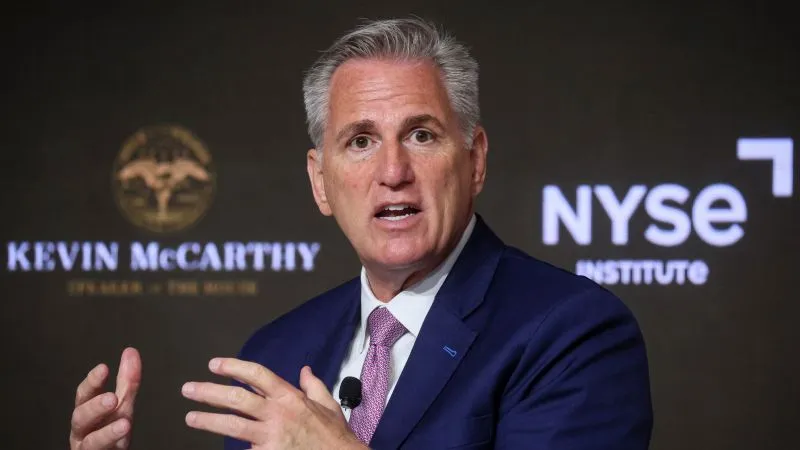
This crucial problem originated from a series of fiscal decisions made in prior periods, creating an escalating burden of public debt. Kevin McCarthy, during his tenure as Speaker of the House, was challenged to navigate a complex budgetary deadlock. Analysts had warned that a failure to reach a sustainable agreement would ensnare the US in a default crisis, or at the very least, trigger damaging market volatility.
Today, this political legacy poses a serious challenge for President Trump's newly re-elected administration. The economic policies currently being rolled out face significant obstacles due to the accumulated debt. Millions of American families are at risk of experiencing direct impacts, ranging from rising interest rates, uncontrolled inflation, to potential cuts in essential public services.
A senior economist from a prominent research institution in Washington, who requested anonymity, stated, This debt trap is not merely a figure on a balance sheet. It is a ticking time bomb affecting purchasing power, investment, and global confidence in the US dollar. A swift and comprehensive resolution is absolutely necessary to prevent the worst-case scenario.
The Trump administration, under pressure to fulfill its campaign promises, now faces a dilemma: whether to continue aggressive government spending for economic stimulation or to undertake drastic austerity measures that might be unpopular with constituents. This situation is compounded by domestic political dynamics that remain heated.
Looking back at the 2024 Presidential election contest, the US political landscape had indeed shown seeds of uncertainty. Efforts such as Ron DeSantis attempting to challenge Trump for Republican Party support, and Chris Christie contemplating a White House bid, illustrate the internal party turmoil that also shaped national policy.
The opinion that once circulated among political pundits, suggesting the Republican Party must 'ditch Trump' for a 2024 election victory, ultimately did not materialize. Trump's victory further solidified his position, but he now bears the heavy burden of a complex economic legacy.
Beyond the debt crisis, the United States also faces various internal challenges. The 'fire burning' incidents in Tennessee, referring to social tensions or security issues, add to the complexity of domestic problems. These local conflicts have the potential to divert attention and resources that should be focused on macro-economic recovery.
This economic storm is not merely a theoretical threat. Recent data indicate a slowdown in economic growth and an increase in unemployment figures across several key sectors. Policymakers on Capitol Hill are now faced with an urgent mandate to formulate effective debt management strategies before the crisis's impact spreads and becomes uncontrollable.
President Donald Trump and his economic team are required to demonstrate decisive and innovative leadership. Building bipartisan consensus in Congress is crucial to agree upon profound fiscal reforms, review spending priorities, and seek sustainable national revenue sources without burdening the populace. The economic continuity of the United States depends on the current leadership's ability to navigate this vortex of crisis.
Editorial Insight: The debt crisis in the United States in 2026 highlights how past political decisions have significant long-term repercussions. The Trump administration faces a dual challenge: addressing a complex fiscal legacy while maintaining public and investor confidence. Failure to tackle this issue could not only destabilize the US economy but also potentially trigger a wave of global economic uncertainty.