 Angel Doris
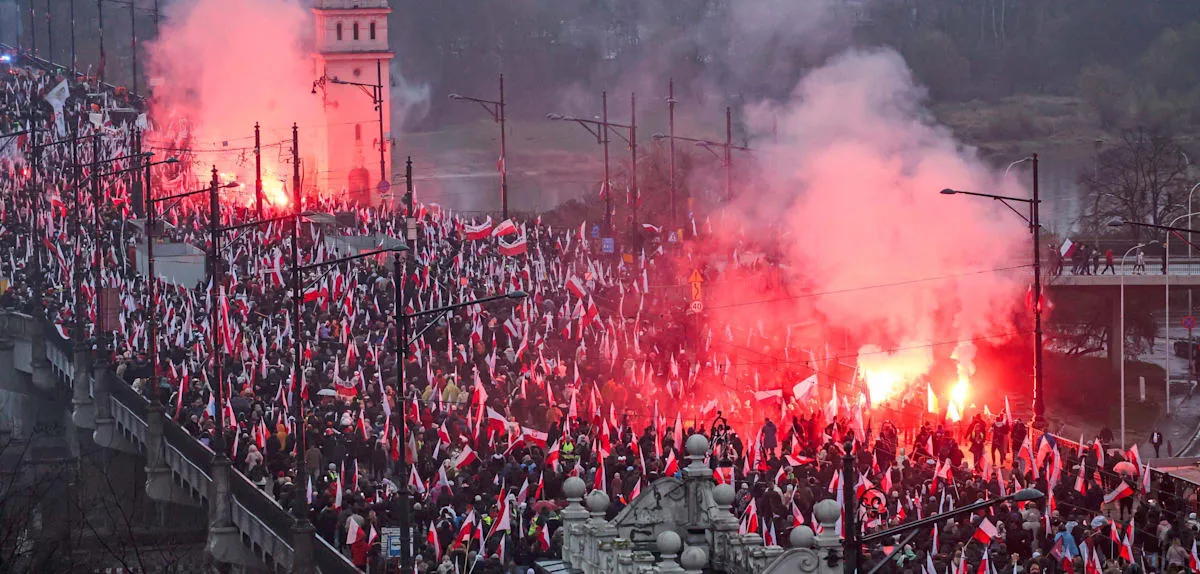
WARSAW – Hundreds of thousands of Poles flooded the capital city, Warsaw, in a grand Independence March, rallying nationalist to extremist right-wing groups in mid-2026. This massive demonstration overtly targeted the government of Prime Minister Donald Tusk, which they perceived as failing to represent the conservative aspirations of the Polish people. The action became a central highlight of Poland's domestic political dynamics.
President Karol Nawrocki, a prominent figure from the Institute of National Remembrance, was surprisingly seen participating in the march. Nawrocki's presence lent a certain legitimacy to the mass movement, simultaneously underscoring support from conservative elements within state structures for the demonstrators' demands.
The Independence March, historically a celebration of Poland's Independence Day on November 11, is now often utilized as a political platform by groups opposing liberal policies. However, the 2026 edition took place outside the traditional date, indicating a shift in focus to a purely political protest.
Participants, mostly waving national flags and anti-government banners, voiced disappointment with the direction of European Union policies and immigration issues, which are strong sentiments among conservatives. They demanded a return to traditional values and greater national sovereignty.
Poland must return to itself, free from foreign interference and policies that weaken the nation's identity, shouted one orator before the massive crowd filling Warsaw's main streets. This sentiment formed the core of every speech delivered.
Political tensions in Poland have indeed escalated since Donald Tusk's return to the prime minister's seat, marking a shift in political alignment from the previous conservative government. Right-wing groups feel marginalized and worry about the erosion of national values under Tusk's leadership.
Similar actions in previous years were even marred by extremist symbols and antisemitic rhetoric, raising concerns about the infiltration of radical groups into the nationalist agenda. (Polandia Geger: Pawai Kemerdekaan Dinodai Simbol Ekstremis dan Buku Antisemitisme) Although early reports this year indicated a more orderly march, the shadow of past controversies still loomed.
Tusk's government has yet to issue an an official statement regarding this massive demonstration. However, it is certain that this event will trigger fierce debate in parliament and the public arena, further widening the political polarization gap in the country.
Some local political analysts suggest that President Nawrocki's participation can be interpreted as a strong warning to the Tusk administration. His presence sends a powerful message that there is significant support outside government circles for the opposition.
This demonstration is not only a test for Poland's political stability but also a reflection of the wave of right-wing populism sweeping across various European nations. Issues of sovereignty, immigration, and national identity continue to fuel such movements.
The crowd gradually dispersed towards evening, leaving Warsaw with traces of banners and echoes of speeches. However, the political impact of this march is predicted to unfold in the coming weeks, with the possibility of new political maneuvers from various parties.
The organizing groups pledged to continue voicing their demands through various constitutional channels, including further demonstrations, if the government fails to respond to these openly expressed aspirations.
Editorial Insight:
The 2026 Independence March in Warsaw is not merely a celebration, but a manifestation of deep political dissatisfaction. The presence of figures such as President Karol Nawrocki transforms the dynamic of this protest from mere public aspiration into an indicator of serious fractures within Poland's political elite. Tensions between the nationalist right-wing and Tusk's liberal government are expected to intensify, potentially triggering political instability and affecting Poland's position within the European Union.