 Chandra Wijayanto
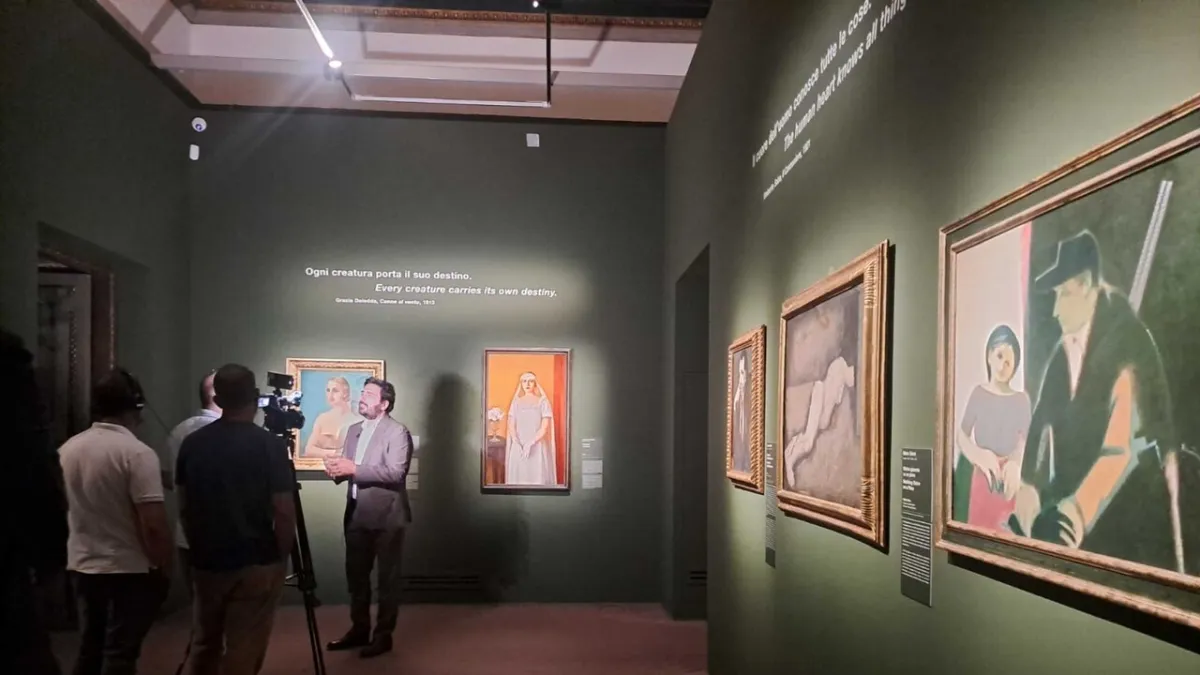
ROME – A wave of artistic appreciation is sweeping through Italy's capital. Palazzo Bonaparte proudly presents the exhibition "Novecento italiano in 50 opere," a profound exploration of the dynamics of Italian art throughout the 20th century. This grand exhibition, now open to the public, features fifty selected masterpieces from the Generali collection, promising an unforgettable visual experience with a special surprise: the presence of a work by the legendary artist Gustav Klimt.
The exhibition, accessible free of charge, has become a major highlight on the European cultural scene in 2026. Generali's initiative to widely open its collection provides a rare opportunity for the public and tourists to immerse themselves in Italy's rich artistic heritage, while also gaining a closer understanding of the evolution of styles and thoughts of visionary artists.
The "Novecento italiano" collection presents a broad spectrum of art movements that defined the era, ranging from revolutionary Futurism, mysterious Metaphysics, to touching post-war realism. Each work has been carefully chosen to reflect the social, political, and cultural upheavals that shaped 20th-century Italy.
Visitors will embark on a captivating chronological journey, starting with the pioneers of Italian modernism, continuing through the war and reconstruction periods, up to contemporary artistic expressions towards the new millennium. The spatial arrangement at Palazzo Bonaparte is meticulously designed to allow each artwork to tell its story to the fullest.
The inclusion of a painting by Gustav Klimt, an Austrian Symbolist master, serves as a surprising element that has captured the attention of art critics and the wider public. Although not directly part of "Novecento italiano," its placement is presumably to create an inter-European artistic dialogue, demonstrating how cross-cultural influences shaped the modern art landscape.
An exhibition curator, Dr. Sofia Bianchi, stated, "We aim to comprehensively showcase the richness and complexity of 20th-century Italian art. The Generali collection provides an extraordinary foundation for this narrative, and the 'Klimt surprise' acts as a bridge to understand a broader European context. This is not just an exhibition; it is a visual dialogue about identity and innovation."
The free access initiative reaffirms the organizers' commitment to democratize art, making it easily accessible to all segments of society. This step is commendable, especially amidst global debates on cultural accessibility and the role of institutions in modern society. Much like the ongoing struggle for women's rights in Italy, access to art is also a fundamental right. Further discussion on rights issues in Italy can be found at 80 Years of the Republic: Women's Rights in Italy Still an Endless Struggle.
This exhibition is expected to attract not only art enthusiasts but also academics, students, and anyone interested in Italian history and culture. "Novecento italiano" offers a golden opportunity to witness works rarely exhibited together, providing new insights into a significant period in global art history.
Palazzo Bonaparte, with its majestic classical architecture, provides a perfect backdrop for such a grand cultural event. This historic building itself has witnessed various important events in Rome, adding a historical dimension to the exhibition experience.
Before concluding their visit, every visitor is invited to reflect on the relevance of 20th-century art to contemporary challenges and aspirations. The exhibited works not only speak of the past but also pose eternal questions about identity, beauty, and humanity's place in a constantly changing world.
Do not miss this golden opportunity. The "Novecento italiano in 50 opere" exhibition at Palazzo Bonaparte runs until the end of 2026, making it a must-visit destination for art lovers traveling to Rome. Visitors can come directly without needing ticket reservations.