 Edward DP Situmorang
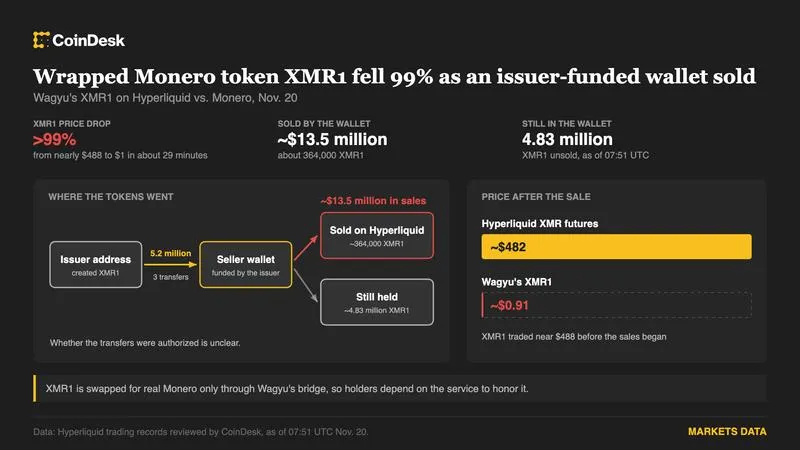
JAKARTA – The global digital asset market is once again rocked by a dramatic event. The Wrapped Monero (XMR1) token by Wagyu plummeted nearly 99% in a short period, following a massive $13.5 million sell-off by a digital wallet directly linked to its issuer. This shocking incident triggered a wave of concern and uncertainty among investors and market analysts.
This event, which occurred in mid-2026, is not merely a common price fluctuation. The extreme value depreciation stemmed from a large-scale liquidation of XMR1 held in a wallet believed to be affiliated with the token's issuer. Market participants closely monitored these transactions, noting their direct impact on confidence in wrapped cryptocurrency assets.
The XMR1 token, created by Wagyu, was designed as a representation of Monero on another blockchain, enabling wider interoperability. However, it is crucial to note that XMR1 is a separate entity from Monero (XMR) itself. Monero is a privacy-focused cryptocurrency with an independent blockchain. This fundamental distinction became a key focus in analyzing the implications of XMR1's plunge.
The XMR1 plunge also affected the derivatives market, although it did not directly shake the Monero (XMR) futures market on platforms like Hyperliquid. Analysts highlighted that this incident serves as an important reminder of the inherent risks in the digital asset ecosystem, especially those related to transparency and potential manipulation by issuers.
This is a valuable lesson on the importance of due diligence before investing in any cryptocurrency asset, particularly tokens with close ties to a single entity, stated a digital economy expert from the University of Indonesia. He added that similar incidents could damage the reputation of the entire sector, especially amid regulators' efforts to create a more stable environment.
Investors are now demanding comprehensive explanations from Wagyu regarding the reasons behind the massive sell-off and the mitigation steps that will be taken. A slow or less transparent response could exacerbate the crisis of confidence and trigger an exodus of funds from similar projects.
This event contrasts with the recent positive sentiment sweeping the broader crypto market, as seen in the news Wall Street Reverses Course! Billions of Dollars Flow into Bitcoin. However, the XMR1 incident shows that pockets of extreme volatility and potential structural risks still exist within the evolving digital asset landscape.
Key points exacerbating this situation include:
- Massive sell-off worth $13.5 million by an issuer's wallet.
- Nearly 99% depreciation of the XMR1 token.
- Fundamental difference between XMR1 (Wagyu) and Monero (XMR) often misunderstood.
- Lack of transparency from the issuer, Wagyu.
Global financial authorities, including those monitoring the crypto market, are expected to tighten oversight of digital asset issuance and liquidation mechanisms. The primary goal is to protect investors from potentially harmful schemes and ensure market integrity.
Stricter regulations may encourage token developers to adopt more decentralized and transparent governance structures, minimizing the risk of power concentration in a single entity. This is crucial for maintaining the credibility and sustainability of innovation in the decentralized finance (DeFi) sector.
Market analysts speculate that the domino effect of the XMR1 incident could impact other 'wrapped token' projects if clarity and security assurances are not provided. This uncertainty could hinder broader adoption of blockchain technology.
Editorial Insight: The plummeting of the XMR1 token is a severe blow to the digital asset ecosystem, particularly the 'wrapped tokens' segment that often bridges blockchains. This is not merely about financial losses but also an erosion of trust that will take a long time to rebuild. This event underscores the urgency of adaptive and proactive regulation, as well as deeper investor education on the specific risks associated with various types of crypto assets. Operational transparency from issuers is a fundamental key to preventing similar scandals in the future.