 Angel Doris
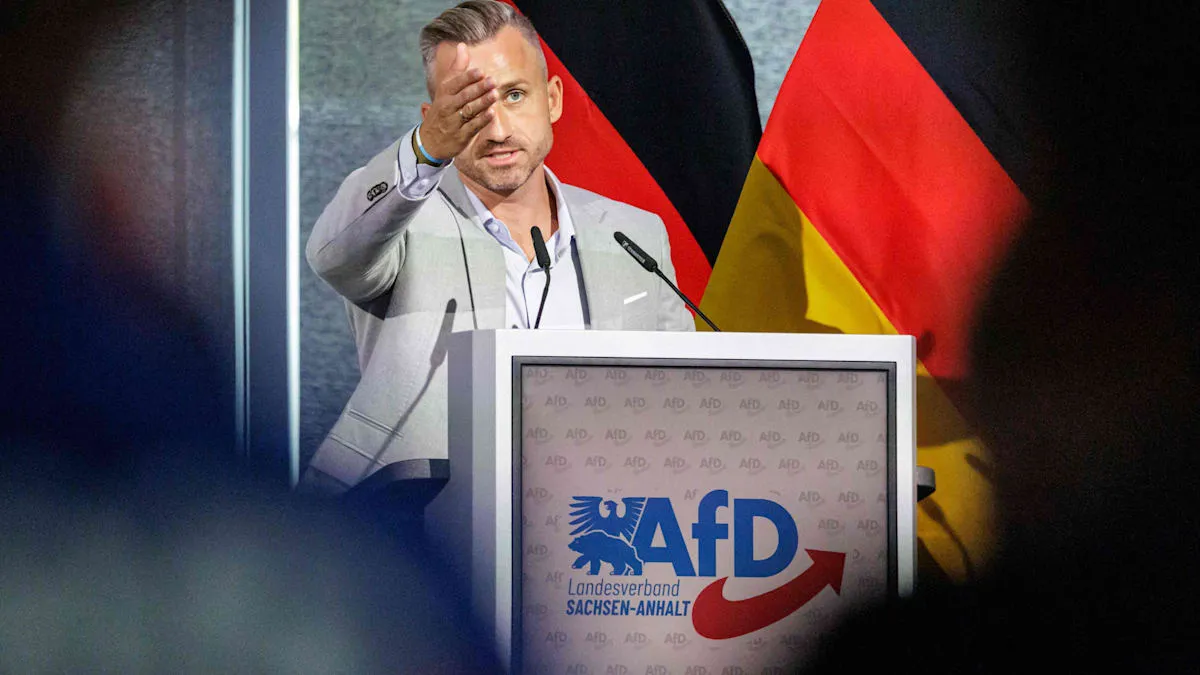
Sachsen-Anhalt — The Alternative for Germany (AfD) party's Sachsen-Anhalt branch has unveiled an ambitious 100-day program, sparking heated discussions across the German political landscape in early 2026. The program centers on three main pillars: stricter migration policies, educational system reforms, and media oversight. Prominent political scientist, Werner Patzelt, highlighted that many aspects of the program legally fall within the jurisdiction of a state government, signaling significant potential for implementation.
This move by AfD Sachsen-Anhalt comes amidst a growing wave of populism across Germany, as evidenced by increasing support for similarly aligned parties. The 100-day agenda is designed to deliver immediate tangible impacts should the AfD gain control of the state government, or at least substantially influence policy direction.
The focus on migration policy stands as a central point. The AfD consistently advocates for accelerated deportation processes and stricter immigration limits. In this program, they promise concrete measures to reduce the number of asylum seekers and expedite the repatriation of foreign nationals who do not meet residency requirements. This issue has long been one of the AfD's primary appeals to constituents concerned about the demographic and social impacts of immigration.
In the education sector, the party proposes curriculum reforms and an emphasis on German cultural values. The 100-day program includes a review of teaching materials and an increased focus on vocational education. The goal is to create an education system more responsive to local labor market needs and to strengthen national identity.
Furthermore, the program also addresses media aspects. The AfD advocates for what it calls “fairness and objectivity” in news reporting, indicating potential tighter scrutiny over public broadcasters. This aligns with the party's rhetoric, which frequently criticizes mainstream media as biased or lacking independence.
Werner Patzelt, a political expert with an established reputation, offered a pragmatic view on the program. \"What they announce, for the most part, lies within the area of responsibility of a state government,\" Patzelt stated, emphasizing that many points of this program are not mere rhetoric from a legal standpoint. This statement lends technical legitimacy to the AfD's proposed program, irrespective of its ideological debates.
Nevertheless, the implementation of such a program will certainly not be smooth. Various civil society groups, labor unions, and other political parties are highly likely to launch criticism and opposition. Harsher migration policies, in particular, could trigger demonstrations and condemnation from human rights organizations.
The year 2026 marks a crucial period for Germany's political landscape. With upcoming regional elections in several states, the AfD Sachsen-Anhalt's 100-day program could serve as an important barometer for assessing the extent to which populist forces can alter policies and shift traditional political paradigms.
The challenge for the AfD is to translate these provocative promises into effective and widely accepted policies, at least in Sachsen-Anhalt. The success or failure of this initial program will be critical in determining the party's momentum in gaining broader national support, an ambition long held by the AfD.
This program is also relevant in the broader discussion about Germany's political future. As touched upon in the related article Wave of Populism: Will AfD Dominate Germany 2026?, the increasing influence of the AfD raises serious questions about the stability and direction of democracy in the country.
Political discourse in Germany is currently characterized by public anxiety over economic, social, and security issues. The AfD, with its populist program, seeks to capitalize on these sentiments to attract votes. The big question is whether this 100-day program will serve as a foundation for their political dominance, or if it will boomerang, revealing the limitations of populist promises.
The federal government and mainstream parties will certainly observe every step taken by the AfD in Sachsen-Anhalt. The AfD's boldness in proposing a program focused on such sensitive issues demonstrates their growing confidence. This also demands a strategic response from other parties to offer credible and effective alternatives.
The people of Sachsen-Anhalt, and Germany as a whole, now await the implementation of these promises. Will the AfD's 100-day program be able to meet the expectations of its constituents, or will it further deepen political polarization in 2026? The answers will unfold over time, but one thing is certain: the debate about the direction of state policy and the role of populism has begun.