 Robert Andrison
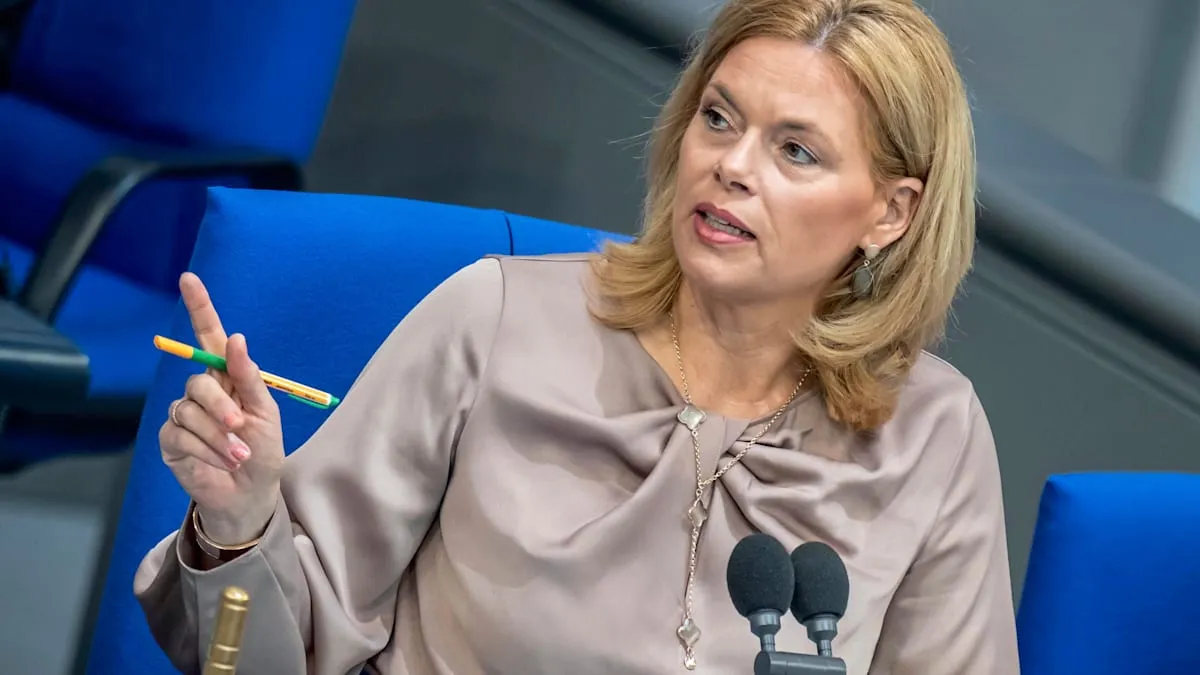
Berlin — German Bundestag President, Julia Klöckner, recently launched a strong critique against the social media conduct of several members of parliament. Klöckner explicitly warned that the legislative institution is not an “influencer agency,” a statement that underscores her serious concerns about the scandalization of politics.
These comments come amid a growing trend of politicians using digital platforms for personal branding, often at the expense of the dignity and seriousness of parliamentary debate. Julia Klöckner, who leads the German parliament in 2026, called for members of parliament to refocus their energy on the substance of legislation rather than creating viral content.
“The Bundestag plenary is an arena for serious debate, where fundamental decisions for this country are made. It is not a stage for seeking instant popularity or sensation on social media,” Klöckner asserted in her statement. “When every gesture, every expression, or every comment is designed for online consumption, the essence of legislative work can be distorted.”
Klöckner’s statement highlights a modern dilemma faced by many parliaments worldwide: how to balance the need for transparent and accessible communication with maintaining the solemnity and credibility of the institution. Inappropriate social media use, according to her, potentially damages the parliament’s image in the public eye.
The phenomenon of “scandalization of politics” as termed by Klöckner refers to the tendency to exaggerate minor incidents or disagreements into overblown drama, solely to attract attention on digital platforms. This can erode public trust and exacerbate polarization within society.
Today, platforms like Twitter, TikTok, or Instagram often become less productive verbal battlegrounds, where nuance is frequently lost and arguments are simplified into provocative tweets. Members of parliament are expected to set an example in constructive discussion, not to further muddy the digital waters.
While social media offers invaluable opportunities for citizen engagement and transparency, Klöckner emphasized the importance of ethical boundaries. “There is a fine line between effective communication and attempts to become a political ‘influencer.’ This line must not be crossed for short-term gains,” she added.
This critique aligns with ongoing efforts to maintain ethical standards and professionalism in the Bundestag. The German parliament has a long history of upholding traditions of respectful debate, and adapting to the digital era requires a review of behavioral norms.
Several political observers support Klöckner’s view, noting that an excessive focus on social media image can distract from the substantive work that public representatives must perform. Crucial issues such as Germany’s austerity package or the scandal of millions of euros in misused welfare funds demand full attention, not just entertainment content.
This warning from the Bundestag President is expected to prompt reflection among members of parliament regarding their responsibilities as public representatives. It is a call to place the nation’s interests and the institution’s integrity above the desire to become a digital sensation, ensuring that parliament remains a respected bastion of democracy.