 Debby Wijaya
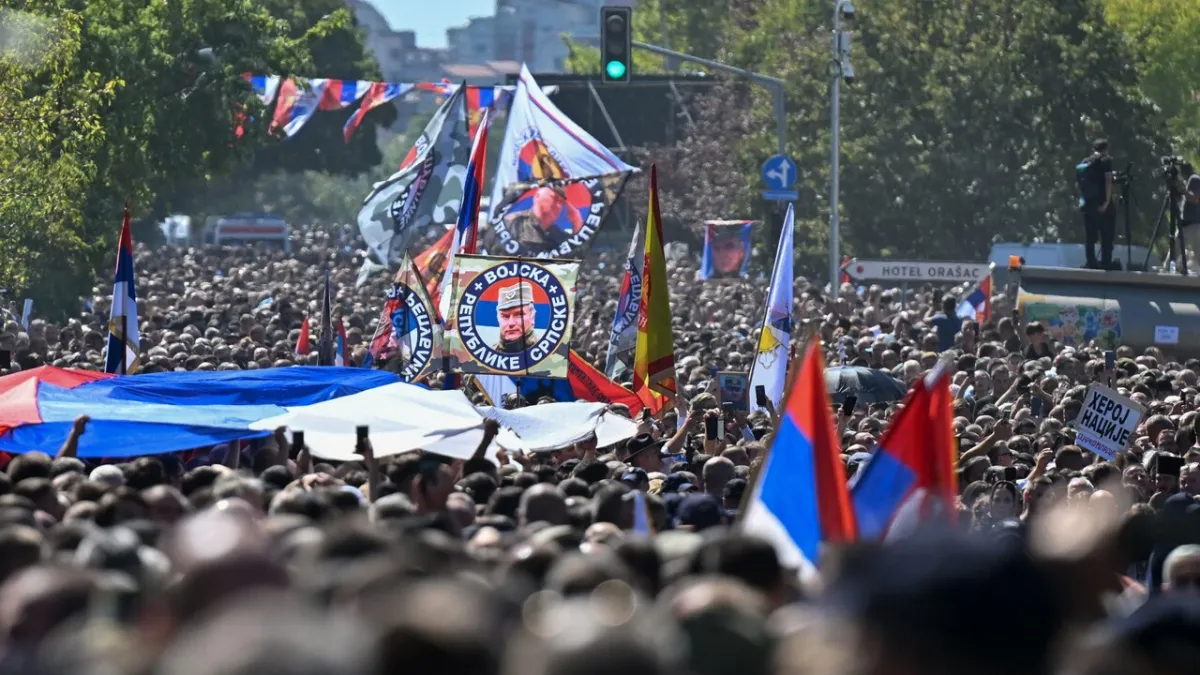
BELGRADE – Hundreds of supporters gathered outside a church in Belgrade, Serbia, in 2026, for the funeral of the late Ratko Mladic. They openly displayed allegiance to the figure known as the 'Butcher of the Balkans', despite his conviction for genocide and crimes against humanity. This scene drew global attention, highlighting the deep polarization of views surrounding the dark history of the Yugoslav conflict.
The mourners present were seen wearing T-shirts adorned with Mladic's image, waving Serbian flags, and holding banners with praises. The atmosphere around the church was charged with nationalist sentiment, seemingly disregarding the international legal decision that sentenced him to life imprisonment.
Ratko Mladic, a former Bosnian Serb military commander, was a central figure in the Bosnian War of the 1990s. The International Criminal Tribunal for the former Yugoslavia (ICTY) in The Hague found Mladic guilty of genocide in Srebrenica, persecution, murder, deportation, and other crimes against humanity.
The verdict was upheld by the International Residual Mechanism for Criminal Tribunals (IRMCT) in 2021, affirming his role in the siege of Sarajevo, which killed thousands of civilians, and the massacre of over 8,000 Bosnian Muslim men and boys in Srebrenica in 1995. This decision is widely considered a significant milestone in international justice.
However, for some Serbs, particularly those with extreme nationalist views, Mladic remains a patriot who defended his people. Such public displays often spark intense debates about how a nation confronts a past marked by conflict and violence, and how collective memory is shaped.
Public demonstrations of support like this are not uncommon in Serbia and the surrounding regions. The complex history of the Balkans frequently brings forth controversial figures who are considered war criminals by one group, yet national heroes by another. This situation indicates wounds that have not fully healed in the region.
The presence of the crowd glorifying Mladic also has the potential to trigger diplomatic and political tensions in the region. Neighboring countries that were victims of wartime atrocities, as well as the international community, often strongly condemn any form of glorification of war criminals.
Nonetheless, Serbian authorities must balance freedom of expression with maintaining public order. Managing the situation around the funeral requires extra caution to avoid exacerbating an already sensitive atmosphere.
The scenes in Belgrade underscore the ongoing challenges in the post-conflict reconciliation process in the Balkans. Efforts to build lasting peace and justice are often hampered by differing interpretations of history and resistance to acknowledging past atrocities.
Mladic's case serves as a stark reminder that collective memory is often fragmented, separating views between victims and perpetrators, and revealing the difficulty in achieving national consensus regarding traumatic history. This event will continue to be a topic of discussion in the context of international law and criminality as well as post-conflict studies.
Editorial Insight: The funeral of Ratko Mladic, marked by a mass display of support, is more than just a final rite; it is a powerful political statement. It reflects the persistence of nationalist narratives that refuse to acknowledge international war crimes convictions, while also highlighting the failure or difficulty of Balkan societies to fully reconcile with a wounded past. Such glorification risks deepening divisions and hindering long-term efforts toward transitional justice and peace in the region. The international community must continue to advocate for accountability and respect for victims of war crimes.