 Dorry Archiles
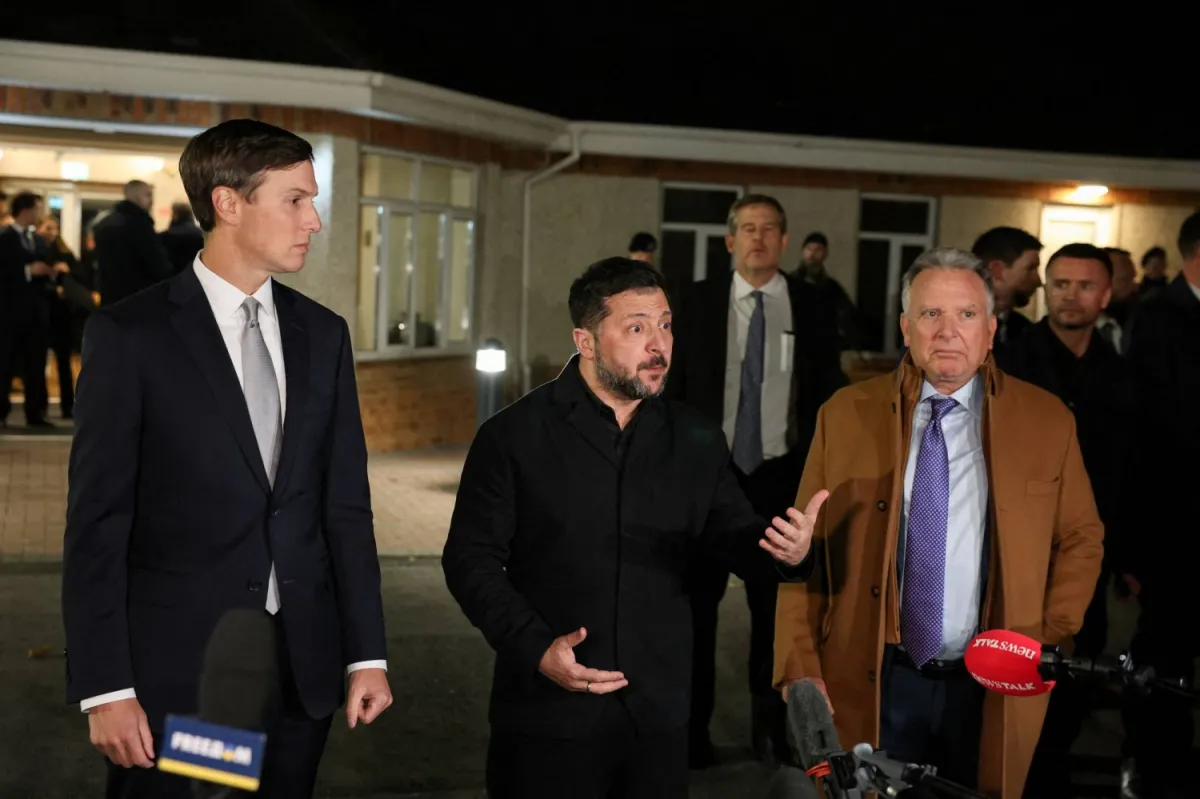
WASHINGTON – The United States has surprisingly floated a controversial idea in recent strategic talks, explicitly linking Ukraine's potential North Atlantic Treaty Organization (NATO) membership with the ceding of its Donbas region to Russia. This bold proposal, marking the first instance where territorial concessions were directly tied to accession to the Western military alliance, immediately ignited intense diplomatic debate on the international stage in 2026.
The idea, circulating among senior US officials, signals a significant shift in post-conflict global strategy. Until now, the issue of Ukraine's territorial integrity has been a major stumbling block in all conflict resolution efforts and discussions regarding Kyiv's path to Euro-Atlantic integration.
Diplomatic sources close to the negotiations reveal that the proposal was put forward as an attempt to create a 'fast track' for Ukraine into NATO, a security guarantee long desired by Kyiv. However, this offer comes with a very high price: recognition of Russia's territorial claims in Donbas.
This move would undoubtedly create an enormous dilemma for Ukraine's leadership. Ceding the Donbas region, which is an industrial heartland and a significant ethnic Russian base, would represent a massive political and symbolic sacrifice. The government in Kyiv faces a difficult choice between losing a portion of its territory or gaining the collective protection of NATO's Article 5.
On the other hand, this proposal also raises profound questions about the principles of national sovereignty and territorial integrity that form the basis of international law. How will the international community view such a precedent, and what will be its impact on future conflicts?
Geopolitical observers note that this proposal, if actually realized, could be a catalyst for fundamental changes in the political map of Eastern Europe. It is not only about Ukraine but also about how the Western alliance confronts challenges of aggression and territorial claims by major powers.
US President Donald Trump and his advisors are reportedly seeing this as a pragmatic step to de-escalate long-term tensions and secure European borders, albeit with painful compromises. This approach indicates an effort to redefine the boundaries of collective security.
Some NATO member states, particularly in Eastern Europe, have reportedly expressed serious concerns. They worry that such a move could set a dangerous precedent encouraging aggressor states to claim other territories with the hope of similar concessions. Concerns about the alliance's unity breaking down are a primary focus.
Meanwhile, Russia is expected to welcome this idea as an acknowledgment of its claims to Donbas, while simultaneously strengthening its bargaining position at the negotiation table. Moscow's reaction will be crucial in determining the subsequent dynamics of Washington's bold proposal.
This debate reflects the urgency of finding sustainable peace solutions, consistent with Pope Leo XIV's consistent assertion that violence is not the way, and global conflicts threaten world stability and resources. Read more about Pope Leo XIV's views at Pope Leo XIV Shakes the World: Violence Not the Way, Migration and Resources Threatened!
Editorial Insight: The US idea to trade Donbas for NATO membership is a high-stakes diplomatic gamble. While offering a potential path to security for Ukraine, it simultaneously tests the fundamental principles of international law and territorial integrity. The audacity of this proposal will determine not only Ukraine's future but also the shape of Europe's security architecture in the coming decades. Reactions from Kyiv, Moscow, and other NATO members will be crucial indicators of how far such a compromise is acceptable in the pursuit of stable peace.