 Debby Wijaya
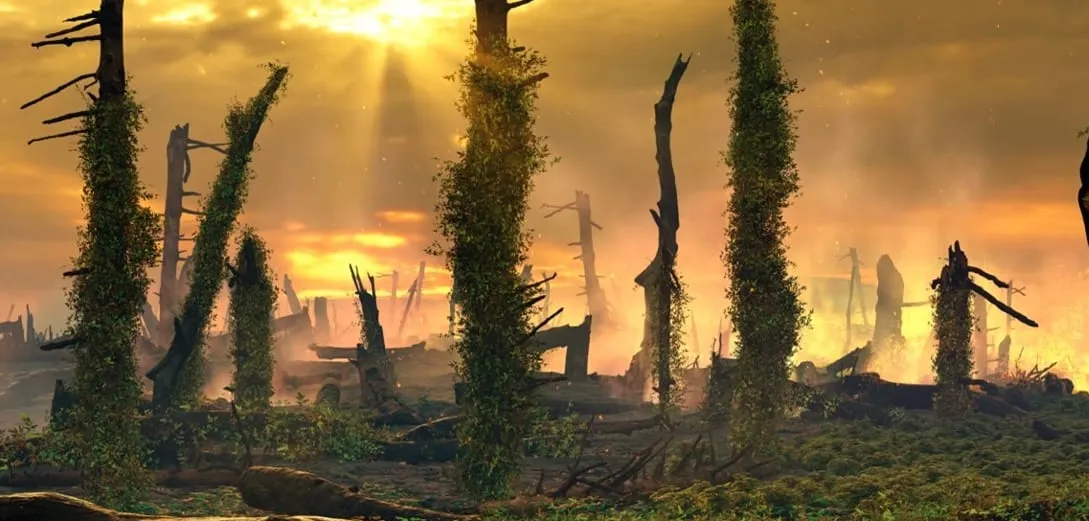
Recent research reveals that approximately 200 million years ago, at the close of the Triassic period, Earth was ensnared in a prolonged global fire crisis that triggered extreme climate change and a mass extinction event. This study highlights how these ancient occurrences hold crucial lessons for our planet's sustainability today, offering a historical perspective on modern environmental challenges.
Scientists have successfully reconstructed a grim picture of that era, when the world was dominated by the supercontinent Pangea, which was slowly breaking apart. Massive volcanic activity from the Central Atlantic Magmatic Province (CAMP) is believed to be the primary trigger for this series of catastrophes.
These colossal eruptions, lasting for thousands to millions of years, released vast quantities of greenhouse gases, especially carbon dioxide, into the atmosphere. The drastically soaring CO2 concentrations fundamentally altered the global climate composition.
Extreme global temperature increases due to the greenhouse effect led to prolonged droughts across various continental regions. Vegetation dried out, creating perfect fuel for uncontrolled fires to spread incessantly.
Analysis of ancient rock layers shows evidence of widespread global wildfires occurring periodically over thousands of years. Soot and charcoal found trapped in sediments at various locations serve as silent witnesses to the prehistoric inferno.
These massive fires not only devastated terrestrial ecosystems but also had fatal impacts on the atmosphere and carbon cycle. Thick smoke blanketed the skies, affecting photosynthesis and disrupting food chains.
The combination of extreme climate change and an endless fire crisis ultimately led to one of the largest mass extinction events in Earth's history, known as the end-Triassic extinction.
Many prehistoric animal and plant species, including several groups of large reptiles and amphibians, vanished without a trace. Only the most adaptable or fortunate species managed to survive this tumultuous period.
Professor Elena Schmidt, a paleoclimatologist from Heidelberg University, stated, “The geological record from the late Triassic period is a striking reminder of how vulnerable Earth’s systems are to major disruptions. Current human intervention, with massive carbon emissions, has the potential to trigger similar long-term consequences.”
This study emphasizes that understanding past extinction events is vital for predicting and mitigating the impacts of present-day climate change. Geological patterns provide a roadmap for the future.
Although the timescales and triggers differ, the fundamental mechanisms of ancient climate change offer a strong analogy to the global warming challenges humanity faces in 2026. Greenhouse gas concentrations continue to rise due to industrial activities.
One of the clearest warnings is the vulnerability of forest ecosystems to drought and fire. In the modern era, we witness how this phenomenon triggers disasters, such as the extreme wildfires that ravaged Europe a few years ago, as highlighted in our previous report on Europe's Wildfire Emergency.
Researchers underscore the urgency to drastically reduce carbon emissions and transition to renewable energy sources. The fragile ecological balance cannot tolerate repeated disturbances without severe consequences.
Understanding how Earth recovered from such a massive catastrophe also offers hope. However, natural recovery processes require geological timescales that far exceed the human lifespan.
Thus, the legacy of the Triassic inferno is not merely an ancient tale of destruction but a resounding manifesto of warning that echoes into the present. The decisions we make now will determine whether history repeats itself in a different form, with equally devastating consequences for modern civilization.