 Gabriella
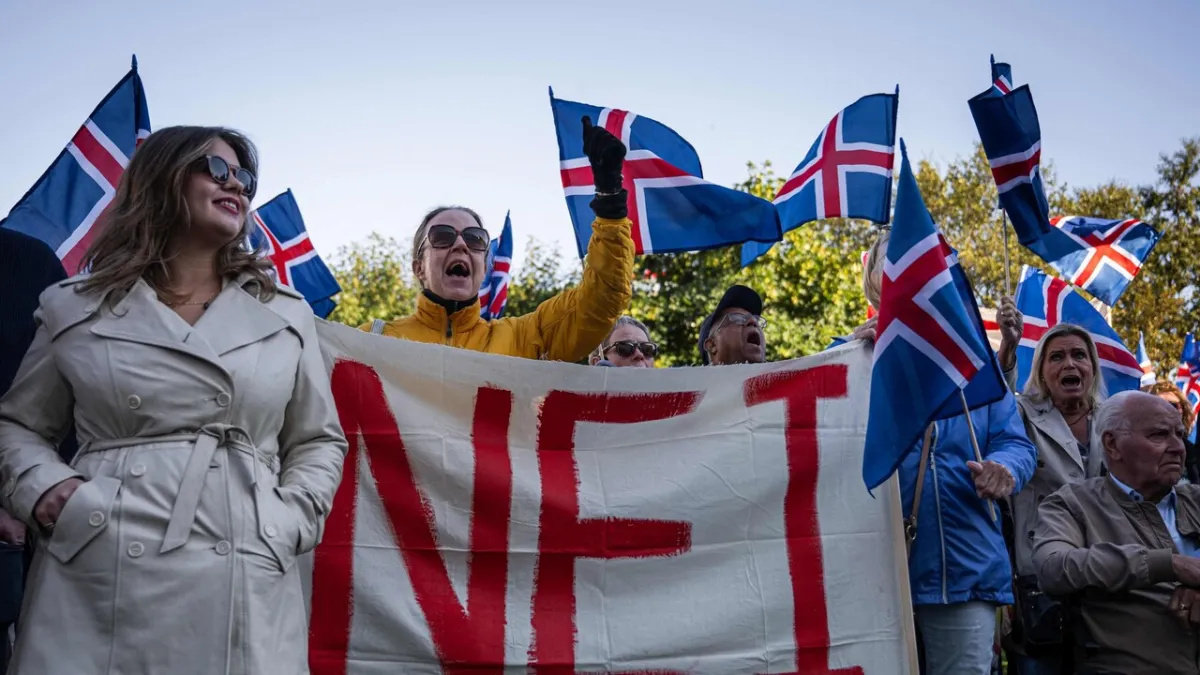
REYKJAVIK – A crucial referendum in 2026 once again confirmed Iceland's stance against full membership in the European Union. With 52.8 percent of votes opposing, this result represents a decisive victory for the sovereignist movement and strong anti-EU sentiment in the island nation. This rejection echoes throughout Europe, sparking serious debate about the direction of regional integration amid a constantly turbulent geopolitical landscape.
The voting results showed that support for EU membership was only dominant in the capital area, Reykjavik, while the majority of rural areas and other smaller towns emphatically rejected it. This polarization highlights fundamental differences between cosmopolitan urban views and the Icelandic people's desire to maintain their identity and national control over abundant natural resources.
The victory of the 'no' camp was immediately celebrated by sovereignist and anti-EU leaders across the continent. Influential figures like Marine Le Pen from France and Roberto Vannacci from Italy quickly offered praise, calling the result proof of the resurgence of national sovereignty movements challenging the centralization of power in Brussels.
Iceland's rejection is not a new phenomenon. The country has long maintained a skeptical attitude towards the European Union, with key arguments centered on issues of fisheries, currency, and sovereignty over its abundant marine natural resources. Fisheries, as a pillar of Iceland's economy, are considered too risky if subject to the EU's common fisheries policy.
Furthermore, concerns about losing control over monetary policy and the euro's impact on Iceland's relatively small economy were also major considerations. Many Icelanders feel that their unique national identity would be eroded by the bureaucracy and homogenization that comes with EU membership.
Analysts note that this decision was also strengthened by lessons from Brexit, where the United Kingdom chose to leave the European Union in 2020. Although the context is different, the narrative of taking back national control and protecting domestic interests resonated strongly in Iceland, bolstering the arguments against membership.
Geopolitically, Iceland's rejection is a setback for the European Union in its efforts to expand and strengthen its influence in the strategic Arctic region. It also sends a signal to other EU member states that may be grappling with Euro-skeptic sentiment domestically.
The Icelandic government now faces the task of navigating diplomatic and economic relations with the European Union, where they remain part of the European Economic Area (EEA) and the Schengen Area. The main challenge is how to ensure market access and cooperation are maintained without sacrificing the principle of sovereignty that has just been affirmed through the referendum.
Iceland's foreign policy will continue to focus on regional cooperation through platforms such as the Arctic Council, while maintaining strong bilateral relations with European nations and other global partners. Economic stability and cultural identity remain top priorities for Iceland's post-referendum leadership.
This 2026 referendum also sends a message to political groups in other European countries striving for greater autonomy. It demonstrates that aspirations for sovereignty can outweigh the drive for deeper political and economic integration, even in an era of globalization.
This rejection does not mean Iceland will isolate itself. On the contrary, it affirms their commitment to an independent development path, while remaining active in selective and beneficial international cooperation. Discussions about Iceland's future on the European stage will continue, but now with clearer parameters based on the will of the people.
The power of direct democracy through such referendums highlights the importance of the public's voice in determining national policy. Iceland's decision will be an important case study for other nations reconsidering their relationships with supranational blocs.
To understand more about the background and implications of Iceland's foreign policy regarding Europe, the public can read the related article titled Iceland Rejects EU Negotiations, Europe's Future in Turmoil! which offers a comprehensive perspective on these dynamics.
Editorial Insight: Iceland's decision to reject European Union membership in 2026 underscores a global trend of increasing nationalist sentiment and emphasis on sovereignty. This outcome not only reflects Iceland's domestic priorities, particularly concerning resource management and identity, but also has the potential to inspire similar movements in other European nations facing dilemmas between integration and autonomy. The EU needs to re-evaluate its strategy for attracting new members and addressing sovereignty concerns to prevent further fragmentation.