 Demian Sahputra
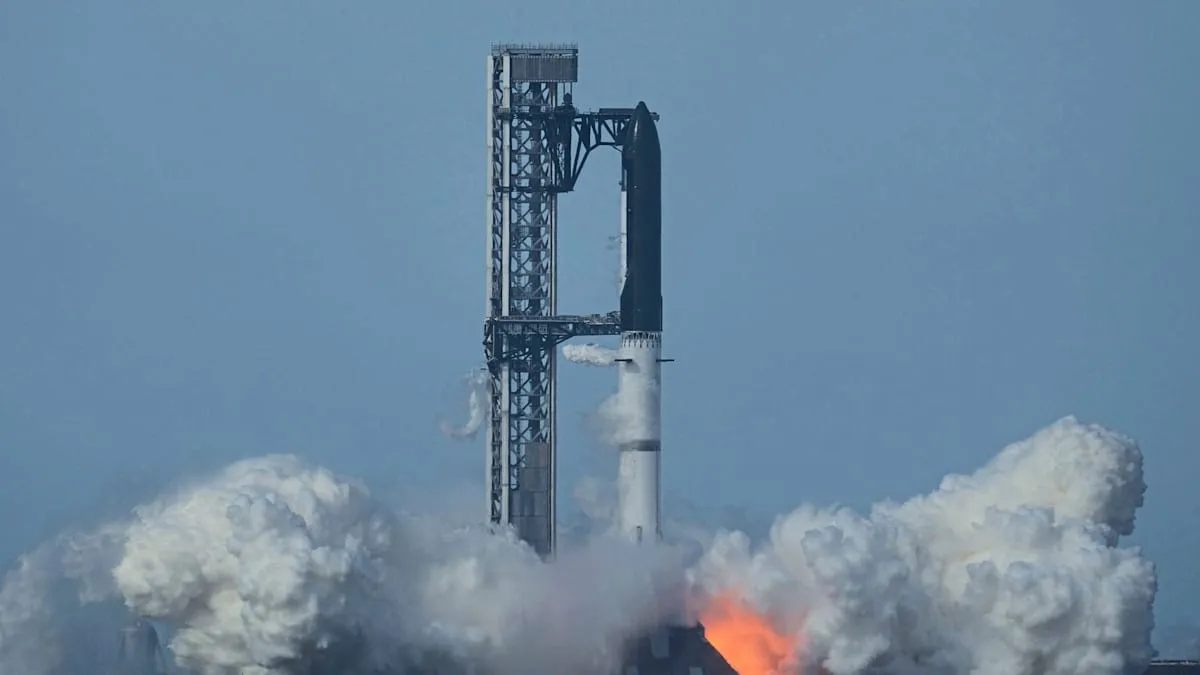
Texas — The launch of Starship, the world's largest rocket conceived by technology visionary Elon Musk through his company, SpaceX, was dramatically halted moments before its scheduled lift-off last Thursday. The crucial moment at the Boca Chica, Texas, launch facility left global space observers tense and speculating, marking ongoing challenges in the ambition of space exploration.
The decision to abort was made just minutes before Starship's Raptor engines were slated to ignite, propelling the steel giant into orbit. Preparations had been intensive, with millions of eyes monitoring the live broadcast, hoping to witness a new milestone in the journey towards Mars and beyond.
Starship is not merely a rocket; it is at the core of Elon Musk's ambitious vision to make humanity a multi-planetary species. Standing over 120 meters tall and capable of massive payloads, this fully reusable launch system is designed to transport humans and cargo on missions to the Moon, Mars, and other interstellar destinations.
Starship's development has undergone a series of intense tests, including several prototypes that have exploded or experienced landing failures in the past. Each test, whether successful or not, provides crucial data for the SpaceX engineering team, reinforcing their iterative approach to achieving reliable spaceflight.
Despite often being marked by drama and similar challenges, such as previous launch incidents that captured global attention (read more here), this delay is not uncommon in the high-stakes space industry. Extreme weather conditions, last-minute technical glitches, or system anomalies often compel engineers to postpone missions to ensure operational safety and success.
This Starship delay immediately sparked discussions about its implications for SpaceX's future mission schedule, including potential impacts on critical contracts with NASA. The Artemis program, which aims to return humans to the Moon by the middle of this decade, heavily relies on Starship as its primary lunar lander.
Industry analysts emphasize that such setbacks are an inseparable part of revolutionary innovation. “Space exploration is an inherently challenging endeavor,” stated Dr. Aria Setiawan, an astrophysics expert from Gadjah Mada University, in a separate interview. “Every delay, though disappointing, is a necessary calibration step to ensure long-term safety and success.”
Elon Musk himself has not yet issued a detailed public statement regarding the incident, but is expected to provide updates via his social media platforms, as he frequently does. SpaceX's technical team is believed to be working diligently to identify the precise cause of the halt and formulate solutions.
This postponement also serves as a reminder of the intense competition within the commercial space industry. While SpaceX continues to push technological boundaries, competitors like Blue Origin and United Launch Alliance are also investing heavily in the development of next-generation launch systems. This competition is expected to accelerate innovation, but also highlights the complexity and costs involved.
The U.S. government, through the Federal Aviation Administration (FAA), will likely review this incident as part of standard safety procedures, ensuring that all protocols have been followed and risk factors addressed before the next launch authorization is granted. Transparency in the investigation process is key to maintaining public and investor confidence.
Despite this hurdle, SpaceX's ambition to open human access to space remains unshaken. Every delay is viewed not as a failure, but as an opportunity to learn and refine technology. The next Starship mission, now eagerly anticipated, will serve as tangible proof of SpaceX's resilience and determination in realizing their extraterrestrial vision.