 Debby Wijaya
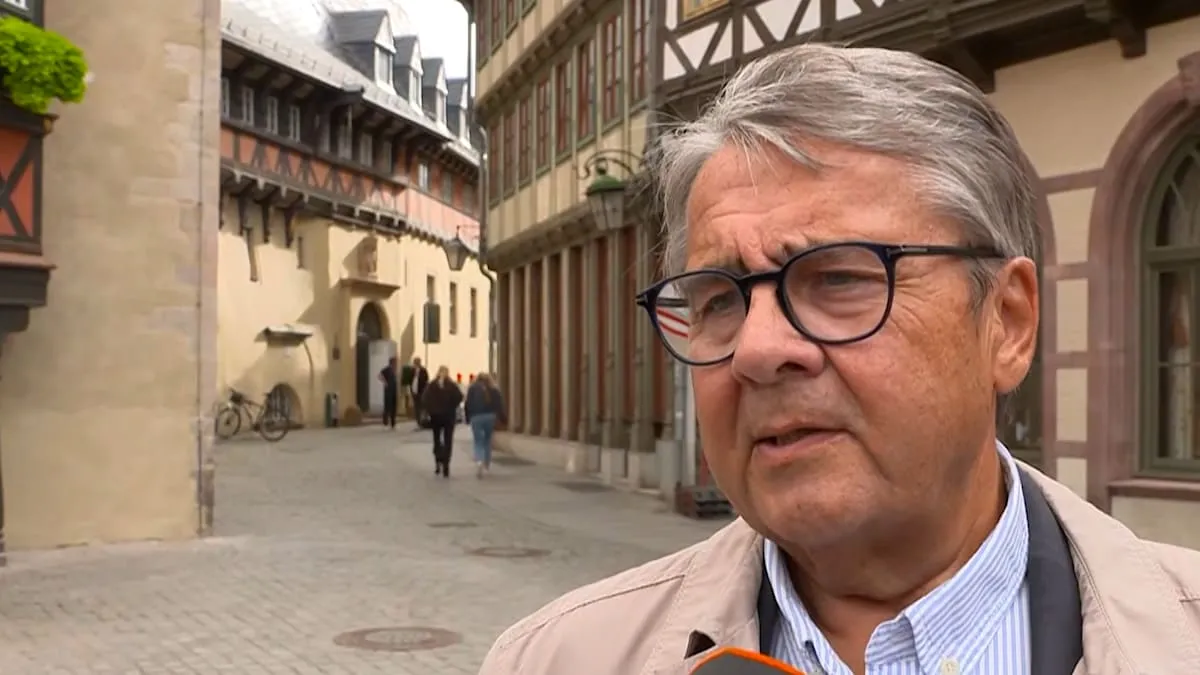
BERLIN – Former German Foreign Minister Sigmar Gabriel has unequivocally stated that the conflict led by President Vladimir Putin is not merely a war against Ukraine, but a broader aggression targeting Western values and order. He issued this warning amidst ongoing debate regarding the sympathies of some East Germans towards Russia, a sentiment he finds incomprehensible given the brutal realities on the Ukrainian battlefield.
Gabriel, a senior figure from the Social Democratic Party (SPD), emphasized that public narratives often fail to grasp the true essence of the conflict. According to him, Russia's actions extend beyond Ukraine's geographical borders, fundamentally challenging the principles of democracy and sovereignty held dear by Western nations.
Putin is not waging war against Ukraine. He is waging one against the West, Gabriel stated, quoting his viral remarks. This assertion underscores the urgency for the international community, especially Europe, to see the larger picture of this ongoing invasion.
He expressed his astonishment at the pro-Russia sympathies prevalent among many East Germans. In his view, visual evidence and news reports about the suffering in Ukraine are more than sufficient to form a clear and critical perspective on Moscow's actions.
One only needs to turn on the TV to see what Russia is doing to people in Ukraine, he added, highlighting the continuing atrocities in the conflict zone, including brutal attacks such as those in Kyiv and Odesa. (Also read: Kyiv Hit by Drones, 17 Odesa Residents Injured: Russia Bombards Ukraine Repeatedly!)
Pro-Russia sentiments in East Germany are often linked to the historical legacy of the GDR era and its close ties with the Soviet Union. However, Gabriel argues that current conditions demand a re-evaluation of such perceptions, based on evident facts.
Gabriel's perspective is crucial in reinforcing the narrative that Western support for Ukraine is not just humanitarian aid, but a collective defense against a larger threat. This also aligns with the acknowledgment of other European leaders, such as Manuela Schwesig, who recognized the need to confront a new reality in relations with Russia. (Also read: Manuela Schwesig Admits Mistake, Germany Faces New Russian Reality)
The implications of this view are the necessity for stronger consensus among NATO and European Union member states to address complex geopolitical threats. This conflict, seen through Gabriel's eyes, is a test of Western cohesion and resilience.
Gabriel's appeal also serves as a reminder for the media and civil society to continue providing accurate and balanced information, to counter disinformation that might foster misguided sympathies for the aggressor.
The war in Ukraine, therefore, is not only a territorial dispute but also a war of narratives and values. A comprehensive understanding, as articulated by Sigmar Gabriel, is crucial in shaping effective policies and a unified response from all democratic nations.
Editorial Insight: Sigmar Gabriel's statement is not mere political rhetoric but a profound reflection of geopolitical realities in 2026. The Ukrainian conflict, far from being a regional dispute, has established itself as a marker of a shifting world order. The lingering sympathies in some pockets of European society, particularly East Germany, highlight the complex challenge of building a unified narrative amidst information polarization. Gabriel's courage to explicitly define this threat as aggression against the West underscores the need for consolidated democratic values and strategic readiness to face a potentially prolonged era of confrontation. Information credibility and public awareness are the most essential bulwarks today.