 Dorry Archiles
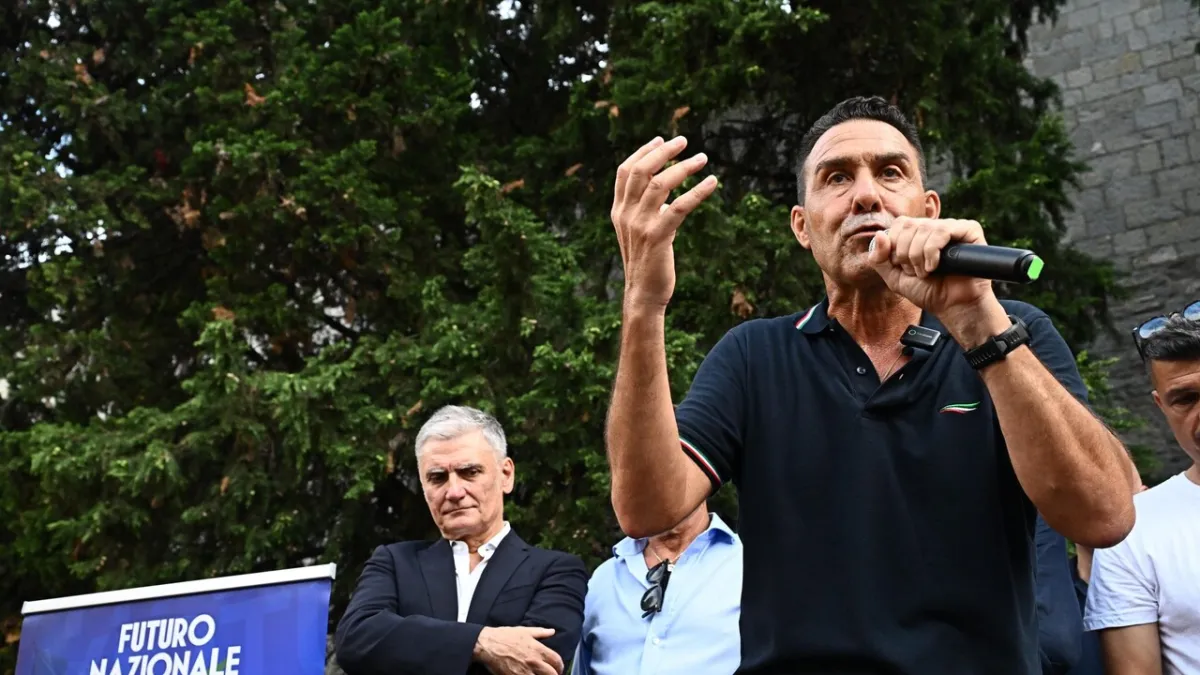
GENOA — General Roberto Vannacci, a controversial figure in Italy's 2026 political landscape, has overtly accused left-wing groups of being responsible for Genoa's "isolated" situation, while also launching sharp criticism against Salis. This provocative statement was made amidst preparations for a peaceful anti-fascist demonstration, drawing public attention to the dynamics of future political alliances in Italy.
Vannacci did not stop at mere accusations against the left. He specifically claimed that policies advocated by these groups have resulted in the strategic port city being in a "blindata" condition, referring to excessive restrictions or tight security measures.
In his speech, the outspoken general also targeted Salis, without providing explicit details about the nature of his attack, but indicating deep disagreement with the figure or policies represented.
The statements quickly spread, triggering diverse reactions, especially within political circles. Critics viewed it as an attempt to rally right-wing support through a narrative of polarization, while supporters praised it as a courageous voice unveiling the truth.
Interestingly, amidst these strong accusations, General Vannacci did not close the door to potential future political alliances. "Vedremo...", he stated briefly, implying that Italian politics remains highly fluid and open to unexpected collaborations.
Vannacci's remarks coincided with an anti-fascist march in Genoa, which was reported to proceed orderly and peacefully. The contrast between fiery political rhetoric and a calm civil demonstration highlights the complexity of Italy's socio-political landscape.
Political analysts interpret the attack on the "sinistra" (left) and Salis as Vannacci's strategy to strengthen the conservative right's position amid fierce political competition leading up to upcoming local or regional elections in 2026.
The issue of "isolation" in cities like Genoa could become a central point of debate. Questions arise as to whether the "blindata" condition mentioned by Vannacci refers to specific security situations, economic policies, or certain perceived restrictions on citizens' freedoms.
The clash of narratives between left and right political groups is certainly not new in Italy. However, with figures like General Vannacci becoming more prominent, public opinion polarization is likely to intensify.
Italian political history demonstrates that alliance dynamics are often pragmatic. Vannacci's "vedremo" statement opens speculation about possible shifts in alliances that could alter the political power map in 2026.
Various other political figures are expected to respond to these accusations soon, given the weight of a statement from a general with a strong military background. The public awaits further clarification regarding the "Genoa isolated" claim.
In contrast to the political tension, the peaceful anti-fascist march in Genoa shows that civil society is still capable of expressing its aspirations non-violently, offering hope for constructive dialogue amidst heated political rhetoric.
This situation in Genoa serves as an important barometer for Italy's overall political climate. How responses to Vannacci's accusations and his stance on alliances will influence future policy directions and party divisions.
Related article: Lega-FI Presses Government: Mini-Package Tax Delayed for a Full Year indicates political pressure from right-wing groups on the government, which could provide context for Vannacci's statement.