 Debby Wijaya

Berlin — The German government's claim of over ten billion euros in bureaucracy savings for citizens, the economy, and administration has sparked intense debate. Digital Minister Wildberger presented this impressive figure as proof of success, but several leading economists question the statistical validity, especially heading into mid-2026.
Minister Wildberger's optimistic statement comes amidst government efforts to demonstrate efficiency and reduce regulatory burdens often complained about by various sectors. The ten billion euro figure is claimed as an accumulation of various bureaucracy reduction initiatives launched.
However, in-depth investigations suggest that the majority of these claimed savings originate from the implementation of a single, specific law. This identification raises doubts about the comprehensive impact of bureaucracy reduction programs as a whole.
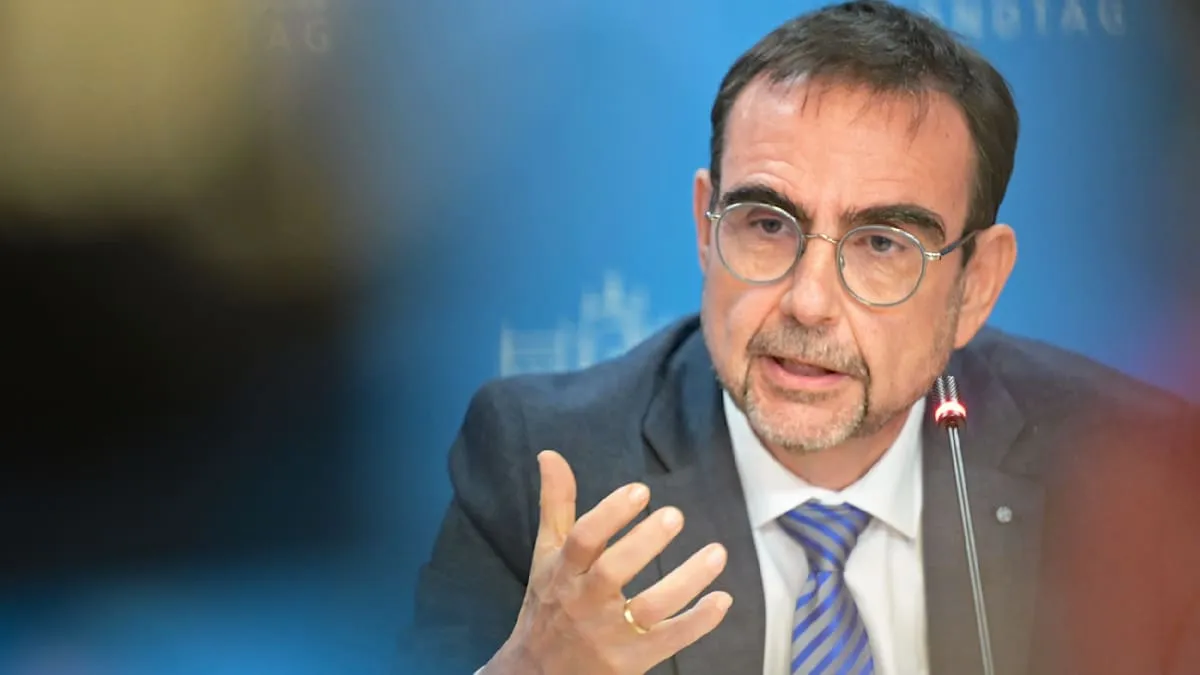
Professor Dr. Klaus Schmidt, an economist from Heidelberg University, expressed his skepticism. "It is crucial to understand the origin of this figure. If most of it comes from one regulation, then what about efforts in other sectors? This could be an attempt to 'polish' data rather than genuine efficiency," he stated during a public discussion.
Schmidt added that the methodology for calculating bureaucracy savings is often complex and prone to interpretation. "Calculating costs that *were not incurred* is a challenging task. The government might be overly optimistic in their projections," he explained.
The German government, through the Ministry of Digital Affairs, insists that their methodology is accurate and transparent. Ministry spokesperson, Anja Becker, clarified that the primary law driving these savings significantly streamlines digital permit procedures.
"The Public Administration Digitization Act of 2025 indeed serves as the backbone for substantial savings. This does not mean other efforts are neglected, but rather its effect is so profound," Becker emphasized, highlighting system modernization that is claimed to reduce time and costs.
Nevertheless, critics argue that an excessive focus on a single law may obscure a lack of progress in other bureaucratic areas that also require attention. The administrative burden felt by small and medium-sized enterprises, for instance, remains a critical issue.
The German Association for Small and Medium-sized Businesses (BVMW) reported that their members still face numerous time-consuming forms and procedures. "Bureaucracy reduction must be felt on the ground, not just on government report papers," said BVMW chairman, Markus Weber, in a recent press statement.
This situation is reminiscent of previous debates regarding government efficiency. In 2024, claims of savings in infrastructure projects were also questioned. Consistency in independent audits becomes crucial for maintaining credibility.
The government needs to present more detailed and independent data so that the claim of ten billion euros in savings is not merely perceived as a political maneuver. Transparency is key to rebuilding public trust.
Analysis by the Ifo Institute for Economic Research suggests that the government should involve more independent experts in evaluating policy impacts. This would help filter potential biases and provide a more objective picture of realized savings.
This debate emerges shortly after news of Berlin's efforts to cut bureaucracy by 600 million Euros garnered public attention. The article "Berlin Pangkas Birokrasi 600 Juta Euro: Apa Untungnya Bagi Rakyat?" describes similar dynamics at the city level. This indicates that the issue of bureaucratic efficiency is a serious concern at various levels of German government.
The biggest challenge for Minister Wildberger and the government is to convince the public and the economic community that their claims are based on solid calculations and have a real impact, not merely "beautifying" success data for political narrative purposes.
Going forward, the government is expected to be more proactive in explaining the metrics used to measure these bureaucracy savings. Comprehensive explanations will be a vital foundation to support sustainable and convincing efficiency claims.