 Robert Andrison
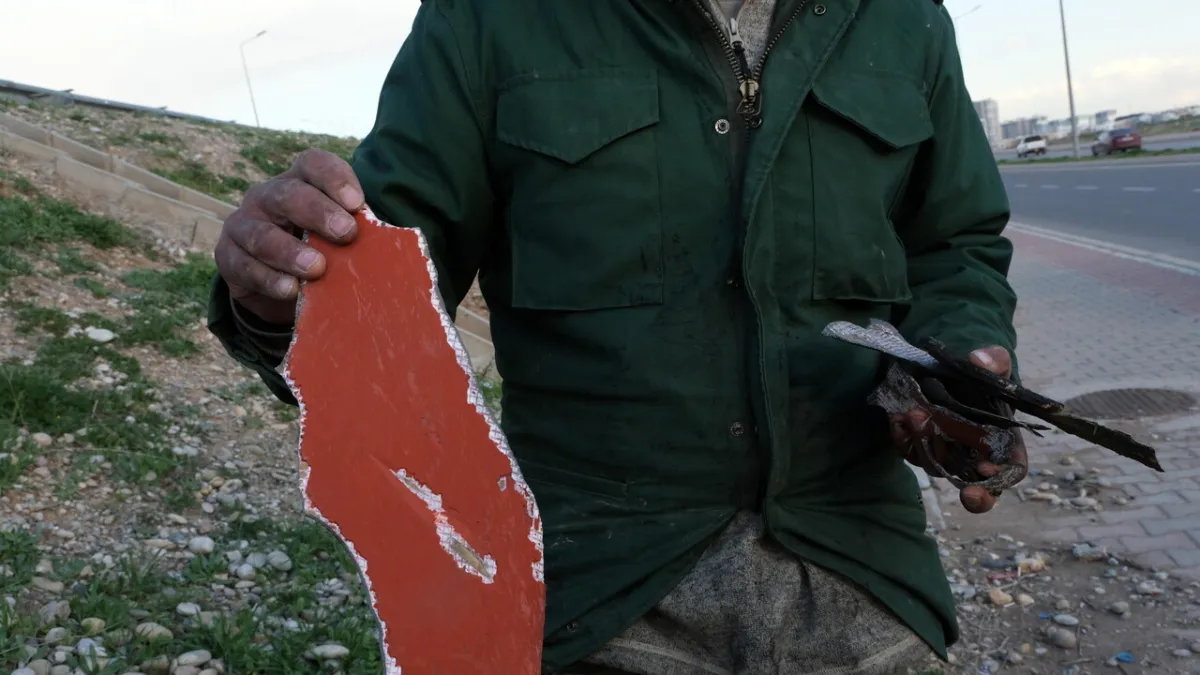
ERBIL – Drone attacks recently launched by Iran targeted the office of the Kurdistan prime minister in Iraq, a significant escalation that has sparked serious concerns about regional stability. This incident occurred after the Wall Street Journal reported that Iran utilized a two-month truce period to prepare for a broader conflict, indicating an aggressive shift in the geopolitical dynamics of the Middle East.
The dramatic events instantly drew the attention of the international community, reaffirming the fragility of peace in a region already fraught with turmoil. The strategic target of this attack, the premier's office in Erbil, the capital of the Kurdistan Region, underscores Iran's effort to send a strong message to parties perceived as opposing its interests.
According to an exclusive report from the Wall Street Journal, Tehran strategically exploited previous conflict pauses to build its military capacity. The report states that Iran has amassed weaponry and devised new strategies, all of which could potentially exacerbate tensions in this sensitive area. This latest aggression, through the use of drones, serves as a tangible manifestation of these preparations.
Kurdistan Iraqi authorities immediately condemned the act, calling it an unacceptable violation of sovereignty. The regional government called for a thorough investigation and a firm international response to prevent the recurrence of similar incidents in the future. Tensions between Iran and Iraqi Kurdistan have indeed been an ongoing issue, often centered on Iran's accusations that Kurdish opposition groups operate from Iraqi territory.
- Violation of Sovereignty: The attack is considered a direct violation of Iraq's sovereignty.
- Military Escalation: Iran's increased use of drones indicates aggressive military tactics.
- Accusations of Opposition Operations: Iran often accuses Kurdish opposition groups of operating from Iraqi territory.
The increasing use of drones in Iranian military operations beyond its borders has become a worrying pattern. This technology provides precision strike capabilities that are difficult to counter, allowing Iran to project power into neighboring territories with minimal risk to its own forces. This creates new challenges for air defense and regional security.
The impact of this attack is not limited to the Kurdistan Region. All of Iraq, which is struggling to restore post-conflict stability, now faces a new threat from foreign interference. Baghdad, as the central government, is in a difficult position to balance relations with Tehran and maintain its territorial integrity and national sovereignty.
Analysis by geopolitical observers suggests that this attack could be part of a larger Iranian strategy to reshape the regional order. With the United States under President Donald Trump focusing on an 'America First' policy, Iran may perceive an opening to expand its influence in the Middle East without facing significant resistance from the West.
This situation also has the potential to trigger a new wave of displacement in the region, adding to the already heavy humanitarian burden. Civilians are always the primary victims of any conflict escalation, and attacks targeting government infrastructure can erode public trust and worsen socio-economic conditions.
The role of the international community is crucial in de-escalating these tensions. The UN and global powers need to urge Iran to exercise restraint and respect the sovereignty of neighboring states. Without strong diplomatic intervention, the risk of a full-scale regional conflict will continue to rise, drawing more actors into the spiral of violence.
Looking ahead, the prospects for peace in the Middle East appear increasingly bleak. Every aggressive act, no matter how small, has the potential to trigger a chain reaction that is difficult to control. The drone attack on Erbil is a sharp reminder of the fragile balance of power and the urgent need for constructive dialogue.
Editorial Insight: The incident of Iran's drone attack on the Kurdistan Premier's office in Iraq is not merely an ordinary military action; it is a clear indication of Tehran's long-term strategy to assert its dominance in the region. By using a truce period for war preparations and targeting government nodes, Iran implicitly sends a message to its adversaries that it is ready to escalate confrontation. The challenge for Iraq and the international community is how to respond to this threat without accelerating a broader spiral of conflict in the Middle East. Regional stability heavily depends on effective diplomatic resolutions and the affirmation of the sovereignty of affected nations.