 Dorry Archiles
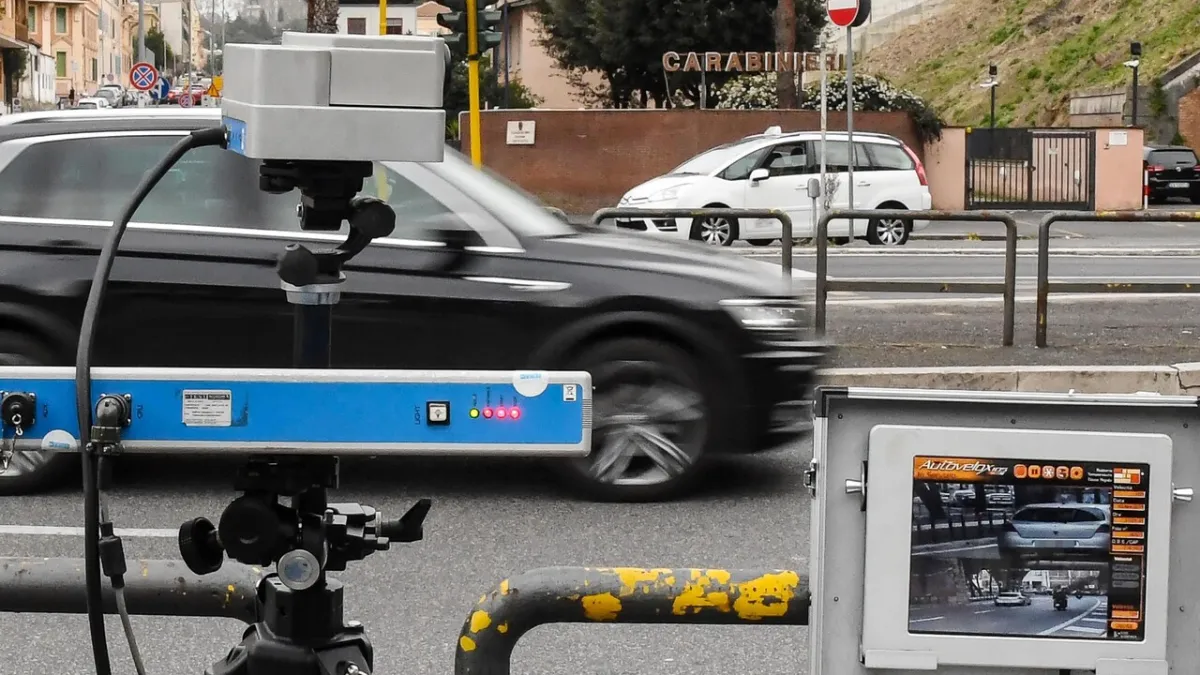
ROME — Major cities across Italy have collected over 300 million euros from automatic speed cameras, or autovelox, over the past five years leading up to 2026. This astonishing figure emerged from a report by the consumer association Codacons, highlighting a stark disparity in revenue collected by various municipalities, with Florence recording the highest amount.
Codacons announced that these fine revenues significantly bolster local government coffers. Their data indicates that the period from 2021 to 2026 witnessed the effectiveness of speed monitoring devices in both curbing vehicle speeds and generating city income. However, behind these figures, a crucial question arises regarding the true purpose of autovelox deployment: is it purely for traffic safety, or has it become an unspoken source of revenue?
The city of Florence, the capital of Tuscany, dominates the list with revenues reaching 86 million euros from autovelox fines. This makes it the undisputed leader in collecting speed penalties among Italy's major cities. A stark contrast is seen in Naples, which collected only 59,000 euros, a difference that illustrates the highly varied approaches to traffic law enforcement across regions.
Codacons President, Carlo Rienzi, in his statement, expressed concern over this disparity. "The significant revenue gap between Florence and Naples raises fundamental questions about the function of autovelox," Rienzi stated. He added, "Are these devices primarily aimed at improving road safety, or have they shifted to become a tool for supplementing local budgets?"
This phenomenon has sparked intense public debate throughout Italy. Many citizens and observers argue that some cities tend to place autovelox in locations that are less strategic for safety but more lucrative in terms of potential fines. Such practices are accused of turning autovelox into a form of "hidden tax" for motorists.
Local governments, on the other hand, often argue that autovelox placement is an essential preventive measure to reduce traffic accident rates. They highlight statistics showing a decrease in fatal incidents as proof of the program's success. However, this argument does not always quell criticism from various circles, including consumer associations like Codacons.
Given this trend, there are calls for reform in autovelox regulations. Many parties are urging greater transparency regarding placement locations and the use of collected funds. The goal is to ensure that every fine paid by citizens genuinely contributes to improving road infrastructure and safety, rather than merely supplementing city budgets.
This debate reflects the challenges faced by many developed countries in balancing law enforcement for public safety with perceptions of fairness and the economic burden on citizens. In Italy, where road safety issues are always a concern, especially after several road tragedies, the effectiveness and ethics of autovelox use will continue to be a hot topic. Society still remembers the sorrow of Italy's road tragedies that claimed many young lives, serving as a vital reminder of the importance of effective traffic policies.
Furthermore, the burden of these fines adds financial pressure on motorists, particularly amidst fluctuating economic conditions. The issue of mandatory electric scooter insurance and related fines further emphasizes that transport regulations have a direct impact on personal finances.
With total revenues reaching hundreds of millions of euros over five years, the autovelox case in Italy becomes an interesting case study on the dynamics between government, citizens, and surveillance technology. Decisions on how to balance the need for safety with financial fairness will continue to shape the face of transportation policy in the country.
Not only in Florence, but several other cities such as Rome, Milan, and Turin also show substantial fine revenues, although not as high as Florence. This pattern indicates that the use of autovelox is a common strategy across the Italian peninsula, although the intensity of its implementation varies.
The Italian government faces pressure to review the autovelox regulatory framework, ensuring more consistent national standards. This is expected to reduce perceptions of unfairness and guarantee that all fines imposed have strong justification from a safety perspective.