 Chandra Wijayanto
United States — Martha Lillard, a woman who symbolized resilience and was likely the world's last patient still dependent on an iron lung, has passed away. Her death marks the closure of a significant chapter in medical history, ending an era of the ancient mechanical ventilator that once saved millions of lives during the peak of the polio epidemic.
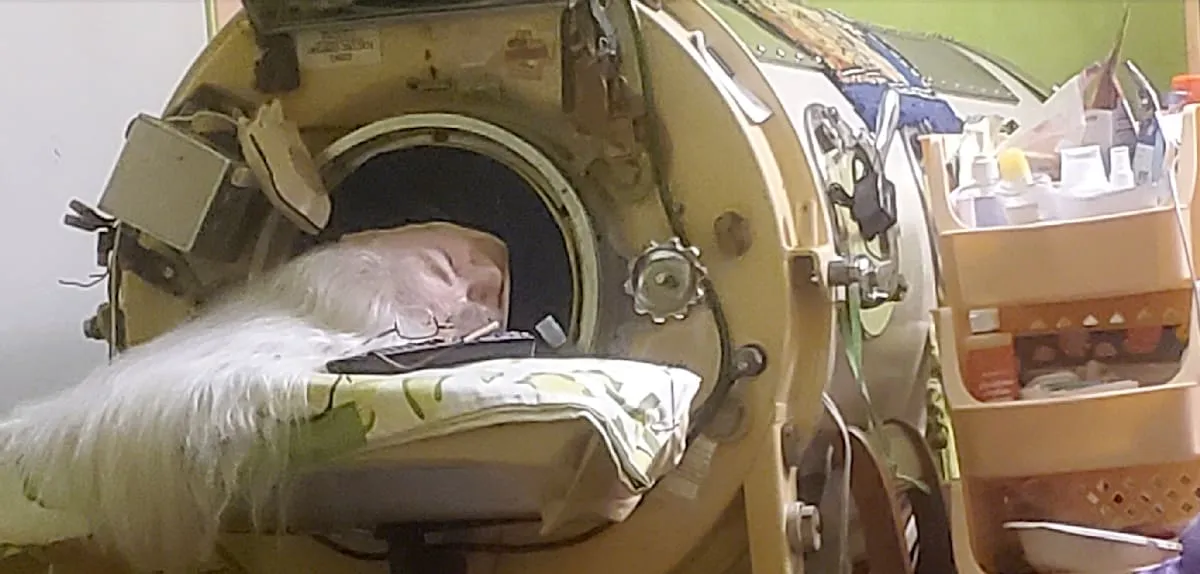
Lillard spent over seven decades, specifically 70 years, living within this giant metal cylinder since she contracted poliomyelitis at the age of six in 1953. The paralyzing disease attacked Lillard's nervous system, robbing her of the ability to breathe independently. The iron lung became the sole bridge between her and life.
The iron lung, a negative-pressure ventilator, operates by creating changes in air pressure around the patient's body. This passively forces the lungs to expand and contract, mimicking the natural breathing process. In its time, this technology was a fundamental breakthrough in treating respiratory failure caused by polio.
In the mid-20th century, the polio epidemic swept across the globe, causing global panic and leaving thousands of people, especially children, permanently paralyzed or even dead from respiratory failure. Hospitals were crowded with rows of iron lungs, a poignant sight reflecting the medical struggle of that era.
Martha Lillard's life inside the iron lung was not merely about survival. She managed to complete her education, learn to paint, and even interact with the outside world thanks to a mirror installed above her head. Her fortitude and adaptability became an inspiration to many, demonstrating that physical limitations do not necessarily restrict the spirit of life.
The evolution of science brought new hope. The discovery and development of effective polio vaccines in the 1950s drastically reduced disease cases. Later, innovations in ventilator technology led to smaller, portable, and non-invasive devices, gradually replacing the massive and rigid iron lung.
Despite rapid advancements in medical technology, Lillard chose to continue using her iron lung. For her, the device was not just a life-sustaining apparatus but also an inseparable part of her identity and comfort. Her body had fully adapted to the rhythm and operation of the ancient ventilator.
Her death is not just the loss of an individual but also the closing of an era. The iron lung, now a museum artifact, will lose its last living user. Lillard's story serves as a poignant yet valuable reminder of the impact of a disease that once haunted humanity before the advent of vaccines.
Martha Lillard's legacy extends beyond mere medical records. She became a symbol of human perseverance, a testament to the marvel of adaptation, and a reminder of the importance of continuous research and innovation in healthcare. Her life proved that dignity and quality of life can be maintained even in the most extreme conditions.
With Lillard's passing in 2026, the global community is invited to remember the fight against polio and appreciate every medical advancement that has saved millions of lives. This story underscores that the medical past, with all its challenges and solutions, continues to shape our journey toward a better healthcare future.