 Robert Andrison
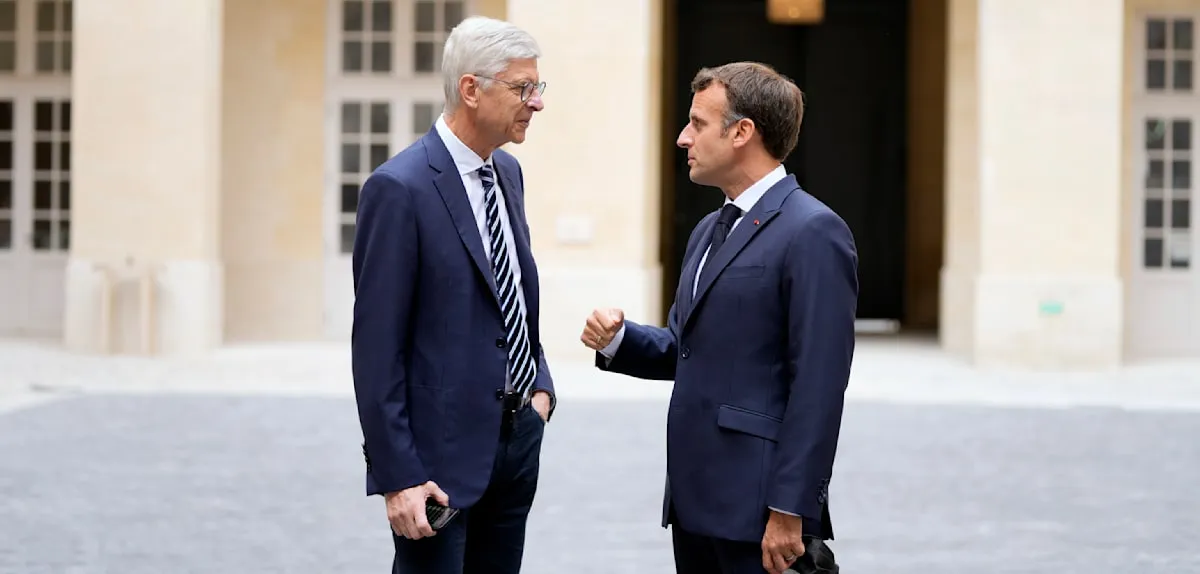
Paris – The global football arena is once again in turmoil after French President Emmanuel Macron openly declared his support for Arsene Wenger to run for FIFA President. This political maneuver could potentially shake the dominance of Gianni Infantino, the incumbent who has led the world football federation since 2016. Macron's backing for the legendary former Arsenal manager has sparked various speculations, while also raising several doubts among sports observers.
Macron, known for his close ties to the French sports world, sees Wenger as an ideal figure to bring change and reform to FIFA. Wenger, with decades of experience in football, including his current role as FIFA's Head of Global Football Development, is considered to have a deep understanding of the sport's ecosystem. However, this move is also seen as an attempt by France to strengthen its influence on the international stage, particularly in football.
Support from a head of state like Macron certainly adds significant political weight to Wenger's potential candidacy. This is not merely moral support, but a strong signal that there are political forces behind the effort to change FIFA's leadership. Macron is believed to want to see FIFA led by a more independent and integral figure, especially after a series of scandals that once rocked the organization.
Wenger himself has not officially declared his willingness to run. His current position at FIFA as Director of Global Football Development puts him in an ethical dilemma if he decides to challenge his superior. However, pressure from Macron could be a serious trigger for Wenger to consider the move. Wenger's reputation as an innovator and strategic thinker in football is a strong asset.
Nevertheless, the path to the FIFA presidential chair will not be smooth for Wenger. Several observers highlight major challenges. First, whether Wenger has a strong enough support base from member federations worldwide, which is key in the election. Second, doubts arise regarding Wenger's capacity to navigate the behind-the-scenes political intrigues of international federations, a field very different from club management.
Wenger's candidacy, if it happens, will be one of the most intriguing dramas in the history of FIFA presidential elections, said an international football analyst who wished to remain anonymous. He is a football icon, but FIFA politics is a very different game. Concerns also include Wenger's age, who will be 77 in 2026, raising questions about his energy and capacity to lead an organization as large as FIFA in the long term.
Gianni Infantino, on the other hand, has secured the FIFA Presidency relatively stably since his re-election in 2019. He has built a broad network of support among member federations, especially from non-European countries. Infantino is known for his adeptness in diplomacy and political negotiation, which are crucial assets in a FIFA leadership contest.
A potential confrontation between Wenger, backed by Macron, and Infantino will present a battle of ideologies and visions for the future of football. Wenger might offer an approach more oriented towards technical development and the philosophy of the sport, while Infantino might emphasize stability and the continuity of ongoing programs.
Another consideration is the impact of this French support on other European nations. France itself holds significant influence in the sports world, including rugby. Questions arise whether Macron's support will split European votes or instead foster a consensus for change.
Some points of doubt regarding Wenger's candidacy include:
- Lack of experience in high-level political lobbying among federations.
- Potential conflict of interest with his current position at FIFA.
- Age, which might be a consideration factor for some voters.
- Challenges in garnering support outside Europe.
The political dynamics of FIFA are indeed always full of surprises. From bribery scandals to power struggles, the history of this federation shows that no position is entirely secure. Support from a G7 leader like Macron for Wenger, a figure of integrity, could trigger long-awaited reforms, or conversely, only add to the political complexity.
In the coming months, the eyes of the football world will be on the developments of this situation. Will Arsene Wenger accept the challenge? And if so, how big a shock can he create at FIFA headquarters, amidst the dominance established by Gianni Infantino?
Editorial Insight: President Macron's maneuver is not just about the individual Arsene Wenger, but also about France's ambition to reassert its influence in global institutions, including FIFA. Regardless of Wenger's success, this support sends a strong message about the need for more transparent and accountable governance in the world football federation, which may also reflect certain dissatisfactions with the current leadership.