 Gabriella
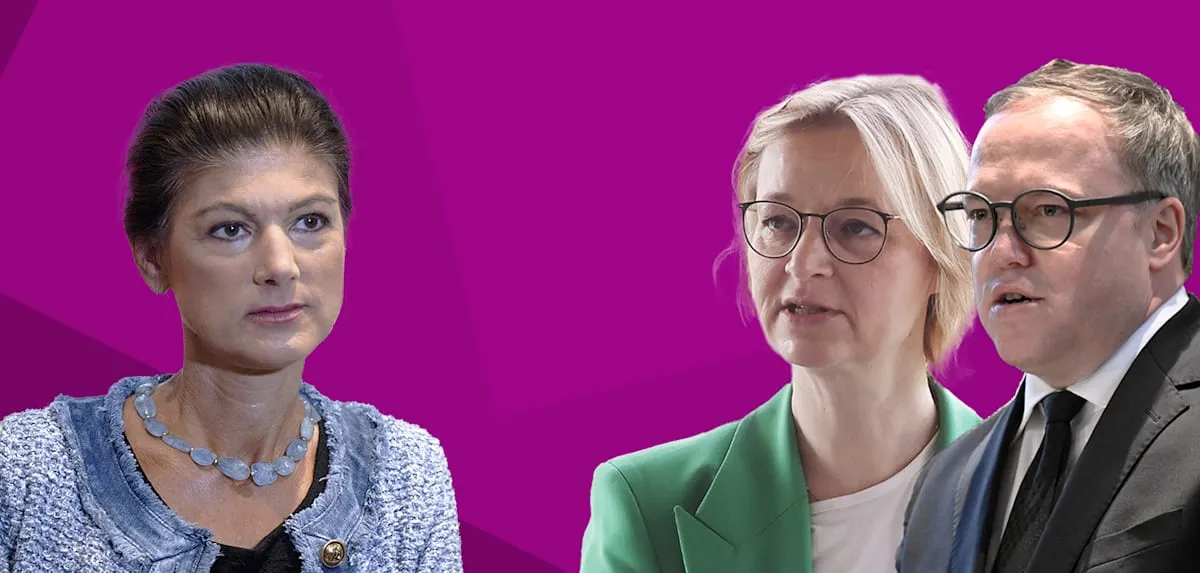
BERLIN – Germany's Bundnis Sahra Wagenknecht (BSW) party faces a severe internal crisis, jeopardizing its very existence following the outbreak of an 'open war' to define its coalition strategy. This deep division centers on a fundamental question: should BSW participate in governments that explicitly exclude the Alternative for Germany (AfD), or consider collaboration with the far-right party?
This confrontation stems from the existential struggle of the newly formed party. Senior BSW officials acknowledge a sharp polarization regarding the fundamental principles of their political involvement, now culminating in open conflict.
Founded by Sahra Wagenknecht, the party gained significant public attention with a platform blending left-wing and conservative elements. BSW's unique approach has often succeeded in appealing to voters who feel unrepresented by Germany's established parties.
The central issue igniting this turmoil is BSW's stance on the AfD. One faction within BSW advocates for a policy of non-coalition with the AfD, aligning with other democratic parties that strongly reject AfD's extremism and polarizing rhetoric.
However, another faction argues that to achieve significant political influence, BSW must adopt a more pragmatic approach. They even suggest considering possible collaborations that include the AfD within the German political spectrum, particularly at the state level, where the AfD holds a strong base of support.
An internal party source, who wished to remain anonymous, stated, 'This is more than just a difference of opinion; it's a battle for the soul of the party. BSW's future hinges on this crucial decision.'
As of 2026, the escalation of this conflict within BSW has the potential to significantly reshape Germany's political landscape. BSW is a relatively successful new player in attracting voters from various spectra, and their fragmentation could have a domino effect.
The German public is closely monitoring these developments, anticipating whether BSW will maintain its original ideological stance of rejecting the AfD, or undergo a bolder strategic shift in pursuit of power.
For a party still in its early stages of consolidation after its formation, an internal war like this could be a severe blow. It threatens their continued presence on the German political stage and their credibility in the eyes of voters.
BSW's ultimate decision will be critical. It will determine whether they can evolve into a stable and cohesive political force, or become fragmented by unresolved ideological ambivalence.
Should BSW ultimately fracture, it would create a political vacuum that could be filled by other parties, including the aggressive AfD, or conversely, pave the way for the formation of unexpected new political alliances amidst Germany's political uncertainty.
Editorial Insight:
The internal struggle within BSW reflects the fundamental challenges faced by new parties with heterogeneous platforms. The inability to clearly define ideological boundaries, especially concerning extremist parties like the AfD, can backfire dramatically. BSW's decision will set an important precedent for coalition dynamics in Germany, particularly as the European political landscape becomes increasingly fragmented by populism and far-right ideologies.