 Angela Stefani
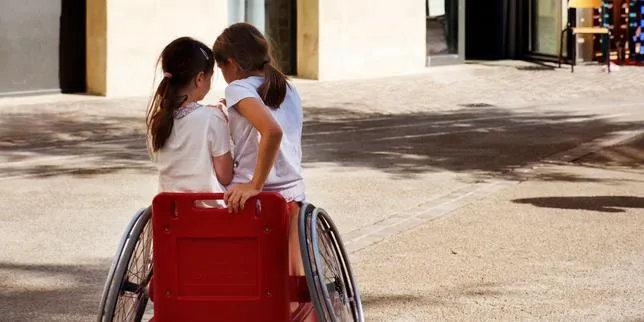
PARIS – A significant breakthrough in social inclusion has materialized in the French capital, Paris, through the Centre de loisirs a parite (CLAP) program. This initiative innovatively brings together children without special needs with their peers who have special educational needs in leisure centers. The pilot program on Rue de Clichy operates fully during school holidays and every Wednesday afternoon in 2026, proving that an equitable play environment is an achievable goal.
The CLAP program is designed with a strengthened supervision structure, ensuring every child receives the attention and support they need. The success of this program relies on a higher staff-to-child ratio and staff specially trained to handle diverse needs, creating a safe and stimulating space for all participants.
This initiative is not merely a recreational activity; it is a social laboratory that teaches values of empathy, understanding, and acceptance from an early age. Children referred to as valides or without special needs learn to interact with peers who communicate and move differently, fostering an understanding of human diversity.
A program coordinator at CLAP, who preferred not to be named, stated, We see how the children all pull each other up. They learn from each other, discovering new strengths in diverse interactions. It uplifts all of them. This statement underscores the positive impact that extends beyond mere entertainment.
For children with special needs, CLAP opens doors to socialization that is often limited in conventional environments. They can participate in adapted activities, feel like an integral part of the group, and develop social skills in a supportive context.
The implementation of this program has faced challenges, particularly in resource allocation and personnel training. However, the Paris municipal government is fully committed, providing adequate budgets and facilities to ensure the sustainability and expansion of this program throughout the city.
Parents in Paris have warmly welcomed this initiative. Many report significant improvements in their children's self-confidence, both those with special needs and those without. They see their children returning home with new stories of friendships that transcend differences, a tangible testament to the success of the CLAP program.
The CLAP inclusive model serves as a significant example for other major cities worldwide that face similar challenges in providing equitable public services. This program demonstrates that investment in appropriate facilities and personnel can yield profound and long-term social impacts.
The CLAP program also aligns with the UNs 2030 Sustainable Development Goals, particularly those concerning equality and inclusion. By promoting the full participation of all children in community life, Paris is taking proactive steps towards a more just and humane society in this year 2026.
The success on Rue de Clichy is sparking discussions on how to extend this model to other sectors, such as formal education and public facilities. It marks a paradigm shift from segregation to full integration in all aspects of urban life.
Enhanced supervision is the cornerstone of CLAPs success. Every activity is designed to be accessible to all, with flexible adjustments to accommodate various ability levels. This ensures that every child, regardless of condition, can fully enjoy the recreational experience.
The term special educational needs here encompasses a broad spectrum of conditions, ranging from physical, cognitive disabilities to socio-emotional challenges. The CLAP program affirms that every child has an equal right to play, learn, and grow together.
Through CLAP, Paris effectively rejects traditional practices of segregating leisure centers based on children's abilities. This approach instead embraces differences as a strength, not as a barrier, in creating enriching shared experiences.
This program demonstrates the importance of early childhood inclusion, fostering a more tolerant and understanding generation towards differences. Natural interactions in a play environment are far more effective in building bridges of understanding than other formal approaches.
Fundamentally, CLAP is not just about recreation; it is about building bridges between individuals, between abilities, and between perspectives. It is an investment in the future of a more complete and harmonious Parisian society, a vision worthy of global emulation.
Editorial Insight: The CLAP initiative in Paris is more than just a local program; it is a tangible manifestation of a global philosophical shift towards a more inclusive society. The success of this program has the potential to become a blueprint for other cities looking to integrate children with special needs into mainstream social activities. In 2026, amidst various global challenges, Pariss move highlights the importance of humanitarian values and empathy as the foundation for sustainable and civilized urban development. This is not just news, but an inspiration for the future.