 Debby Wijaya
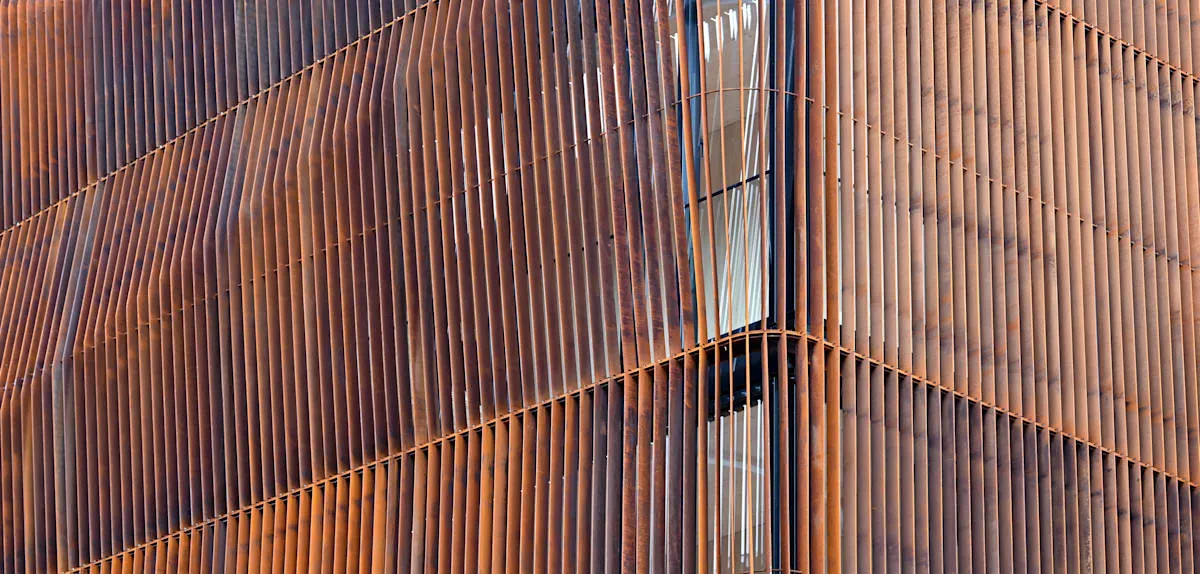
MÜNCHEN — Pritzker Prize laureate architect Francis Kéré recently completed an innovative design for an early childhood education center (PAUD/Kita) at the Technical University (TU) München. This project radically rejects the common "pedagogical cuteness" aesthetic, instead focusing on creating an environment that challenges and stimulates children's imagination and independence.
Known for his architectural approach rooted in culture and sustainability, Kéré presents a new vision for early childhood education. The PAUD building, provocatively dubbed "the children's prison" by some, is actually designed to liberate exploration and sensory interaction, far from rigid or overly pampered impressions.
"I believe that a learning environment should be more than just a 'cute' or passively 'safe' place," said Kéré, as quoted from a previous design presentation. "Children need challenges, space to experiment, and materials that speak to their senses. This design aims to provoke thought, not just accommodate."
The building structure emphasizes the use of natural materials and varied textures, allowing children to interact directly with architectural elements. Unconventional geometric forms, inviting open spaces, and abundant natural lighting are at the core of the design, creating a dynamic and adaptive atmosphere.
Prof. Dr. Laura Schneider, Head of the Architecture Department at TU München, stated, "We deliberately sought a bold approach for this PAUD. Collaboration with Francis Kéré enabled us to realize a holistic educational vision, where architecture itself becomes a pedagogical tool. This is a vital investment for the future of the younger generation in Germany."
In contrast to most conventional PAUDs often dominated by bright colors and cartoon characters, Kéré's design opts for a neutral color palette and organic forms. This aims for the environment not to dictate or overstimulate, but rather to be a canvas for children's creativity and self-discovery.
Educators assigned to this PAUD have received special training to maximize the potential of Kéré's design. They are expected to guide children in utilizing every corner and texture of the building as part of the learning process. This design encourages independence and curiosity.
Since its concept was introduced, the project has sparked intense discussion among education activists and architects in Germany. Some praise Kéré's courage in defying norms, while others are skeptical of the "challenging" concept for young children. However, the general consensus leans towards appreciating this innovation.
Kéré argues that architecture plays a crucial role in shaping a child's way of thinking. A building that offers surprises and room for interpretation can foster problem-solving skills and critical thinking from an early age, far beyond formal curricula.
Innovation in education always attracts attention, similar to discussions around the dilemma of child education and state support.
The presence of Kéré's designed PAUD in München is expected to serve as a prototype for the development of early childhood education facilities worldwide. This model highlights architecture's potential not just to provide shelter, but also as a catalyst for cognitive and emotional growth.
With this bold approach, Francis Kéré once again affirms his position as a visionary architect capable of transforming how we perceive space and its interaction with its inhabitants. The PAUD at TU München is not merely a building, but an educational manifesto.