 Chandra Wijayanto
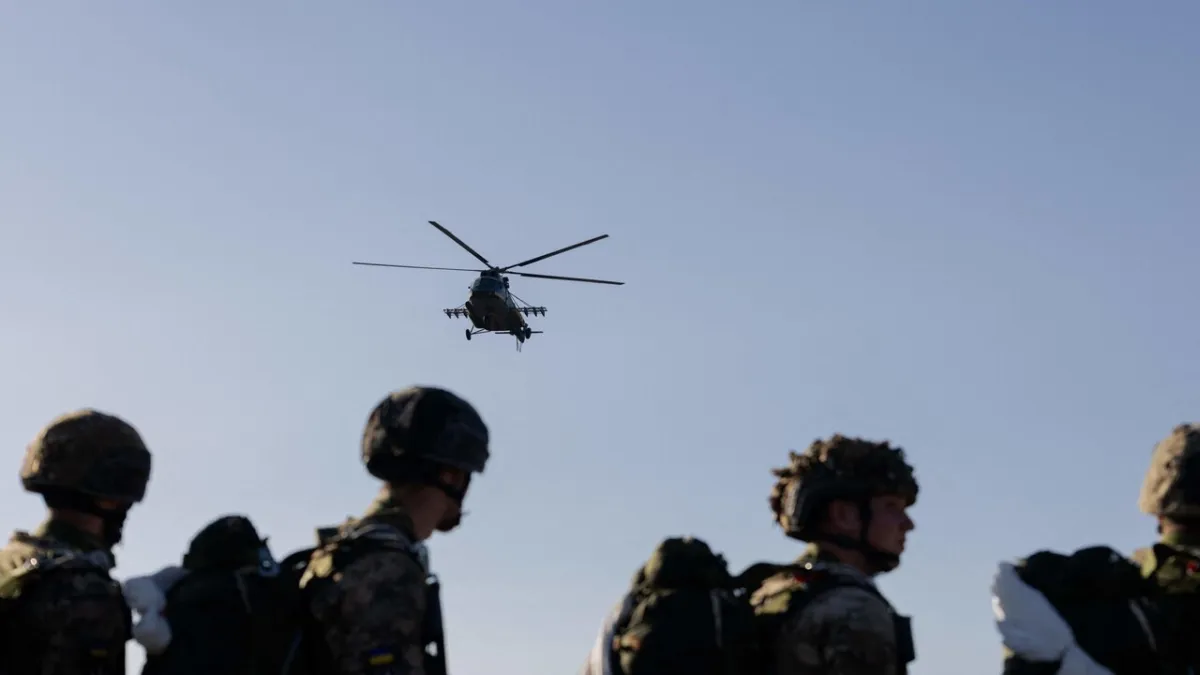
MOSCOW – Russia is reportedly significantly expanding its drone base infrastructure along the borders of Ukraine and Belarus, a move that triggers serious concerns about potential superdrone attacks capable of reaching the Polish capital, Warsaw. A report from The Telegraph reveals at least 59 launch ramps have been identified in these strategic areas, coinciding with air raids that killed nine people in Kyiv, confirming an escalation of regional tensions.
The massive deployment of drone launch ramps indicates an increase in Russia's offensive capabilities. International defense analysts believe these new bases are strategically located, enabling Russia to launch precision strikes deep into Eastern European territory, including critical targets in NATO member states.
This development directly provokes concerns in Poland and the Baltic states, which have already felt geopolitical pressure amidst the protracted conflict. The ability of superdrones to reach Warsaw is not only a military threat but also a symbol of psychological pressure on regional stability.
Intelligence sources cited by The Telegraph state that these dozens of ramps are not merely reconnaissance posts but are designed to support long-range drone operations with significant payloads. This indicates that Russia is not only enhancing its reconnaissance capabilities but also its unmanned aerial attack capabilities.
Similar escalations have occurred when Russia has used drones intensively in conflict, as reported in previous incidents regarding Moscow Rages! Hundreds of Ukrainian Drones Intercepted, Odessa Port Hit Again. This pattern illustrates Russia's strategy in leveraging drone technology for power projection.
The Polish Minister of Defense, in a recent statement, affirmed that his country is closely monitoring the situation and will take necessary steps to strengthen its air defense. The international community urges de-escalation, yet on the ground, military preparations are intensifying.
The attack in Kyiv that killed nine civilians serves as a brutal reminder of the direct impact of such military deployments. This incident adds to a long list of civilian casualties in the conflict, drawing strong condemnation from various human rights organizations and Western governments.
The report also highlights Belarus's role as a Russian ally, allowing the deployment of military infrastructure in its territory. Belarus's involvement in supporting Russian military operations further complicates the security dynamics on Europe's eastern border.
Military experts estimate that the deployed superdrones possess a much wider operational range and greater payload capacity compared to conventional drones. This technology has the potential to drastically alter the landscape of modern warfare.
NATO, through its spokesperson, has expressed deep concern over this report. The alliance reaffirms its commitment to collective defense and its readiness to protect every inch of its member states' territory, including Poland.
The development of Russian drone bases on the borders of Ukraine and Belarus is not merely a military tactic, but a strong strategic message. It is a demonstration of projected power capability aimed at pressuring and intimidating neighboring countries, especially those with close ties to the West.
This situation demands a prompt diplomatic response and coordinated defense measures. Otherwise, the potential for direct confrontation will increase, with the risk of broader destabilization in the Eastern European region.
Editorial Insight: The construction of advanced Russian drone bases on the Ukrainian and Belarusian borders represents a strategic turning point in the Eastern European security landscape. This is not just an enhancement of Russia's military capabilities, but also a clear political statement directed at NATO and the European Union. The direct threat to Warsaw via superdrones will provoke a strong response from Poland and its allies, potentially triggering a new arms race and deepening existing tensions. The context of 2026, with an increasingly fragile geopolitical environment, demands high vigilance and robust diplomacy to prevent an unwanted escalation of conflict.