 Demian Sahputra
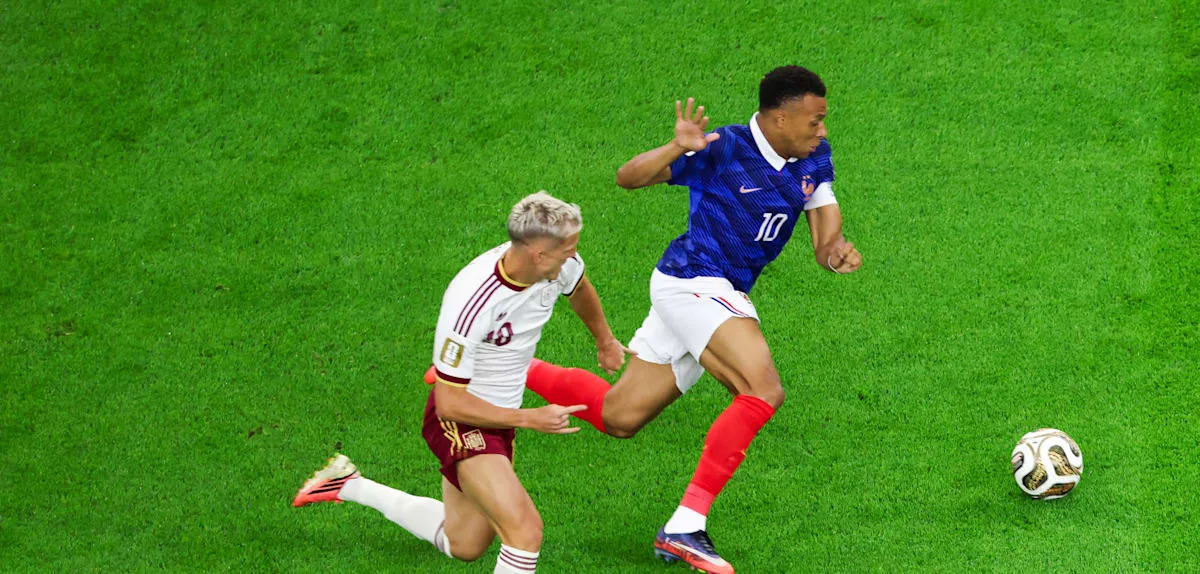
Elite teams competing in the 2026 World Cup showcased a striking tactical trend: the adoption of a single formation as the primary strategy for success. In-depth analysis reveals that triumph was not merely due to a rigid scheme, but rather the teams' ability to integrate unique "X-factors" within that tactical unity. This phenomenon, observed from the group stage through to the final match, has become a major focus for global football pundits, questioning the future of tactical diversity in this prestigious event.
The 2026 World Cup, which has just concluded or is in its crucial stages, has presented a spectacle of football with a relatively uniform pattern. Many teams that advanced far tended to rely on the same tactical configuration in every match. This consistency provided stability but also raised questions about the innovation and tactical flexibility long touted as decisive factors.
This phenomenon of tactical homogeneity emerged after observations of several attention-grabbing teams. They, without hesitation, maintained their basic game structure but successfully implemented elements of surprise or an "X-factor" that made their strategies unpredictable.
Doha — Several legendary pundits and former coaches noted a significant decrease in tactical variation compared to previous World Cup editions. "It is rare to see teams truly daring to change their fundamental approach mid-tournament. The majority choose to refine what they already have," commented a senior football pundit.
This trend suggests that to reach peak performance, teams do not always have to experiment with different formations. Instead, perfect mastery of a specific formation, coupled with individual brilliance or minor innovations, becomes the key.
The "X-factor" in question varies. Some relied on the individual genius of a playmaker, the deadly speed of a winger, or even the almost impenetrable solidity of their defense. This element then distinguished champion teams from mere participants.
For instance, the finalist team that made history at the 2026 World Cup, despite playing with a common 4-3-3 formation, possessed a holding midfielder capable of distributing the ball with extraordinary accuracy, instantly changing the direction of attack.
Meanwhile, a surprise team from the African continent, which also advanced far, relied on a 4-2-3-1 formation with a lone striker who had a very sharp goal instinct and superior ball retention skills. This was their form of "X-factor."
The success of this single formation is also believed to be a reflection of the intense match schedules and the need for training efficiency. With consistent formations, players can build deeper chemistry and understanding in a short amount of time.
However, on the other hand, some critics argue that this trend could make matches less exciting and predictable. "Football should be a canvas for tactical creativity. If all teams merely copy successful formulas, we will lose the beauty of diversity," said a European sports journalist.
Nevertheless, the data and facts on the field tell a different story. The teams that lifted the trophy at the 2026 World Cup are concrete proof that tactical unity, balanced with personal or collective elements of surprise, is the most effective formula.
This phenomenon also raises questions about the future of the World Cup itself. With FIFA pushing for rapid expansion to 64 teams by the 2030 World Cup, will tactical diversity be further eroded or will it spark new innovations? This question will continue to be a hot topic among global football observers.
This marks a new era where strategic consolidation takes precedence over risky formation exploration. The 2026 World Cup may be remembered not just for its champions, but also for a paradoxical evolution in modern football's tactical approach.