 Angel Doris
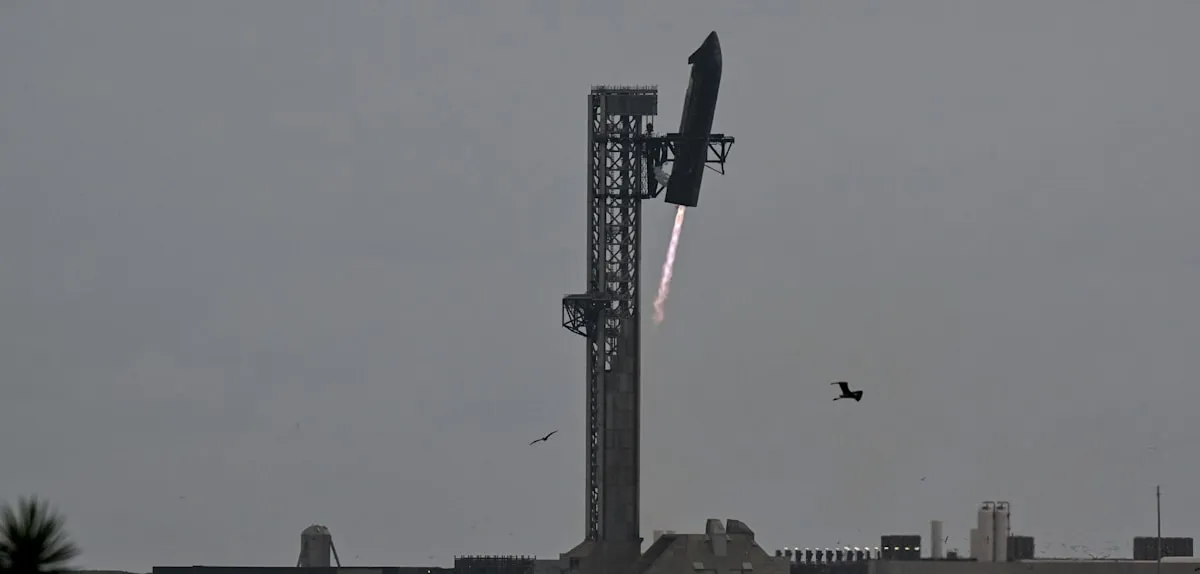
STARBASE, TEXAS – SpaceX has etched a new chapter in the annals of space exploration with the successful capture of the Starship rockets second stage, marking a fundamental breakthrough in the endeavor to achieve fully reusable spaceflight. This pivotal moment occurred at the Starbase launch complex in Texas, approximately 20 hours after launch, when precise robotic arms on the launch tower successfully grappled and stabilized the colossal spacecraft. This success follows a series of challenging test flights, including a setback during the 15th test flight.
This achievement is not merely a landing, but a complex vertical capture, akin to the method used for the smaller Falcon 9 rockets. However, with the much larger and more intricate Starship, this technology represents a significant leap. Starship's design targets full reusability, from launch to landing and rapid re-flight, an ambition claimed to be essential for drastically reducing the cost of space travel.
Historically, rocket stages are either discarded after launch or perform autonomous landings. This innovative capture method reduces the need for complex powered landings and potentially minimizes damage to the rocket structure, ensuring readiness for subsequent missions in a short timeframe.
Elon Musk, CEO of SpaceX, has repeatedly emphasized the importance of full reusability to realize his vision of human colonies on Mars and trips to the Moon. The successful capture of Starship's second stage this time is a critical validation of the company's radical approach.
This is an extraordinary step forward, an unnamed aerospace analyst stated, The potential to revolutionize access to space at a significantly lower cost is now becoming increasingly tangible. The analyst underscored its positive impact on scientific, commercial, and even space tourism missions.
The 15th test flight, which previously encountered hurdles, provided valuable lessons that became the basis for significant improvements in the capture system. SpaceX engineers reportedly worked day and night to refine the algorithms and mechanisms of the robotic arms.
The Starship spacecraft, consisting of the Super Heavy first stage and the Starship second stage itself, is designed to be a versatile transportation system. It is capable of carrying large cargo, crew, and even serving as an interplanetary shuttle.
Testing at Starbase continues intensively, with each test flight providing crucial data for the engineering team. This success not only proves technical capability but also strengthens SpaceX's position as an innovation leader in the global space industry.
The impact of this achievement is expected to be widespread. Other space companies may be encouraged to explore more ambitious reusability methods. Competition in the space launch sector is predicted to intensify, spurring further innovation.
Editorial Insight: The successful capture of Starship's second stage by SpaceX marks a potential turning point in spaceflight. If this technology can be refined and routinely applied, launch costs will plummet, opening doors for more scientific exploration, the development of a space economy, and even realizing the dream of interplanetary travel. This is a strong validation of Elon Musk's long-term vision, which now appears increasingly closer to reality, despite significant operational and financial challenges still ahead.