 Angela Stefani
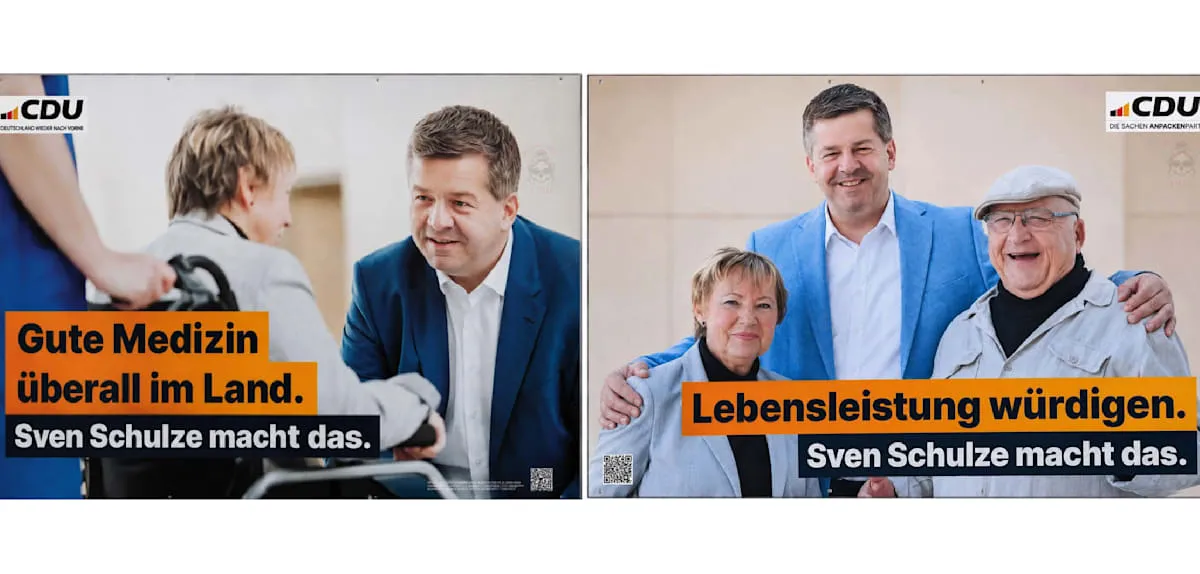
MAGDEBURG – The election campaign in the German state of Sachsen-Anhalt is embroiled in controversy following the launch of posters featuring the Christian Democratic Union (CDU) top candidate, Sven Schulze. The posters, depicting a woman initially in a wheelchair then standing beside Schulze, immediately sparked a wave of mockery on social media, even drawing Schulze into a miracle healer narrative. This incident highlights the complexities of visual political communication ahead of the 2026 general election.
The polemic originated from two sequential images used as CDU campaign material. The first image showed a woman with a sad expression sitting in a wheelchair. The second image, placed directly next to it, featured the same woman now standing tall, smiling, beside Sven Schulze. This visual was intended to convey a message of hope or change, but public interpretation deviated significantly.
The online response to these posters was swift. Netizens widely mocked the images, creating various memes, and labeling Schulze as a figure possessing miracle healing powers. Criticism poured in, highlighting insensitivity and the potential exploitation of disability imagery for political gain.
Facing this storm of criticism, Sven Schulze did not remain silent. He openly addressed the mockery, acknowledging a misinterpretation in the poster design. I cannot promise you miracles, Schulze stated, attempting to de-escalate tensions and clarify the intention behind the campaign message.
He added, We will do better next time. This statement indicates an awareness of the communication strategy error and a commitment to re-evaluate the campaign approach. This incident undoubtedly serves as a valuable lesson for the CDU campaign team.
Such phenomena are not new in the modern political landscape. Campaigns that rely on visual imagery often risk provoking unexpected interpretations, especially in the age of social media, which allows for instant dissemination of information and public reaction. Prudence in choosing visual messages is crucial.
It is important to remember that the representation of disability in politics should be carried out with integrity and respect. Efforts to highlight support or programs for people with disabilities must avoid manipulative impressions or oversimplifying the complexities of their lives.
This controversy has the potential to affect voter perception of Sven Schulze and the CDU in Sachsen-Anhalt. Amidst fierce political competition, any communication misstep can significantly impact electability and public trust.
Political parties in Germany, including the CDU, continuously strive to find the most effective ways to reach voters. However, this episode serves as a reminder that ambiguous or potentially offensive messages can easily backfire, eroding meticulously planned campaign efforts.
Moving forward, campaign teams are expected to be more careful in designing visuals and narratives, ensuring that the messages conveyed align with ethical values and do not cause misunderstanding. This incident adds to the long list of challenges faced by politicians in maintaining their public image.
Editorial Insight: The Sven Schulze campaign poster incident highlights a classic dilemma in political communication: how to convey a powerful message without falling into simplification or potential offense. Schulze's quick response indicates an effort to mitigate reputational damage. However, this case reaffirms that sensitivity to social issues, particularly disability, must be a core pillar in any political campaign strategy. Without caution, even good intentions can turn into a reputational boomerang.