 Demian Sahputra
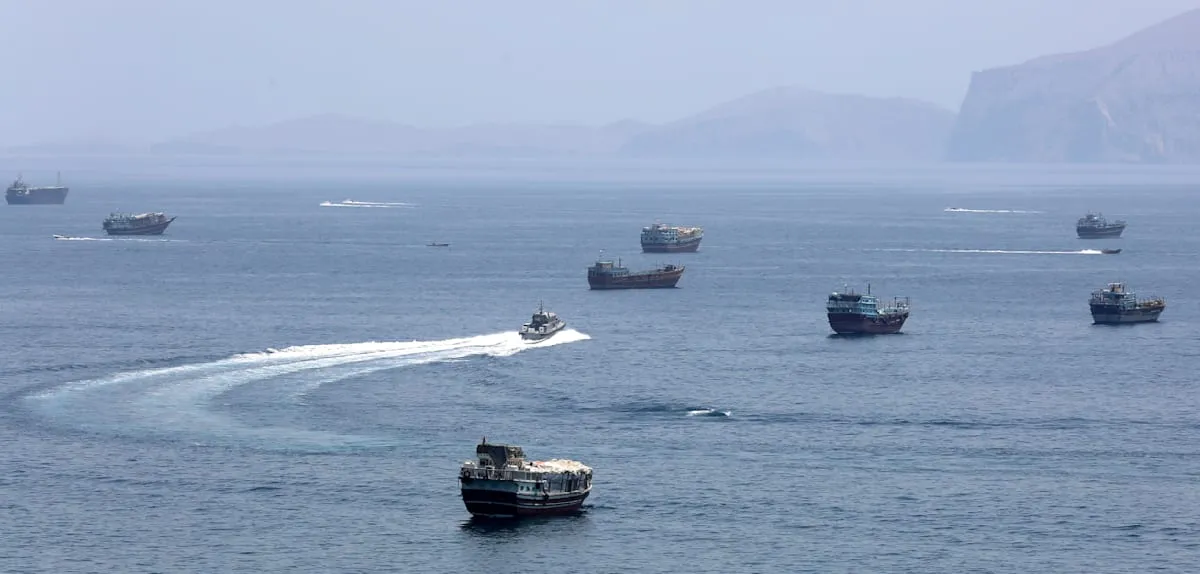
Geopolitical tensions in the Middle East reached a critical point in 2026 after Iran's Revolutionary Guards announced a complete closure of the Strait of Hormuz. This declaration followed an incident involving the shelling and forced stopping of a ship in the strategic waters, triggering a swift United States military response and a series of retaliatory attacks by Tehran against US bases in the region.
The closure of the Strait of Hormuz, a vital shipping lane connecting major Middle Eastern oil producers with global markets, immediately sparked serious concerns about economic turmoil and international security. Approximately one-third of all seaborne oil traded globally passes through this narrow strait daily, making it a critical artery for global energy.
The incident began when units of Iran's Revolutionary Guards launched an attack on a ship, bringing it to a halt after accusing it of violating sovereignty or engaging in provocation. Specific details regarding the ship's identity, cargo, and crew's nationality are still under investigation, but this action was immediately perceived as a serious escalation.
In response to Iran's actions, the Pentagon confirmed that the United States military had taken emergency measures, including increased troop readiness and the possible deployment of additional assets to the region. US Central Command (CENTCOM) reiterated its commitment to maintaining freedom of navigation and maritime security in the Gulf region.
However, tensions further escalated when Iran reportedly launched attacks against several US military bases across the Middle East. While precise details regarding the scale and impact of these attacks are still unclear, the move is a clear response to US military movements and further threatens regional stability.
Geopolitical analysts describe this situation as one of the worst crises in the Middle East in recent decades. This escalation underscores the fragility of peace in a region long plagued by conflict and major power intrigues. The Middle East Ablaze: Iran Blocks Hormuz 2026, US on High Alert is a vivid illustration of how regional tensions can quickly heat up.
The international community has called on all parties to exercise restraint and avoid actions that could exacerbate the situation. The United Nations Secretary-General, through his spokesperson, urged dialogue and diplomacy as the only way to prevent a full-scale conflict.
The economic consequences of the Hormuz closure are already being felt. Global crude oil prices surged sharply on commodity exchanges, reflecting market concerns about disrupted supplies. The shipping industry and maritime insurance also face significant uncertainty, with inevitable increases in risk premiums.
History records the Strait of Hormuz as a recurring maritime flashpoint, from the "Tanker War" in the 1980s to recent ship seizures. Each time tensions rise, the impact is felt across global markets, proving the critical importance of this waterway.
Amid global concerns, intensive diplomatic efforts appear to be underway behind the scenes, though the outcomes remain uncertain. World leaders hope tensions can de-escalate before a wider military escalation occurs, which could draw more actors into the vortex of conflict.
This 2026 crisis highlights the need for a stronger regional security architecture and effective dialogue mechanisms to prevent the recurrence of similar incidents in the future. Without swift and decisive de-escalation measures, the threat of a larger conflict in the Middle East will continue to loom, with global implications that cannot be underestimated.
The situation poses a severe test for international diplomacy and the ability of major powers to manage crises without exacerbating existing tensions. Global energy security and economic stability now hang in the balance, depending on every strategic step taken in the coming days.