 Chris Robert
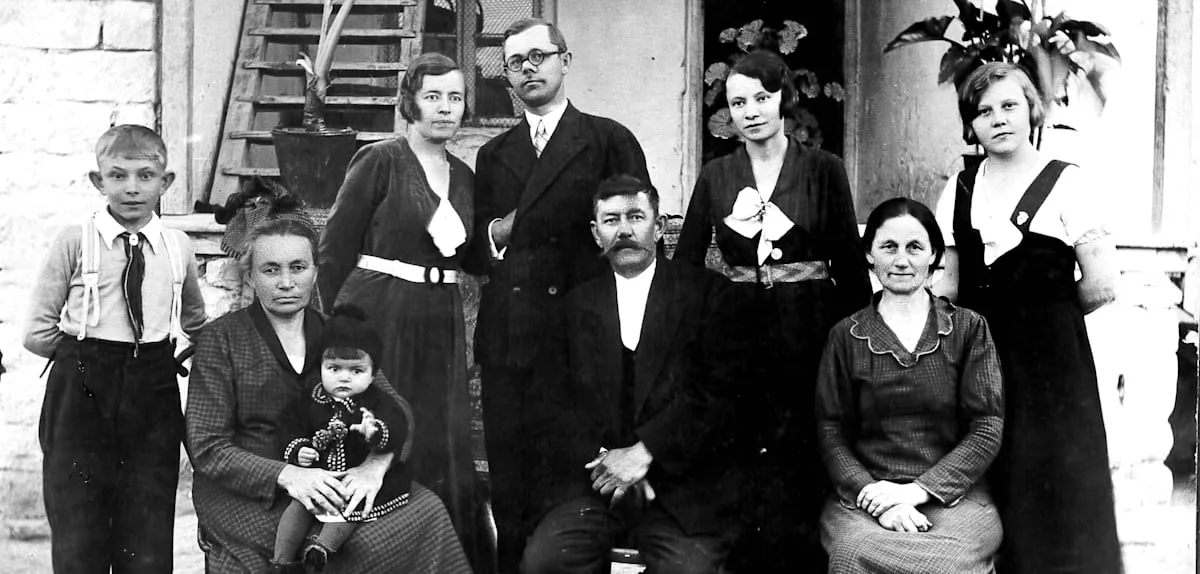
KYIV — Traversing the East European landscape, replete with countless untold stories, investigative journalist Michael Riepl embarked on an emotional expedition to trace his grandmother Hedwig's roots. This journey was not merely a personal genealogical quest, but a profound exploration into the forgotten history of German communities in Russia, the Caucasus, and Ukraine, whose existence was almost eradicated by the repressive policies of the Stalin era. In 2026, Riepl's findings serve as a stark reminder of cultural genocide and the resilience of heritage.
Riepl's expedition, undertaken some time ago but whose resonance remains potent today, focused on a fundamental question: "Are there still Germans living there?" This query often elicited straightforward answers from locals he encountered: "I don't think so. Stalin took them all away." These simple words encapsulate a deep historical trauma, revealing a systematic effort of expulsion and identity annihilation.
The "Russlanddeutsche" or Russian-German communities did not solely inhabit Russian territories; they were widely dispersed throughout the Caucasus mountains and the Ukrainian plains. They were descendants of German immigrants invited by Catherine the Great in the 18th century, bringing agricultural and industrial expertise to the vast expanses of the Russian Empire. For centuries, they built lives, villages, and a distinct culture, becoming an integral part of Eastern Europe's ethnic mosaic.
However, after the Bolshevik Revolution and particularly during Joseph Stalin's rule, their fate dramatically changed. Suspected as anti-Soviet elements and potential foreign "collaborators," millions of ethnic Germans were forcibly displaced, deported to Siberia and Central Asia, and even executed. These ethnic "cleansing" policies aimed to erase their collective identity from the Soviet Union's demographic map.
Riepl, with the spirit of a historian and the keenness of a journalist, traversed remote villages, former settlements, and historical sites. He sought not only documents or artifacts but also endeavored to experience the atmosphere and discover remnants of culture that might still endure. This was a search not merely for individuals, but for a collective memory.
One of the most moving discoveries on Riepl's journey was the distinctive German roof tiles. "The roof tiles of the German diaspora still stand today," he observed. These tiles, with their unique design and construction techniques, symbolize resilience. Although their inhabitants are gone or assimilated, their architectural legacy refuses to perish.
The visible physical presence, such as these roof tiles, serves as silent proof that history cannot be entirely erased. They are mute witnesses to a civilization that struggled to survive amidst ideological storms and oppression. This narrative reminds us of the importance of preserving collective memory, even when its living witnesses are no longer present.
In the global context of 2026, the issue of diaspora and identity becomes increasingly relevant. Similar phenomena, albeit with different dynamics, continue to affect millions of lives worldwide. Just as we observe shifts in the political landscape caused by diaspora voting rights in modern nations, such as seen in Italy Shakes Democracy: Diaspora Voting Rights Reshape 2026 Political Map, this story of the German diaspora offers a deep historical perspective on how communities can be marginalized or, conversely, shape the future.
Riepl's journey also highlights how this historical memory is preserved or, conversely, forgotten by successive generations in these regions. Many young people are no longer familiar with this dark history, or only hear fragments of it through the stories of elders. Education and research such as this are crucial to ensuring historical justice can be upheld.
Michael Riepl's story and his quest for his grandmother's legacy are an ode to human endurance and the power of cultural identity. It reminds us that behind the grand narratives of history lie millions of personal stories worth telling and remembering, even into 2026 and beyond. The enduring legacy of the roof tiles stands as a powerful metaphor: a silent symbol of lives that once were, defying strenuous attempts to eradicate them from collective memory.