 Demian Sahputra
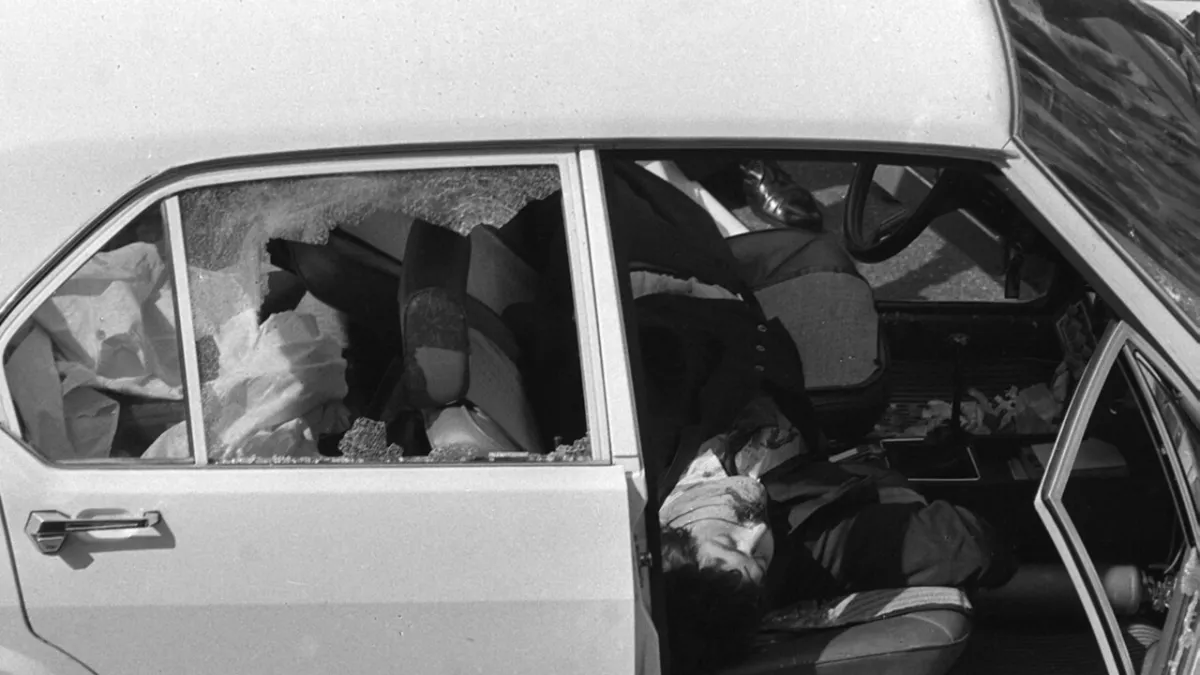
ROME – A controversial publication in 2026 once again tears through the dark chapters of Italian history, spotlighting the Via Fani tragedy. Through his latest book, Spari da destra (Shots from the Right), investigative journalist Roberto Chiodi presents a startling reinterpretation of the 1978 kidnapping and murder of former Prime Minister Aldo Moro. Chiodi explicitly claims that a previously overlooked ANSA photograph could be the key to unveiling that the Red Brigades did not act alone, sparking speculation of involvement from elements beyond the left-wing terrorist group.
The Via Fani tragedy, which occurred on March 16, 1978, remains one of the most traumatic episodes in post-war Italian republican history. The event witnessed the kidnapping of Aldo Moro, leader of the Christian Democracy Party, and the murder of his five bodyguards by the Red Brigades. During 55 days of intense searching, Italy held its breath before Moro's body was discovered in the trunk of a car in Rome, embedding a deep wound in the nation's collective psyche.
However, the official narrative that exclusively placed the Red Brigades as the sole perpetrators is now being re-questioned by Chiodi. In his work, he does not merely pose questions but offers new evidence based on visual details from an archival photograph. Chiodi argues that the image, captured by the ANSA news agency moments after the incident, contains vital clues previously missed by investigators and historians.
The book's title, Spari da destra or Shots from the Right, is itself highly provocative, indicating the direction of Chiodi's investigation. The author, with extensive experience in analyzing sensitive cases, attempts to trace the possible involvement of right-wing extremist groups or even secret agents who may have operated behind the scenes. This hypothesis, if proven, would fundamentally alter our understanding of one of Italy's most crucial moments.
This reinterpretation of Via Fani undoubtedly has the potential to shake the foundations of existing historiography. For decades, the general consensus held the Red Brigades fully responsible. The emergence of counter-evidence or arguments, such as those put forth by Chiodi, will undoubtedly ignite fierce debate among historians, politicians, and the Italian public. This is not merely about revising facts, but about reshaping collective memory.
Given the political and emotional sensitivity surrounding Moro's murder, Chiodi's book is expected to trigger a wave of major controversy. Any attempt to deviate from established narratives often faces skepticism and resistance. Victims' families and survivors may re-experience old wounds, while politicians will be pressed to re-examine archives that may not yet be fully open.
The role of the ANSA photograph as the starting point for this new investigation underscores the power of visual evidence in investigative journalism. An image once considered simple documentation is now elevated to an artifact with the potential to uncover hidden truths. Chiodi appears to use visual forensic analysis to reveal microscopic details that escaped previous attention.
The Italian public, always divided in its interpretation of its political past, is now confronted with yet another challenge for reflection. Discussions in the media, academic forums, and even family dinner tables will again be dominated by the Years of Lead or *Anni di Piombo*, full of violence and political intrigue. This book is not just about Via Fani, but about how a nation grapples with its own history.
If Chiodi's claims have a strong foundation, it will demonstrate the immense complexity of power networks operating behind major events. This is not merely a struggle between the state and terrorism but also internal intrigues, double-dealing, and potential foreign interference. The truth behind Via Fani may be far more layered than we have understood.
The publication of Spari da destra is expected to prompt legal authorities and archival institutions to reopen old files. Transparency and accountability are key to ensuring that every element of truth, however small, is finally revealed, bringing justice to the victims and clarity to future generations.
Editorial Insight: The release of Spari da destra by Roberto Chiodi is more than just an addition to historical literature. It is a direct challenge to the officially accepted narrative. If the claims regarding the involvement of right-wing elements or non-Red Brigades actors are substantiated, the implications will be far-reaching, not only for Italy but also for the study of global terrorism and covert politics. This book has the potential to reopen a chapter of investigation that has long been closed, demanding accountability from entities that may have hidden in the shadows of history.