 Chris Robert
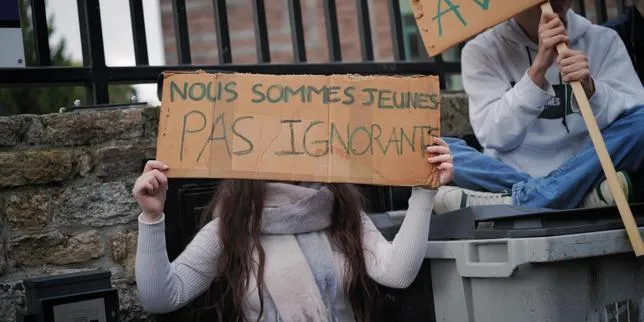
PARIS – The student protest movement across France reignited on Tuesday, potentially leading to the closure and paralysis of at least 200 out of approximately 3,700 high schools nationwide. These mass demonstrations, initiated by various student organizations, demand significant changes in education policy and learning conditions. The French Minister of National Education, in a statement on France Inter, confirmed the estimated number of affected schools. Hundreds of students took to the streets in major cities such as Paris, Lyon, Marseille, Lille, Toulouse, and Bordeaux.
The scale of this mobilization indicates a sharp increase. The figure of 200 schools at risk of paralysis is not merely a statistic, but a reflection of deep-seated dissatisfaction among France's youth regarding their education system. This signifies that the issues sparking the protests are no longer sporadic incidents, but an organized movement reaching a broad geographical and demographic spectrum of students.
The Minister of National Education expressed concern over the impact of these blockades on the teaching and learning process. The ministry is working to understand the root causes of this unrest, while ensuring every student's right to education is not disrupted by the protests. Dialogue is seen as a way out, but students appear to have chosen the path of demonstration to attract public and government attention.
The main demands of the demonstrators, though not specifically detailed by the news source, generally revolve around curriculum reform, increased education budgets, improved facilities, and fairer access to higher education. Such waves of protest often serve as a safety valve for frustrations with policies perceived as unresponsive to the needs of modern students.
French history bears a long record of student and youth movements successfully influencing the country's policy direction. This year's demonstrations are reminiscent of similar mobilizations in the past, showing that the voice of the youth remains a political force that cannot be underestimated. They recognize their collective power to push for an agenda of positive change.
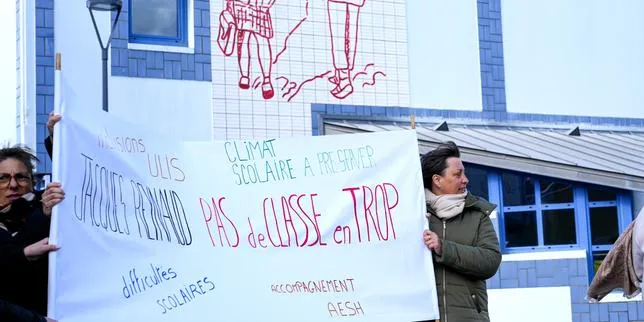
In the capital, Paris, thousands of students flooded the streets, carrying banners and chanting slogans rejecting the educational status quo. Police were on alert to maintain order, but most actions proceeded peacefully despite causing significant traffic disruptions. The energy and spirit of the demonstration radiated clearly from every corner of the city.
Similar situations unfolded in other major cities. In Lyon, school blockades reportedly caused class delays. Meanwhile, in Marseille and Lille, protest marches also attracted public attention, demonstrating student solidarity across various regions. Toulouse and Bordeaux also bore witness to this massive mobilization, reaffirming that the call for change resonates throughout the country.
Student organizations such as UNL (Union Nationale Lyceenne) and FIDL (Federation Independante et Democratique Lyceenne) are suspected to be key players behind the coordination of these actions. They actively amplify student voices, formulate demands, and mobilize masses through social networks and internal meetings. The strength of these organizations forms the backbone of the protest movement.
The French government now faces a serious challenge. An incorrect response could trigger even larger protests, disrupting social and political stability. Public and media pressure will continue to monitor the situation, demanding transparency and concrete steps from the authorities. This is not just an education issue, but also a test of national leadership.
Pare nts and the general public are closely following these developments. While some understand the students' aspirations, there are also concerns about the disruption to learning and the safety of their children amidst crowded demonstrations. The balance between the right to demonstrate and public interest is under scrutiny.
School blockades are often effective tactics to draw media and government attention, but they also risk alienating parts of the public who feel inconvenienced. The effectiveness of this movement will largely depend on the students' ability to maintain momentum, articulate clear demands, and build support from broader segments of society.
The future of French education depends on how a dialogue between the government and student representatives can be established. Without constructive communication, the potential for prolonged conflict will increase. This is a crucial moment for both sides to find common ground for the shared interest of France's future generation.
Editorial Insight: This wave of student protests in France is not merely a transient outburst of emotion, but a strong indication of structural failures within the education system that require serious attention. The government must promptly conduct an in-depth study and open substantial dialogue with student representatives. Ignoring the aspirations of the younger generation risks creating a social ticking time bomb that could detonate at any time, impacting national stability and the quality of France's human resources in the future.