 Debby Wijaya
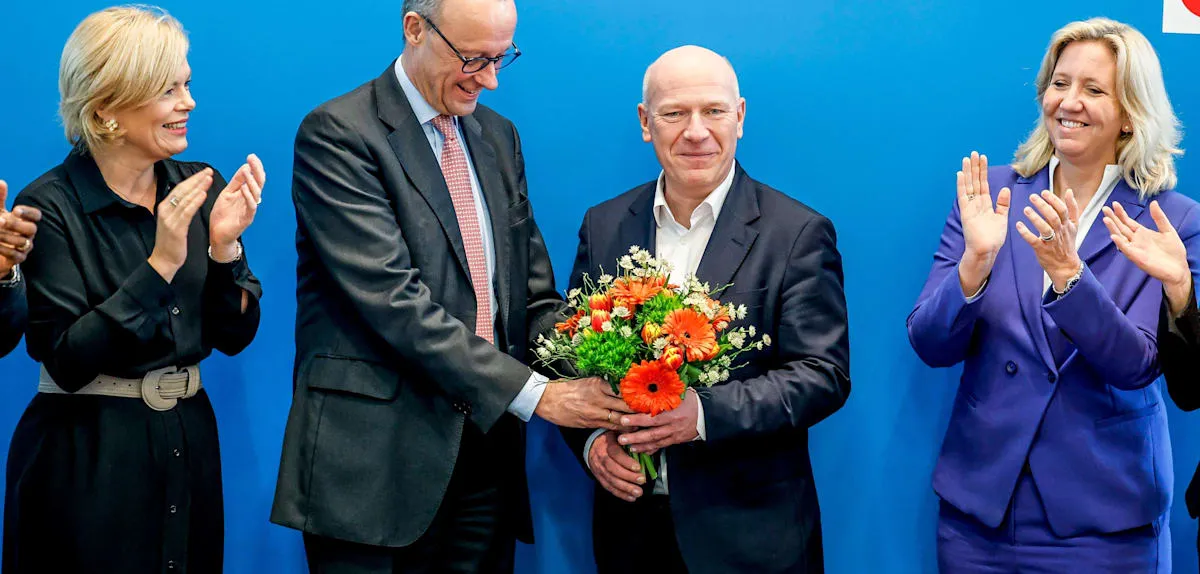
BERLIN — The German public has been captivated by the latest satirical publication from the prominent media outlet WELT this week, featuring a humorous illustration depicting Berlin Mayor Kai Wegner unexpectedly 'defeating' football coach Julian Nagelsmann. This piece of digital art, which has sparked lighthearted debate, was released by WELT's satire editorial team, aiming to elicit laughter and social commentary amidst the political and sports news frenzy of 2026.
The fictional scene in 'WELT's Witzbilder' comically contrasts the world of Berlin politics with the football arena. In the circulated image, Kai Wegner, a central figure in the capital's politics, is shown in a superior position, symbolically outmaneuvering Nagelsmann, one of Germany's most recognized football tacticians. This is not a physical confrontation but a clever metaphor that ignites collective imagination.
WELT's satire editorial team is known for its boldness in presenting social and political criticism through visual humor. This publication, titled 'The Best Witzbilder of WELT – Kai Wegner beats Nagelsmann,' quickly went viral on social media platforms, triggering widespread discussion on the relevance of satire in the contemporary media landscape.
Julian Nagelsmann, who in 2026 remains a key figure in German football, whether as a national team coach or an elite club manager, often finds himself subject to public attention. His reputation as a talented young coach with innovative tactical approaches makes him a recognizable icon often associated with ambition and high pressure.
Meanwhile, Kai Wegner holds the position of Mayor of Berlin, a role always surrounded by complex challenges, ranging from urban issues to intricate political dynamics. In 2026, his political agenda remains busy, including efforts to stabilize the governing coalition and address various socio-economic crises afflicting the capital.
This satirical publication likely highlights perceived disparities or tensions between the worlds of politics and sports, or perhaps subtly mocks the performance of either figure in an unexpected context. It is a way for the media to comment on current conditions without getting bogged down in overly serious news narratives.
For instance, Kai Wegner himself has been at the center of attention due to various political issues. Topics such as the 'Tennis-Affäre' scandal that once shook Berlin and entangled the CDU in a political crisis exemplify how vulnerable public figures are to media scrutiny. Satire often serves as a medium to reflect or even amplify public perception of such figures. Read more about political issues in Berlin: Tennis Affair Scandal Shakes Berlin: Wegner Entangles CDU in Political Crisis.
On the other hand, German football is not immune to drama and high expectations. Discussions about the future of DFB coaching and the pursuit of top talents like Julian Nagelsmann always draw attention. Debates on whether a particular coach is suitable or not, or comparisons between coaches, are daily fodder for sports enthusiasts.
WELT's satire editorial cleverly leverages the differing personas and contexts of Wegner and Nagelsmann to create humor. This is a classic example of how satire can function as a social catharsis, providing space for society to laugh at tensions or absurdities they might perceive in real life.
The essence of these 'Witzbilder' lies in their ability to provoke thought and discussion. Is it a jab at Berlin politics perceived as 'hindering' progress in other areas, or merely a harmless joke about two well-known figures who rarely intersect? The interpretation is left entirely to the reader.
Communication experts and media observers often emphasize that the role of satire is to maintain clarity and balance in public discourse. By highlighting issues through the lens of humor, media outlets like WELT help audiences process information in a lighter yet critically resonant manner.
Ultimately, this publication successfully achieved its goals: attracting attention, sparking conversation, and reminding all parties of the potent power of humor and satire as communication tools. In 2026, as information inundates us from all directions, the ability to smile and reflect simultaneously becomes increasingly valuable.