 Dodi Irawan
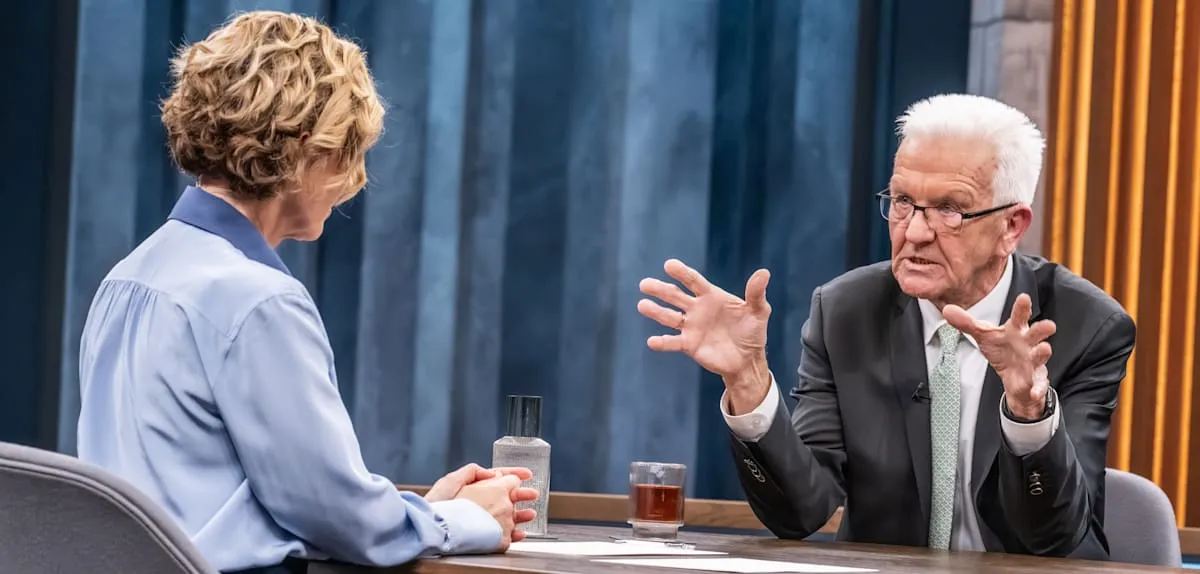
BERLIN – A wave of dissatisfaction is sweeping across Germany, especially among the younger generation, who are now openly expressing their anger over a series of crucial issues: soaring cost of living, a crisis in the education system, and discussions about military conscription. The peak of this unrest was revealed in a public discussion on the renowned show Miosga, where Winfried Kretschmann, a senior political figure, fully acknowledged the validity of the protests, while Juso Chairman Philipp Turmer surprised the audience with a personal confession that deepened the narrative of existential pressures faced by young people today.
This unrest is not without strong reasons. Many believe that the increase in basic necessities and urban rents has reached a critical point, eroding purchasing power. Generation Z and millennials, in particular, feel the heaviest impact of this less stable economic situation. This situation is similar to what other countries have experienced, such as inflation squeezing the purchasing power of the people in Japan in 2026.
In the education sector, the problems faced are no less complex. Higher education institutions in Germany, once known for their quality and accessibility, are now complained about due to a lack of investment, outdated facilities, and a curriculum deemed less relevant to the demands of the global job market. This creates a gap between expectations and reality for students and recent graduates.
The discussion about reactivating or reforming military conscription policy has become the third heated issue igniting the emotions of young people. For most of them, this idea is seen as an additional burden amid future uncertainties, threatening personal freedoms and career prospects they have built.
Winfried Kretschmann, a senior politician with extensive experience, shared a view that surprised many. I completely understand the protests of these young people. This simply cannot continue, he stated on the show, highlighting the urgency to address the existential question faced by Germany's productive age group. His statement indicates an acknowledgment of the legitimacy of the demands being voiced.
Furthermore, Juso Chairman Philipp Turmer, the youth wing of the Social Democratic Party (SPD), shared a touching personal experience. He admitted facing severe financial difficulties as a student, even being unable to pay rent for his room. This confession, openly conveyed, resonated with many viewers and strengthened the argument that the existing problems are very personal and profound.
Turmer's confession and Kretschmann's empathy show that these issues have permeated various layers of society, not just surface ripples. This is no longer merely political criticism but a reflection of systemic failures that require a rapid and comprehensive response.
The pressure from this youth generation poses a significant challenge for the ruling government. With elections approaching, the response to the cost of living crisis, education, and conscription can determine the direction of German politics. Recent surveys in states like NRW show significant fluctuations in political support, as seen in surveys shaking NRW ahead of the 2026 elections.
Young people, often considered apolitical, are now demonstrating a political force that cannot be underestimated. They are becoming an important voice demanding real change, not just empty rhetoric. Awareness of their rights and future drives increasingly organized movements.
This crisis also sparks debate about Germany's social and economic future. Will the country be able to adapt to the demands of its new generation, or will it be stuck in old models that are no longer relevant? These issues echo concerns previously raised by prominent economists warning of the shadow of DDR 2.0 threatening Germany.
Various solutions are being discussed, ranging from housing policy reform, increased budget allocation for education, to a complete revision of conscription options. However, their implementation requires strong political consensus and a willingness to listen to the voice of the people, especially from the most affected groups.
It is clear that the anger of the youth generation in Germany is not a fleeting phenomenon but an indication of structural problems that must be addressed immediately. Their voices demand serious attention from policymakers for a more stable and just future.
Editorial Insight: This anger among Germany's youth is a critical barometer for social and political stability. If their demands, rooted in fundamental issues like economy and education, are not adequately addressed, the potential for social unrest could escalate. Political leaders must recognize that investing in the well-being and future of the young generation is a crucial investment for the nation's sustainability. Failure to do so could lead to an erosion of public trust and sharper polarization.