 Edward DP Situmorang
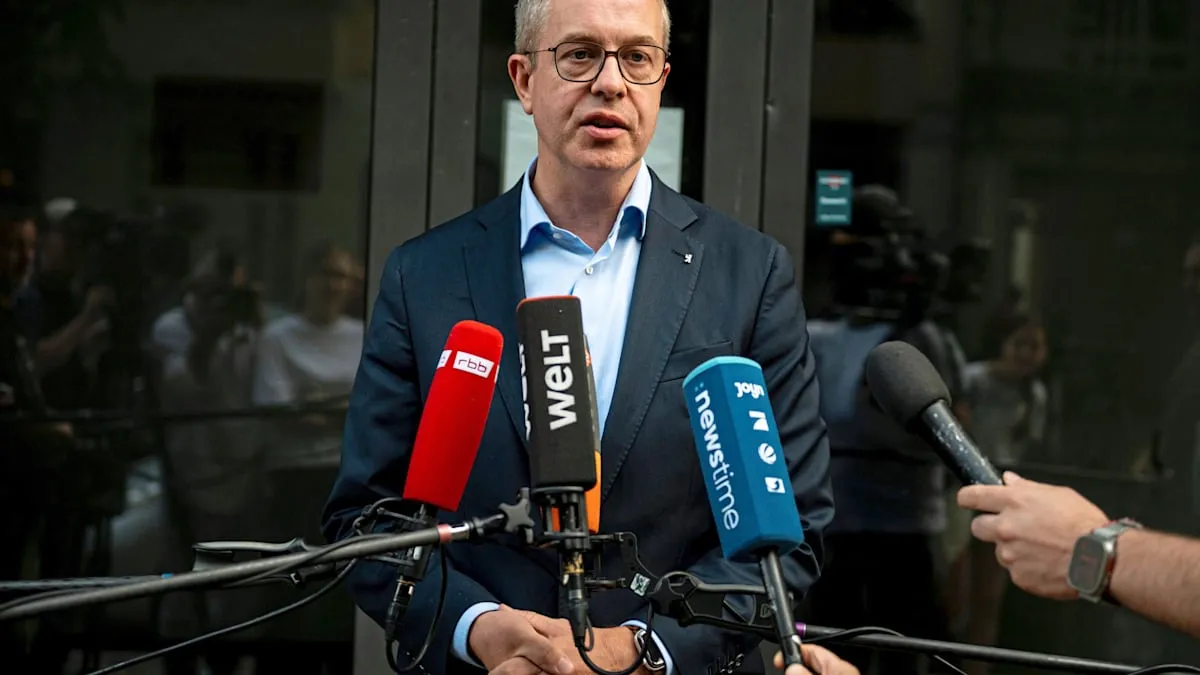
BERLIN — Kai Wegner's resignation from the leadership of Berlin's CDU in 2026 has been met with mixed responses, but one of the most vocal comes from Harald Burkart, Chairman of the Junge Union Berlin. Burkart explicitly stated his support for Stefan Evers as the right figure to lead the CDU forward, while simultaneously urging the party to prioritize crucial issues such as housing development, internal security, and the economic revitalization of the German capital.
“Better late than never,” said Burkart, responding to Wegner's surprising move. This statement suggests a long-standing dissatisfaction within the party regarding the previous leadership, particularly concerning responses to crises affecting Berlin.
Wegner's resignation itself was driven by escalating pressure, especially following the Berlin electricity crisis that temporarily paralyzed much of the city's activities. This situation, as previously reviewed in the article “Berlin Electricity Crisis Crushes Ambition: Kai Wegner Steps Down from CDU Leadership”, marked a crucial turning point for the capital's political landscape.
Stefan Evers, now widely considered a strong candidate, is not a new face in Berlin politics. He is known for a solid track record and is believed to be capable of bringing new energy and concrete solutions to the complex challenges Berlin faces. Support from the Junge Union, the youth wing of the CDU, provides significant political leverage.
Burkart emphasized that Berlin's future heavily relies on leadership willing to make strategic decisions. He highlighted the urgency of affordable housing development in response to the surging population and continuously rising property prices.
Internal security is also a top priority. With fluctuating crime rates and emerging new threats, Berlin's residents long for a greater sense of safety and order. Burkart hopes the new leader can formulate more effective policies to maintain the city's stability.
From an economic perspective, Berlin needs a significant boost to recover from the global slowdown. Addressing high operating costs and attracting investment are major tasks. As highlighted in the report “German Economy on the Brink: 20% of Companies Halt Investment Due to High Costs”, this situation demands intelligent and courageous policy interventions.
Support for Evers does not only come from the Junge Union. Several conservative factions within Berlin's CDU are also consolidating power, viewing Evers as the most suitable figure to restore the party's image and public trust after political turbulence.
With this momentum for change, Berlin's CDU has an opportunity to reassert its commitment to the citizens. The leadership transition is expected to be not just a change of figures, but also a paradigm shift towards more responsive and solution-oriented governance.
The political stakes in Berlin are now heating up. The election of the new CDU leader will be an important barometer for the city's future policy direction and how Berlin will address various challenges, from social, economic, to infrastructure, in the coming years.
Stefan Evers himself has not yet made an official statement regarding his candidacy, but the political environment in Berlin is already buzzing with speculation and flowing support. Berliners await a concrete vision from the candidate who will lead the city forward.
This situation also mirrors the broader political dynamics in Germany, where local issues often have national resonance. Decisions made in Berlin can influence public perception of the CDU as a whole at the federal level.
Wegner's resignation and the call to focus on more pressing agendas indicate that German politics, especially in Berlin, is entering a phase of recalibration. Parties are urged to be more sensitive to public aspirations and offer tangible solutions.