 Dorry Archiles
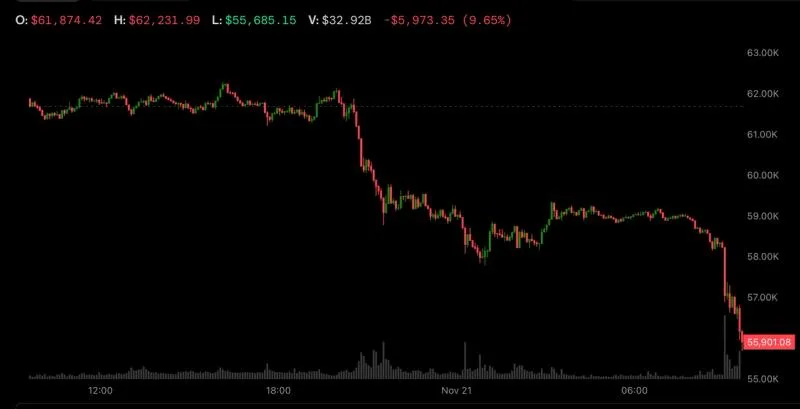
JAKARTA – Bitcoin's price plummeted dramatically below the 57,000 US dollar mark on Saturday, September 28, 2026, reaching its lowest point in the past two years. This sharp decline triggered a wave of sell-offs across the global cryptocurrency market, raising serious concerns among investors and financial analysts.
This dramatic movement occurred amidst increasingly bearish market sentiment, following a series of macroeconomic pressures and regulatory uncertainties that continue to overshadow digital assets. Data indicates that Bitcoin, as the largest cryptocurrency, led this decline, dragging other major altcoins into a similar downturn.
Market analyst, Dr. Surya Wijaya from the Institute for Digital Economic Studies, stated that this correction is part of an unavoidable market cycle. Volatility is indeed in Bitcoin's DNA. However, this particular decline points to more dominant external factors, such as global monetary policy tightening and risk-off sentiment from institutional investors, Dr. Surya remarked.
This drop is more than just a regular fluctuation. Since reaching its peak some time ago, the crypto market has faced various challenges, ranging from inflation concerns to potential recessions in several major economies. Selling pressure deepened as investors tended to shift towards safer assets.
Indeed, this Bitcoin plunge is reminiscent of the previous Bitcoin capitulation when it collapsed below 59,000 dollars, demonstrating how vulnerable this market is to changes in sentiment. Recent events suggest significant liquidation pressure, particularly from leveraged positions.
The implications of Bitcoin's fall are far-reaching. Many other cryptocurrencies such as Ethereum, Solana, and Ripple also recorded substantial price declines. The total global crypto market capitalization drastically shrank within hours, wiping out billions of dollars in investment value.
Regulatory uncertainty also plays a significant role in driving this negative sentiment. Several countries continue to tighten oversight on digital assets, fueling speculation about the operational future of exchanges and crypto projects. These policies, while aiming to protect investors, often create short-term risk-off effects.
For instance, new initiatives by financial authorities in Hong Kong that tightened crypto regulations by requiring licensed brokers and advisors, illustrate a global trend towards stricter regulation. Such developments can limit market access for some investors, adding pressure on prices.
Retail investors, who are often the first victims in such market volatility, are advised to remain calm and avoid panic. Experts suggest that investors diversify their portfolios and consider long-term investments rather than making impulsive decisions.
The current market condition is a true test for the fundamentals of crypto assets. Only projects with strong utility and adoption will be able to survive and rebound, added Dr. Wijaya, emphasizing the importance of in-depth analysis before investing.
This event also highlights the importance of financial education in the rapidly evolving world of digital assets. The crypto market, with all its potential gains, also carries significant risks, making comprehensive understanding key.
Despite the significant downturn, some parties remain optimistic about the long-term prospects of Bitcoin and the crypto ecosystem. They argue that price corrections are a natural part of a maturing market's development, which will ultimately filter out weaker projects and strengthen fundamental assets.
Editorial Insight: Bitcoin's fall below 57,000 US dollars is a stark reminder of the inherent volatility of the crypto market and its susceptibility to macroeconomic sentiment and regulatory pressures. Nevertheless, this moment could present an opportunity for long-term investors to accumulate quality assets at lower prices. The real challenge lies in building trust and stability within an ecosystem that is still finding its ideal form amid an ever-changing global financial landscape. Balanced regulation will be crucial in determining the market's future direction.