 Debby Wijaya
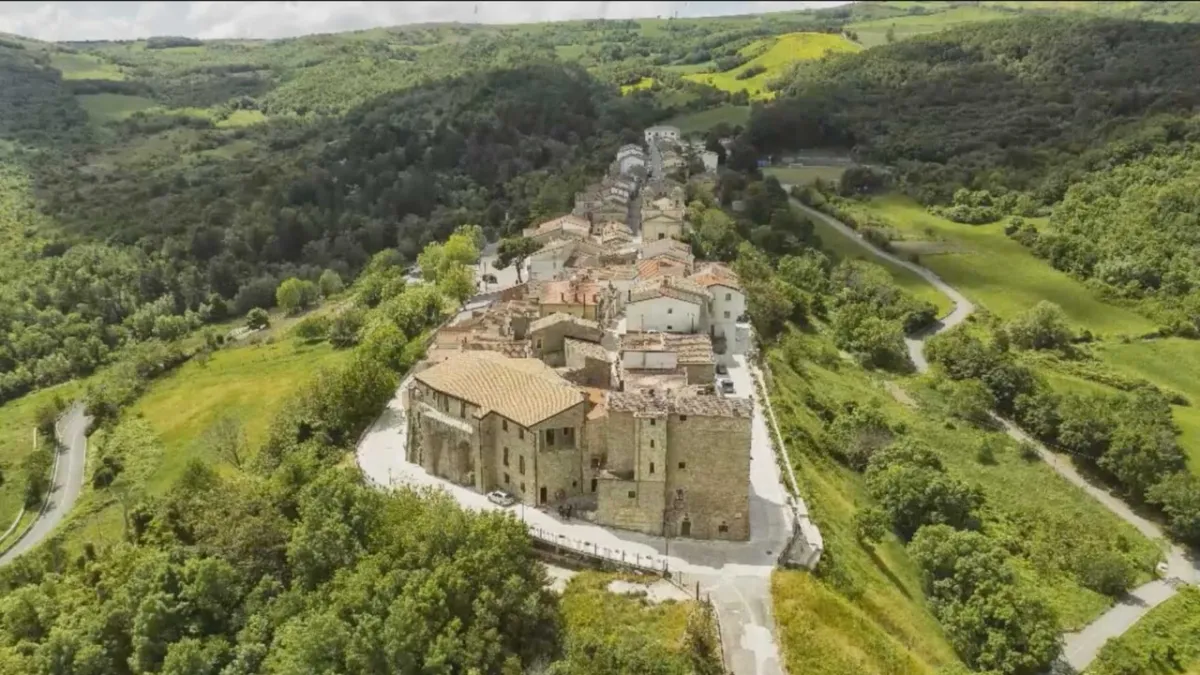
Celle San Vito – Amidst the fertile landscape of Foggiano, Italy, a tiny village named Celle San Vito is forging a new history in the preservation of Europe's linguistic heritage. The village, with the smallest population in the Puglia region, is gaining prominence thanks to its initiative to teach Franco-Provencal to tourists, an innovative step to keep their cultural identity alive in 2026.
Franco-Provencal, also known as Arpitan, is a minority language spoken in small parts of France, Switzerland, and Italy, including Celle San Vito. This language faces a serious threat of extinction due to globalization and the dominance of national languages. However, the community in Celle San Vito refuses to surrender to this fate. They have launched an educational program not only for local residents but also opening its doors to travelers from various parts of the world.
This language teaching initiative serves a dual purpose: first, to revive the use of Franco-Provencal among the village's younger generation; second, to attract tourists eager for authentic cultural experiences. Visitors can now immerse themselves in intensive courses, learning basic phrases and understanding the intricacies of its rich historical grammar. This activity creates a unique bond between visitors and locals, where cultural exchange happens organically.
Furthermore, this spirit of preservation does not stop at oral instruction alone. The Celle San Vito community is currently busy working on the second edition of the Franco-Provencal dictionary. This project is crucial for standardizing the language, providing a comprehensive reference for learners and researchers. The highly successful first edition has laid a strong foundation for this endeavor.
The development of the second dictionary edition involves local linguists, historians, and village elders who are the primary custodians of the oral tradition. They work hand-in-hand to enrich the vocabulary, refine definitions, and document the nuances of the language that might otherwise be lost. This collective effort is a tangible manifestation of the village's commitment to its cultural identity.
Through its language courses and dictionary development, Celle San Vito is not only preserving a language but also fostering sustainable cultural ecotourism. The village offers a distinct experience compared to mass tourism destinations, attracting visitors who seek a deep connection with local history and uniqueness. This also provides an economic boost for the local community, creating jobs and revitalizing the village economy.
Similar initiatives have been undertaken in several other European regions to save minority languages. However, Celle San Vito's approach, which actively involves tourism as a driving force for language revitalization, positions it as an inspiring model. Their success demonstrates that with creativity and collaboration, endangered languages can find new hope.
The regional government of Puglia and several European cultural organizations are also providing financial and logistical support. They recognize the importance of maintaining linguistic diversity as an integral part of Europe's multicultural identity. This support is vital for the long-term sustainability of the project in Celle San Vito.
With all these efforts, Celle San Vito is more than just a small village on the map of Italy. It has become a beacon for the preservation of minority languages, proving that even the smallest entities have the power to create a significant global impact. They teach that cultural heritage is a shared responsibility that must be guarded from generation to generation.
Editorial Insight: Celle San Vito's efforts to teach Franco-Provencal to tourists and compile a second dictionary edition are a brilliant example of how innovation can intertwine with cultural preservation. This model has the potential to be replicated in other regions facing the threat of local language extinction, making tourism a vital agent in revitalizing linguistic identity. This is not merely about words, but about keeping the soul of a community vibrant amidst the currents of modernization. The success of this project could serve as an important case study for UNESCO and other international cultural preservation organizations.