 Dorry Archiles

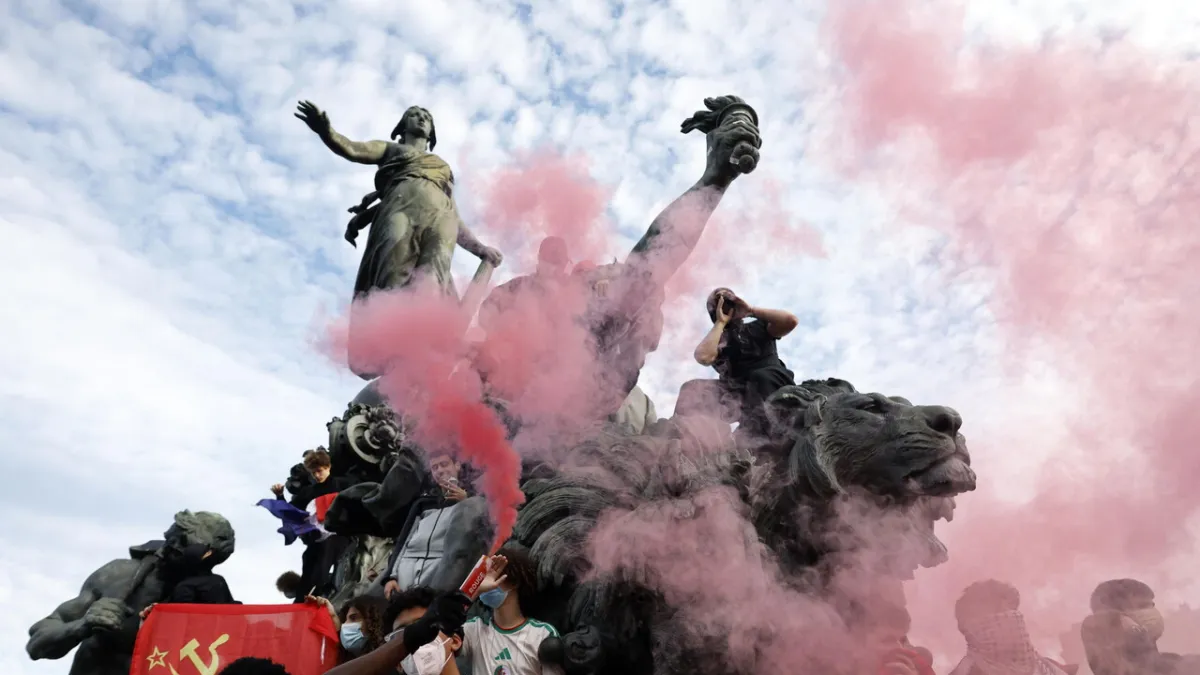
PARIS – Prominent sociologist, Francois Dubet, recently voiced his sharp views in an opinion piece for Le Monde, stating that while no future can be imagined outside educational institutions, school itself cannot provide a definite guarantee for an individual's future. This statement emerges amidst a wave of high school student protests in France, highlighting concerning learning conditions and an existential crisis regarding the meaning of studies, which has been distorted by massification policies.
The mobilization of students in various French cities, as reported in Student Protests Rock France, Macron Calls Ministers, is not merely a response to inadequate facilities. Dubet emphasizes that the core of their unease runs far deeper, touching upon the essence of education's purpose in the modern era.
In his analysis, Dubet explains that the expansion of educational access (massification) fundamentally altered the landscape of studies. Previously, higher education promised clear vertical social mobility. Now, with an increasing number of graduates, the value of that guarantee has eroded.
The phenomenon of massification successfully increased participation rates, yet paradoxically also spawned uncertainty. High hopes often collide with the reality of a job market that does not always align with the qualifications possessed by graduates.
The fundamental question now facing us is, what is the actual meaning of studying for years if no certainty awaits at the end? This creates a dilemma for the younger generation, who feel trapped between the necessity of pursuing education and doubts about its relevance.
Dubet also does not overlook student complaints regarding physical conditions and teaching quality. Crowded classrooms, outdated facilities, and heavy curriculum pressure are direct triggers for protests. However, he reiterates that these are merely the tip of the iceberg.
Comparing it to previous eras, Dubet argues that education has lost some of its sacred aura as a definite social ladder. Contemporary society demands adaptability and skills not always fully accommodated by traditional educational systems.
The French context, with its long history of student protests and complex educational reforms, provides fertile ground for such sociological reflection. President Emmanuel Macron's government also faces pressure to address demands rooted in this deep dissatisfaction. Other articles such as French Education Shock: Inequality Triggers Mass Student Protests in 2026 indicate this issue has gained widespread public attention.
Nevertheless, Dubet does not offer fatalism. He suggests that improvements are needed not just in curriculum or facilities, but also in restructuring the philosophy of education to be more responsive to the socio-economic dynamics of the 21st century.
Editorial Insight: Dubet's statement underscores the urgency for holistic educational reform, extending beyond mere infrastructure improvements. The greatest challenge lies in restoring public trust in education's fundamental value as a tool for enlightenment and character building, not merely a machine for producing labor. Nations, including France, must promptly formulate policies that ensure the relevance of education so that graduates are not only educated but also empowered to face an uncertain future.