 Gabriella

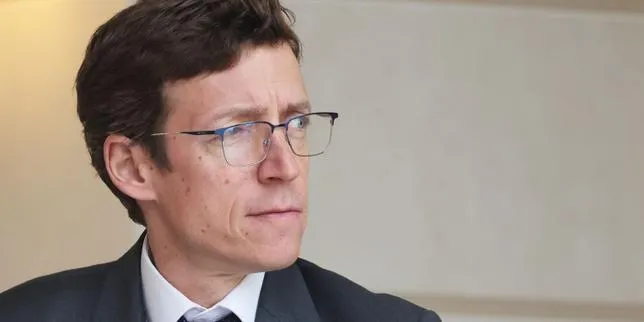
PARIS – The results of the international PISA (Programme for International Student Assessment) have ignited a fierce debate regarding the relevance of global education systems. Prominent mathematics professor, Francois Germinet, in his essay published in Le Monde, explicitly stated that PISA does not reflect the failure of children, but rather a bleak portrait of an outdated school vision, urging fundamental curriculum reform for the future.
Germinet, an influential French intellectual, presented a radical perspective on the essence of success. According to him, the ability to compose or invent the end of a theater play is far more vital in tackling PISA challenges and real-life situations than merely memorizing classic works like Racine. This statement starkly exposes the gap between the demands of standardized evaluations and the necessity for developing students' creative potential.
This criticism is not unfounded. A number of global education experts have long warned that an excessive focus on rote learning and rigid disciplinary silos can stifle critical thinking and student innovation. PISA, designed to measure students' abilities in mathematics, science, and reading, is interpreted by Germinet as an institutional failure to equip future generations with adaptive skills.
He calls for knowledge to no longer be imprisoned within artificial disciplinary boundaries. Germinet believes that interdisciplinary collaboration and holistic thinking are key to solving the complex problems of the modern world. This transformation requires educators and policymakers to boldly transcend traditional teaching paradigms.
Furthermore, the professor also urges that learning environments should no longer be confined to classroom walls. Real-world contexts, social interactions, and direct experiences must become an integral part of the educational process. This step aims to create broader spaces for exploration, freeing students and teachers from monotonous routines.
The debate surrounding PISA and educational evaluation methods is not new. Every release of PISA results is often accompanied by critical analyses from various countries seeking the best formulas to improve their educational quality. However, Germinet's view elevates this discussion to a deeper philosophical level, questioning the fundamental pillars of what we consider 'successful education'.
In his view, the ultimate goal of education is to prepare individuals to imagine and build the world of tomorrow. This demands the capacity to innovate, think critically, and solve problems with new approaches, not merely reproduce existing information. A vision that challenges the established system rooted for decades.
Indonesia, with various curriculum reform efforts underway, also faces similar challenges in balancing academic demands with character and creativity development. The essence of Germinet's argument can serve as an important reflection for policymakers in the country to continuously evaluate the effectiveness of implemented educational approaches.
Regarding the reevaluation of educational assessments, several countries have even taken progressive steps. For instance, in 2026, France and Quebec are reviewing their academic evaluation systems in the era of artificial intelligence. This initiative aligns with Germinet's idea of adapting education to an ever-changing technological and social landscape.
This paradigm shift is not just about changing teaching methods; it is a fundamental redefinition of what constitutes 'value' in education. Are we educating to produce workers compliant with the system, or innovators capable of transforming the world? This question lies at the core of Germinet's provocative essay.
The reforms proposed by Germinet require close collaboration among governments, educational institutions, parents, and the wider community. Without collective support, efforts to free education from the shackles of convention will be futile. Learning must be a dynamic, relevant, and empowering process.
While criticisms of PISA and educational systems have emerged before, Germinet's emphasis on the urgency of developing creativity as a core foundation marks a significant turning point. It is a call to no longer be fixated on narrow metrics that often fail to capture the complexity of human potential.
The future of education depends on our courage to transcend old boundaries. Only then will future generations be truly prepared to face an increasingly dynamic and unpredictable global reality.
Editorial Insight: Francois Germinet's perspective is not merely a sporadic critique but a profound call for a pedagogical revolution. Amidst the accelerating pace of technological disruption and global complexities, the focus of education must shift from accumulating facts to fostering adaptive, creative, and critical capacities. Failing to grasp this essence will mean creating a generation proficient in memorizing history, but inept at designing its own future. This transformation demands political and intellectual courage.