 Dodi Irawan

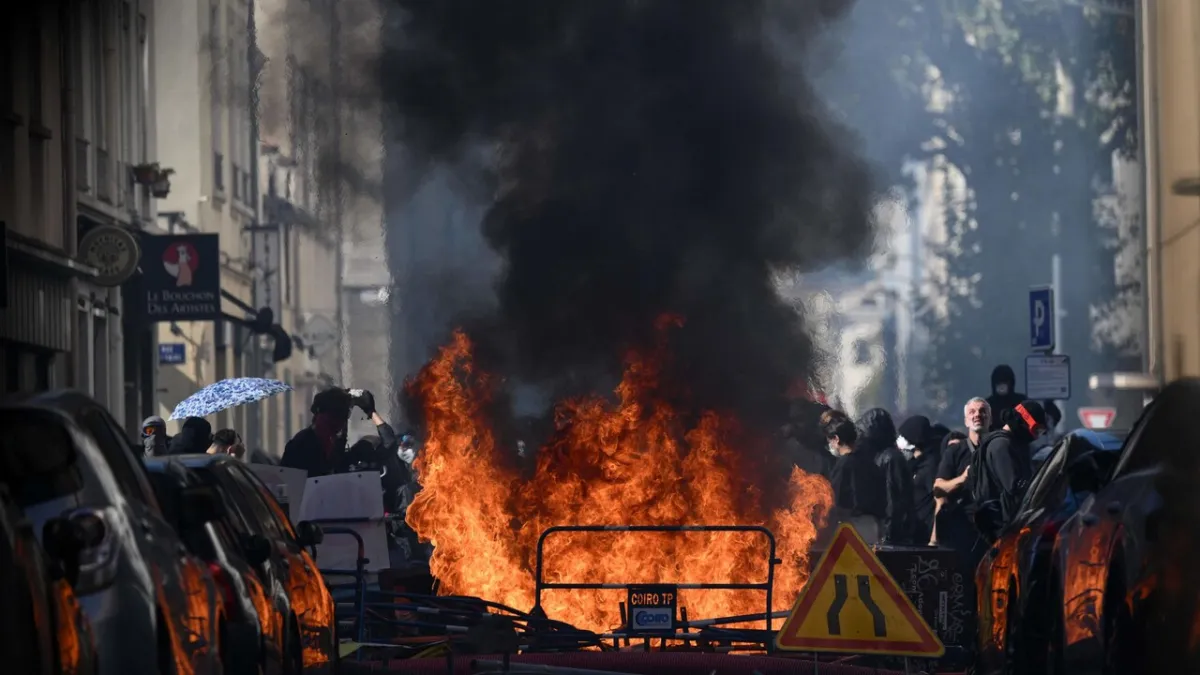
PARIS – A massive wave of student protests has once again rocked France throughout 2026, reflecting deep dissatisfaction with the national education system. Historian Manon Pignot and literature professor Benoite Bureau, in a sharp opinion piece in Le Monde, assert that the chasm of academic inequality has reached a critical point, causing many students to feel marginalized and relegated from their full potential.
They strongly condemn the 'contempt and violence' often inflicted upon students who take to the streets to voice their aspirations. This phenomenon is not merely a sporadic protest but a manifestation of collective anxiety regarding an increasingly exclusive educational future, far from the promises of meritocracy often touted.
Manon Pignot and Benoite Bureau highlight how the current system fails to provide equal opportunities for all segments of society. Children from underprivileged economic backgrounds or specific regions often face significant structural barriers, making their academic journey feel like a strenuous struggle rather than an empowerment.
Disparities in facilities, teacher quality, and access to learning resources are key triggers. Schools in advanced urban areas undoubtedly possess comparative advantages not enjoyed by educational institutions in suburban or rural areas, creating a vicious cycle of academic discrimination that is difficult to break.
In their writing, the two academics explicitly state that 'scholastic inequalities are such that students experience their schooling as a relegation.' This statement forms the core of their sharp criticism, echoing the bitter sentiments felt by thousands of students across the country.
This situation is further exacerbated by the government's perceived slow response to fundamental student demands. Instead of embracing dialogue, policies that tend to be repressive or offer minimal concrete solutions only worsen the situation, triggering an escalation of tensions in various French cities.
Pignot and Bureau remind us that history has shown great potential when a nation dares to 'bet on youth.' They draw a parallel with the Popular Front's policies in 1936, which, amidst social and political crises, paid significant attention to the rights and well-being of young people, including in education and recreation.
According to them, such a progressive approach, which views youth as a strategic investment rather than merely a problem to be solved, is key to easing tensions and building a more inclusive future. The government needs to review its priorities and budget allocation to ensure every student, without exception, receives a fair opportunity.
Some demonstrations have even become a third wave demanding comprehensive education reform, encompassing curriculum, evaluation methods, and university admission systems. Students demand greater transparency and participation in formulating policies that directly affect their lives.
The French government now faces a crucial dilemma: whether to continue ignoring the cries of injustice or take bold steps to reform the vital educational foundation for the nation's future. The decisions made will determine the direction of social stability and intellectual progress in France in the years to come.
Editorial Insight: The educational turmoil in France is a global reflection of the inequality challenges that persist. This case underscores that the quality and access to education are not merely technical issues but the foundation of social justice. Failure to invest in the potential of young people, especially those marginalized, can trigger long-term instability and the loss of valuable talent. Governments worldwide, including Indonesia under President Prabowo Subianto, can learn from this dynamic to ensure equitable and sustainable human resource development.