 Dodi Irawan
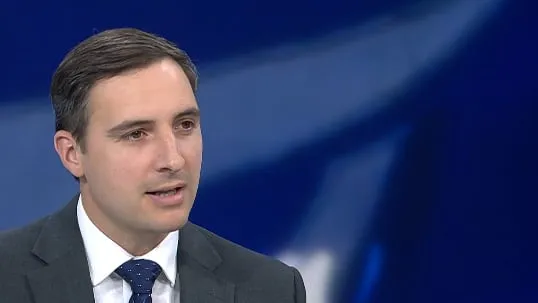
Ankara — Brandon Bohrn, a senior expert for transatlantic relations at the Bertelsmann Foundation, has starkly highlighted a fundamental shift in US foreign policy. Following the NATO summit in Ankara in early 2026, Bohrn stated that Washington, under President Donald Trump’s administration, is clearly moving away from Europe, triggering deep concerns over the cohesion and effectiveness of the North Atlantic Treaty Organization.
Bohrn’s statement underscores an atmosphere of uncertainty clouding transatlantic relations. He emphasized, "We clearly see that the USA under this administration is moving away from Europe." This phenomenon, according to him, is not merely a common political fluctuation but an indication of a significant strategic change.
Bohrn’s analysis comes after a series of controversial maneuvers and rhetoric from President Trump that have often shaken the alliance’s stability. The summit in Ankara, which was expected to strengthen unity, was instead overshadowed by tension due to Trump’s perceived unilateral approach.
One crucial point raised by Bohrn is "the great volatility on the part of this president," which he believes does not help the Alliance. Inconsistencies in Trump’s policies and public statements create an unpredictable environment for NATO member states, especially those on the frontline of European defense.
This situation raises serious questions about the United States’ long-term commitment to NATO’s Article 5, which guarantees collective defense. Speculation about NATO’s future is intensifying, given the alliance’s long history as a pillar of global security post-Cold War.
Geopolitical observers agree that the US’s shifting focus away from Europe has the significant potential to create a power vacuum that could be exploited by other global actors. This necessitates Europe becoming more self-reliant in defense and security matters, a call already echoed by several leaders on the Blue Continent.
The direct impact of this volatility is felt among NATO member states. Various European nations are beginning to re-evaluate their defense strategies and seek ways to reduce their dependence on the United States, even within the alliance context.
Behind the scenes, many diplomats and military officials express frustration over the changing dynamics. Clarity in policy direction is crucial in confronting increasingly complex global security challenges, ranging from regional aggression to cyber threats.
Bohrn also indicated that this shift is not just about rhetoric. Concrete policies, such as troop withdrawals or reductions in budget contributions, could be tangible manifestations of Washington’s departure from its traditional commitments in Europe.
Although warm rhetoric sometimes emerges, such as in reports mentioning Trump Praises NATO's Unity 2026, experts view volatility as a dominant pattern, making it difficult for European nations to build solid long-term strategies.
This situation compels Europe to seek internal solutions and strengthen defense cooperation among EU member states. Initiatives like PESCO (Permanent Structured Cooperation) may gain new momentum in response to uncertainty from its transatlantic partner.
President Trump’s decisions in Ankara, including his stern warnings to Europe, further solidify these concerns. A previous article titled Trump Shakes NATO: Europe Threatened If Ankara 2026 Warnings Ignored detailed the implications of those warnings.
The future of the NATO Alliance, which for decades has guaranteed peace and security, now stands at a crossroads. The big question is how member states will navigate this era of uncertainty without damaging the alliance’s foundations.
Bohrn concluded his analysis by calling for open dialogue and adaptive strategies from all parties. Europe must prepare for a scenario where the US may no longer be the primary security guarantor it once was, while simultaneously maintaining lines of communication to prevent deeper rifts.
This represents the greatest geopolitical challenge NATO has faced in its modern history, demanding wise leadership and rapid adaptation to maintain the global balance of power.