 Gabriella
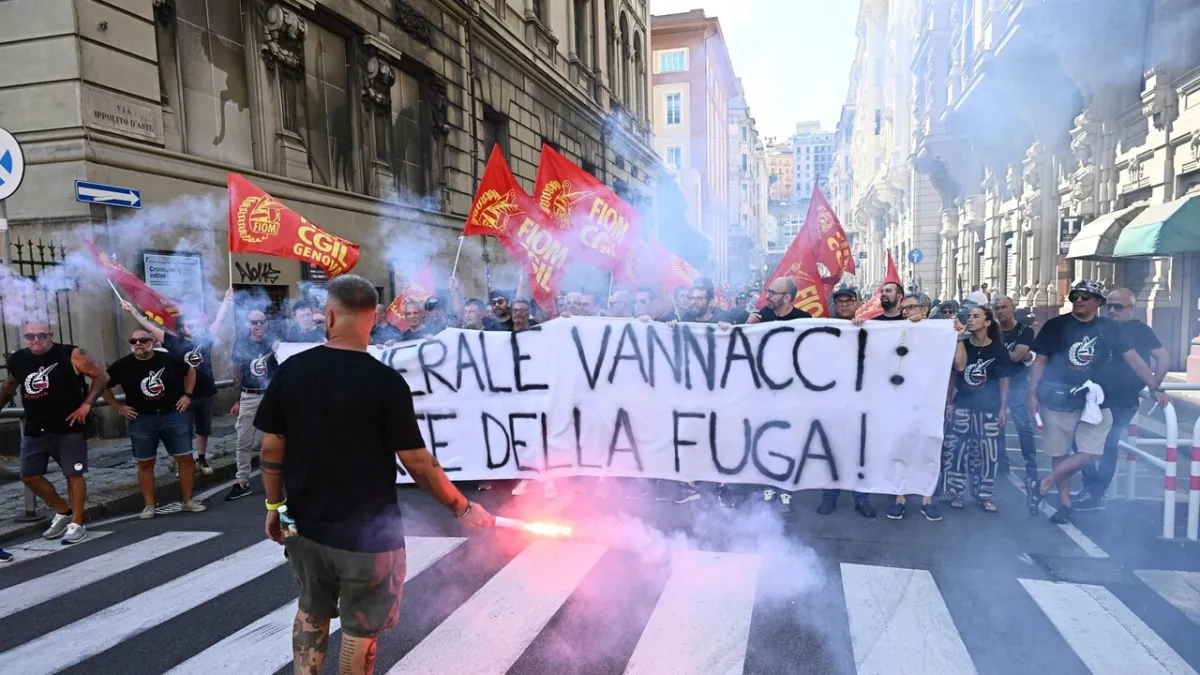
GENOA — A wave of political tension has once again enveloped the city of Genoa after the sudden visit of Vannacci, the charismatic leader of Futuro Nazionale, triggered massive demonstrations from antifascist groups. This event, occurring in mid-2026, was not merely a regular political gathering but an arena for an increasingly heated ideological battle in the heart of Italy, with Vannacci echoing the rhetoric, "More sport, less maranza."
Vannacci's presence, known for his conservative and often controversial views, consistently draws reactions. In his speech to supporters, he emphasized the importance of discipline through sport and accused the "maranza" phenomenon – a local slang term for unruly or unemployed youth often involved in petty crime – as a threat to social order. This slogan immediately became a major point of friction with his opponents.
Hundreds of antifascist activists gathered in central Genoa, carrying banners and chanting slogans rejecting what they consider to be resurgent fascist ideology. They highlighted that Vannacci's rhetoric tends to be divisive and marginalizes vulnerable groups, rather than offering inclusive solutions to complex social problems. Security forces were on high alert to prevent physical clashes.
A spokesperson for the Genoa antifascist movement stated, "We reject all forms of hate speech and attempts to divide society by scapegoating a handful of groups. Social problems must be addressed with dialogue and opportunity, not with prejudiced rhetoric." This statement reflects deep unease among Genoa's residents.
Vannacci himself remained firm in his position. Through his social media accounts, he reiterated that the "More sport, less maranza" campaign is a call for the restoration of traditional values and social responsibility, especially among the younger generation. He claimed his goal is to build a healthier and more productive society, free from the negative influences of street culture.
"The state must be firm in tackling the rampant problem of juvenile delinquency and petty crime. We need to restore morality and work ethic, starting with sports education and stricter social supervision," Vannacci said in an exclusive interview with a national television station, asserting his vision for Italy's future.
This incident in Genoa also highlights Italy's increasingly polarized political landscape ahead of local and regional elections in 2026. Futuro Nazionale, though still a minor party, has successfully garnered public attention with its bold and sometimes provocative narrative, making it a force that cannot be ignored in the political arena.
On the other hand, the debate surrounding "maranza" and its triggers also touches on economic issues and social inequality. Many observers argue that this phenomenon is a reflection of a lack of employment opportunities and adequate educational support for young people in urban areas, rather than merely a matter of individual morality.
Professor Alessandro Rossi, a sociologist from the University of Rome, explained, "Slogans like 'more sport, less maranza' oversimplify social problems rooted in structural issues. Without addressing root causes such as poverty and lack of access, such rhetoric will only deepen divisions." This analysis enriches the perspective on the Genoa incident.
The Italian government under Prime Minister Giorgia Meloni, known for its conservative policies, finds itself in a difficult position. They must balance the urge to uphold order with demands to address the root causes of social problems with a more comprehensive approach. The question of how far the government can fulfill its promise to create a just and equitable society, as discussed in the debate on Credibility in the Eyes of the Constitution 2026, is now under sharp scrutiny.
While the tension in Genoa was successfully defused without major incidents, the ideological debate between Futuro Nazionale and antifascist groups is certain to continue. This event serves as an important indicator of the political and social dynamics in Italy in 2026, where national identity, social order, and inclusivity are central issues of contention.