 Stefani Rindus
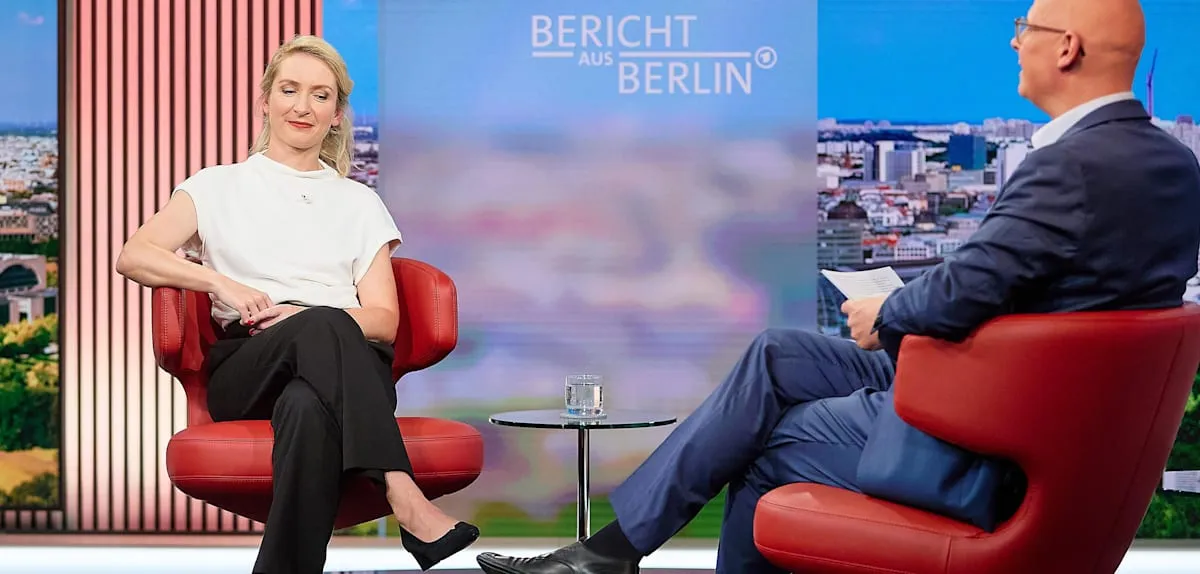
BERLIN — Prominent Left Party figure, Schwerdtner, launched a scathing critique against the German federal government following its planned social austerity measures and a proposed ban on expropriation, which she deems unconstitutional. In an ARD summer interview in 2026, Schwerdtner called for massive political resistance, accusing the CDU of fearing a left-wing political dominance in the capital.
This statement emerges amidst escalating political tensions in Germany. Schwerdtner explicitly attacked the government's policies, which she believes will trigger extensive "social austerity," a move she claims will harm vulnerable groups and widen the inequality gap.
Schwerdtner's primary focus of condemnation was directed at the draft ban on expropriation of assets. She asserted that this action not only contradicts Germany's constitutional principles but also hinders the state's ability to address housing crises and public infrastructure needs.
"This ban on expropriation is a direct assault on fundamental rights and democratic sovereignty. It is unconstitutional," Schwerdtner declared during the nationally televised interview. "We will counter this attempt with all the political force we possess, especially from Berlin."
The accusation that the Christian Democratic Union (CDU) fears a "red Berlin," or a capital city governed by a leftist mayor, underscores the intense ideological competition within the capital. The city of Berlin, historically known for its progressive political leanings, often serves as a barometer for shifting political sentiments in Germany.
Schwerdtner also announced a series of widespread protest actions to be coordinated by the Left Party. This movement is expected to involve various elements of civil society, trade unions, and social activists who oppose austerity policies and economic liberalization.
These protests, according to Schwerdtner, are not merely acts of rejection but rather manifestations of organized political resistance. The objective is to build a broad front to pressure the federal government into withdrawing policies deemed detrimental to the people.
The political landscape in Germany in 2026 indeed shows increasing polarization. Issues such as inflation, the energy crisis, and the impact of socio-economic reforms fuel fierce debates among political parties, with the Left Party positioning itself as a primary defender of social justice.
Political analysts suggest that this call for resistance from Berlin has the potential to garner significant support. History indicates that the German capital frequently becomes the epicenter of protest movements that successfully influence the direction of national policy.
The ideological battle between the Left Party and the CDU regarding the state's role in the economy and social protection is expected to intensify. Schwerdtner's statement marks the beginning of a new chapter in Germany's turbulent political landscape in 2026.
The German public now awaits how the federal government will respond to the planned political pressure and demonstrations. Social austerity policies and the ban on expropriation will serve as crucial tests for the ruling coalition this year.