 Edward DP Situmorang
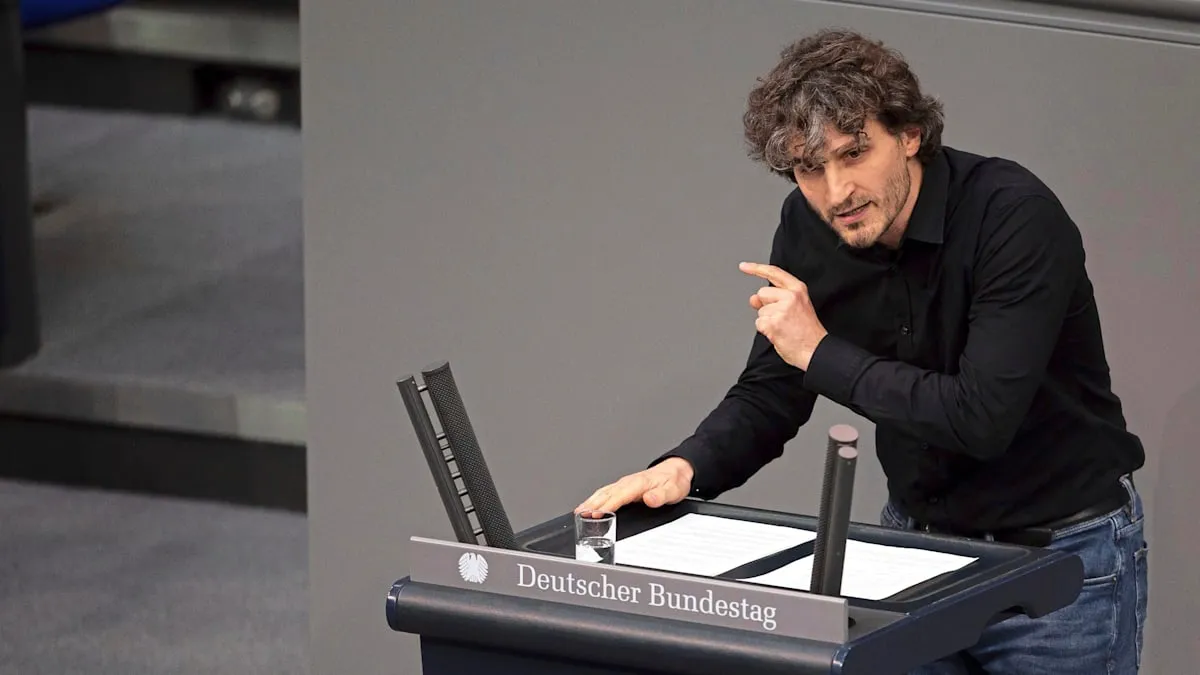
BERLIN — Ates Gürpinar, a senior politician from The Left party, launched sharp criticism against the German coalition government in the Bundestag. He asserted that the Compulsory Health Insurance (GKV) reform, currently under deliberation in 2026, represents a misguided policy that directly cuts healthcare budgets and burdens the most vulnerable segments of society. Gürpinar also demanded greater financial involvement from high-income earners and private insurance holders to ensure social justice within the national health system.
In a resonant speech before parliament, Gürpinar explicitly stated, "It is wrong in substance and in form." This statement encapsulates profound disagreement with the coalition's policy direction, which he deems intransparent and lacking consideration for long-term impacts on millions of German citizens.
According to The Left, the current GKV reform has the potential to create an even wider gap between those who can afford high premiums and those who rely entirely on the public health system. Budget cuts will affect the quality of services, facility availability, and access to essential medical treatments for individuals with limited economic means.
The weakest societal groups Gürpinar refers to include pensioners, low-income families, precarious workers, and individuals facing chronic health challenges. They are the segments of the population who will most directly feel the effects of any policy changes leading to reduced benefits or increased costs.
To address the GKV budget deficit and ensure system sustainability, Gürpinar proposed that the government shift the financial burden onto those who are more capable. Mandatory participation from fantastically wealthy individuals and greater contributions from private insurance policyholders are considered fair and logical steps that have been overlooked thus far.
The debate surrounding health insurance reform is not new in the German political arena. For several years, various factions have put forward proposals to strengthen the GKV system. However, the ruling coalition has often struggled to reach a consensus, particularly regarding funding and burden distribution. This issue was also highlighted in an article titled "German Health Insurance Reform Heats Up, SPD Politicians Loudly Reject", indicating widespread dissatisfaction with the policy draft.
Gürpinar's criticism also touches on broader aspects related to the coalition's performance. The statement that "The coalition doesn't really know what it's doing" implies deep doubts about the government's leadership capacity and strategic direction in tackling crucial issues. This is not the first time the coalition has faced public and opposition pressure regarding major policies.
The implications of such criticism are not limited to the parliamentary arena but also have the potential to erode public trust in political institutions. When senior politicians openly question government competence, it can trigger concerns among voters about the stability and effectiveness of state governance, especially ahead of upcoming elections.
Political polarization in Germany appears to be increasing. The governing coalition has also previously faced criticism from within its own party, as summarized in the report "Juso: SPD Rhetorical Deficit, Chancellor Scholz and Party Leadership Criticized". This demonstrates that dissatisfaction stems not only from the opposition but also permeates elements within the coalition parties themselves.
Given the urgency of the problem and its massive impact, the demands from Ates Gürpinar and The Left require a serious response from the government. The future of Germany's health insurance system, which forms the backbone of social welfare, heavily depends on policies that are not only economically efficient but also socially just. This debate is predicted to intensify until comprehensive solutions can be found.