 Stefani Rindus
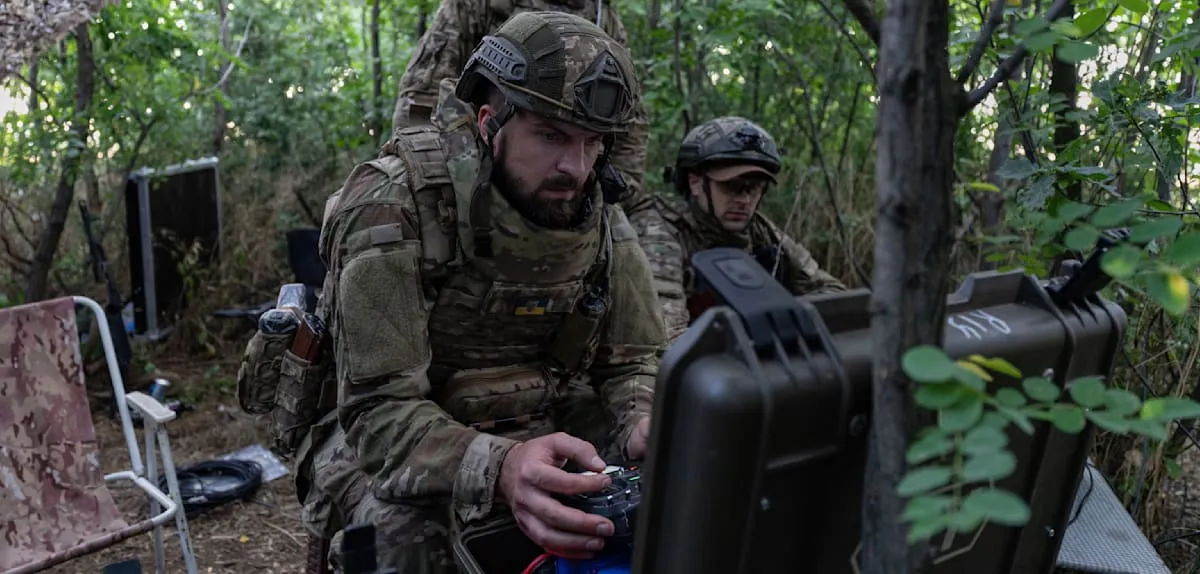
WASHINGTON DC — Central Intelligence Agency (CIA) Director William Burns recently delivered shocking data revealing the brutal reality of the conflict in Ukraine in 2026. According to Burns, newly recruited Russian soldiers on the battlefield have a life expectancy of only 20 to 30 minutes. This figure reflects the devastating impact of increasingly sophisticated drone warfare, fully supported by artificial intelligence (AI) technology.
The data highlights a terrifying evolution in modern warfare, where autonomous and semi-autonomous technologies are determining fates on the front lines. This situation not only creates profound psychological trauma for soldiers but also forces all parties to re-evaluate war strategies and ethics.
The escalation of the conflict in Ukraine, which continues into this year, has become a brutal laboratory for the development and application of advanced military technology. The use of drones, ranging from reconnaissance to high-precision attacks, has fundamentally altered the battle landscape, reducing infantry’s chances of survival.
These drones, often small and difficult to detect, can launch deadly attacks with high accuracy. When equipped with artificial intelligence systems, the drones’ ability to identify targets, make decisions, and strike becomes increasingly autonomous, accelerating the conflict cycle on the front lines.
“These figures are horrifying and must be a serious concern for the international community,” said a military analyst from a defense research institution in London. “This is no longer conventional warfare; it is a duel between humans and AI-powered machines.”
The revelation of this data by the CIA Director also indicates a severity of casualties not widely publicized. The bitter irony is that while technology is designed for efficiency, in the context of war, that efficiency translates directly into accelerated death.
The war in Ukraine has changed the paradigm of armed conflict, where air and ground superiority are increasingly determined by unmanned technological capabilities. Significant investments in drone and AI development by both sides show a shift in focus from troop numbers to technological quality.
AI technology not only speeds up identification and targeting processes but also enables drones to operate in complex formations and perform maneuvers difficult for humans to anticipate. This poses a major challenge for traditional defense strategies and soldier training.
This report once again reminds the world of the dangers of armed conflict in the digital age. The speed and precision of AI-driven drone attacks place every soldier at extreme risk, turning life expectancy into a matter of minutes.
This condition sparks global concern about an AI arms race, where countries compete to develop more lethal autonomous systems. The ethical and legal implications related to the use of AI in warfare are crucial issues that international forums need to address immediately.
The situation in Ukraine is also relevant to discussions concerning Russia's escalating nuclear threats amid aerial warfare. When conventional conflict becomes too deadly, the potential for using more destructive weapons may increase.
The publication of this data must serve as a strong call for the global community to intensify diplomatic efforts to end the conflict. The price paid in human lives, especially young soldiers, is too high to be tolerated in this modern era.
Understanding the dynamics of Ukraine's political turmoil and Zelenskyy's cabinet reshuffle is also important to highlight internal complexities that might affect military strategies on the ground. However, the threat to soldiers on the front lines remains the primary focus.
Modern warfare, with the intervention of AI and drones, has created conditions where the line between life and death is increasingly thin. Swift and brutal death becomes a harsh reality for those caught in the vortex of conflict.