 Dodi Irawan
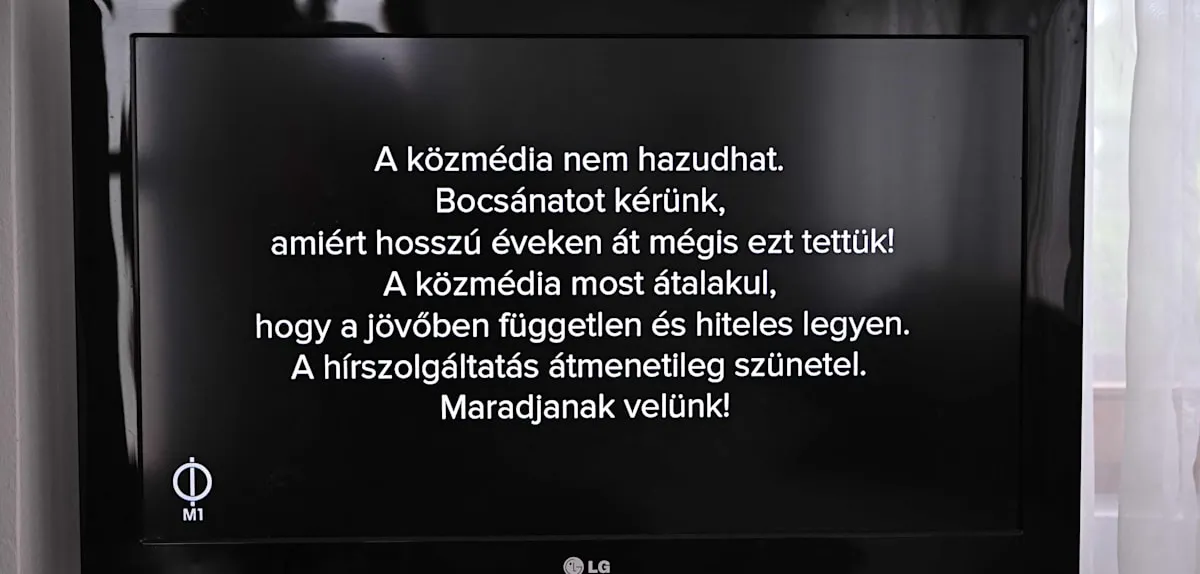
BUDAPEST — Hungary's national television station shocked the public with a four-hour broadcast devoid of regular programming, replaced by a provocative message: “Public media must not lie.” This incident, occurring after the departure of former Prime Minister Viktor Orban in 2026, signals a significant shift in Hungary's media landscape, long known for being highly polarized and state-controlled.
The sharp message, translated from German, '„Öffentlich-rechtliche Medien dürfen nicht lügen“', immediately sparked widespread debate across the country and garnered international attention. Political observers and press freedom advocates view this event as a marker of a new era, promising greater transparency and accountability from public broadcasters.
During the four-hour broadcast, television screens showed no commercials, news, or entertainment, but only repetitive text. This represents a bold and unprecedented move, especially after a long period of the Orban government's dominance over public media, which was often accused of being a propaganda mouthpiece.
Former Prime Minister Viktor Orban, who led Hungary for over a decade, frequently faced strong criticism from the European Union and international organizations regarding the decline of democracy and press freedom in his country. Throughout his administration, many private media outlets were acquired by entities close to the ruling party, while public media remained under strict control.
The shift in political power in Hungary in 2026 has opened opportunities for institutional reform. The media sector, a crucial pillar in a democratic system, is now a primary focus. Society awaits whether the implicit promise of press freedom in the television message will truly materialize.
Journalists and editors in Hungary cautiously welcomed this development. They recognize that the challenges of restoring public trust and building independent journalism are immense. This process requires time, commitment, and robust legal protections for media workers.
An anonymous source from within public broadcasting interviewed by Cognos Daily stated, “This change is the result of massive internal and external pressures. Many of us, journalists, have long yearned for the freedom to report the truth without censorship or political intervention. That message is a declaration of intent.”
The European branch of the Committee to Protect Journalists (CPJ) also issued a statement. They urged the new Hungarian government to immediately implement policies guaranteeing the independence of public media and protecting journalists from all forms of intimidation. This includes reviewing repressive media laws and supporting information pluralism.
Repercussions from this incident will likely be felt in other Central European countries, especially those also grappling with issues of media independence and political influence in reporting. Hungary now serves as a significant benchmark for the debate on the role of public media in a healthy democratic society.
This bold move by Hungary's national television station serves as an important reminder to all stakeholders that media, in any form, has a moral responsibility to present facts and safeguard the freedom of information for the public. The future of Hungarian journalism now stands at a crossroads, between reverting to the past or moving towards an era of full transparency.